
Livraison le jour même ou le lendemain

Qualité garantie

Débloquez vos offres de bienvenue: Livraison GRATUITE | Jusqu'à -80 % | 30 jours d'essai gratuits à JoyPlus
Téléchargez l'application
The dreaded "Low Battery" notification always pops up at the worst possible moment: during a crucial business meeting, in the middle of a busy day of classes, or on that long-awaited trip. A power bank, also known as an external battery, is no longer just a gadget. It has become an essential accessory for keeping our smartphones, tablets, and even laptops charged.
Faced with a plethora of options, it's easy to feel overwhelmed by technical specs. This guide is here to cut through the noise, shed light on the criteria that truly matter, and present a curated selection of top models for 2026. Our goal: to help you make the right choice, hassle-free.
Before you grab the first model you see, it's crucial to understand what sets a good power bank apart from the rest. Here are the three key points to check to find the perfect portable charger for your needs.
Expressed in milliampere-hours (mAh), capacity defines how much energy the power bank can store. The higher this number, the more times you can recharge your devices.
Having a large capacity is good. Being able to use it at full speed is even better! The speed at which energy is delivered, measured in watts (W), is just as essential.
Also, remember to check the number and type of ports (USB-A, USB-C) to ensure you can plug in multiple devices simultaneously if needed.
A high-capacity power bank is logically heavier and bulkier. You'll need to weigh your priorities: are you looking for maximum battery life or an accessory with a minimal footprint?
A crucial point for globetrotters: air travel is highly regulated. Most airlines limit power bank capacity to 100 watt-hours (Wh) in carry-on luggage. Rest assured, nearly all consumer models, including 27,000 mAh power banks, fall within this limit. However, they are strictly forbidden in checked baggage.
Let's get to it! Here are three models that caught our eye, each tailored to a specific user profile.

Why it stands out: This powerhouse from VARTA is built for those who can't afford to run out of battery, especially when a laptop is part of the equation.
Pros:
Who is it for? Digital nomads, professionals on the go, and anyone who needs a reliable and ultra-powerful energy source for their laptop, tablet, and smartphone.
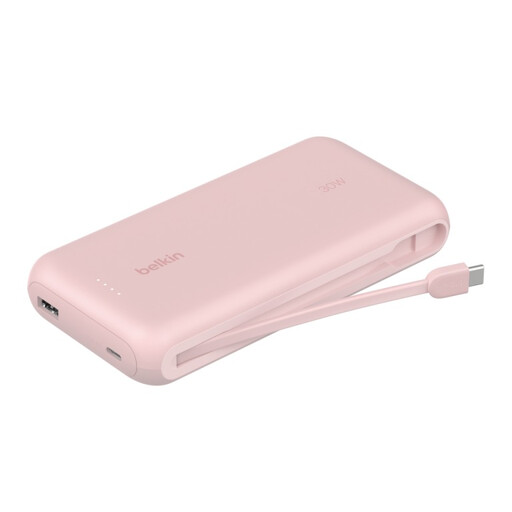
Why it stands out: This Belkin model is the ultimate multi-tool, combining ample capacity with thoughtful features, like its integrated USB-C cable.
Pros:
Who is it for? The everyday user who juggles a smartphone, tablet, and earbuds. Perfect for students, commuters, and weekend travellers who appreciate simplicity.
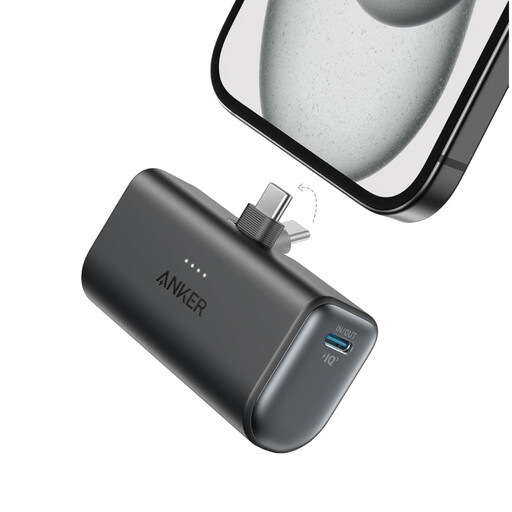
Why it stands out: This small power bank from Anker is the epitome of portability. Its foldable connector and pocket-sized format make it the perfect everyday companion.
Pros:
Who is it for? Those who count every gram and prioritise convenience above all. Ideal for city outings, concerts, or as a minimalist backup solution.
Our selection is just a glimpse of what's available. The power bank market is filled with models of varying capacities, sizes, and features.
To explore a wider range and discover other brands and models, feel free to browse our complete category of portable power banks.
In theory, a 20,000mAh power bank can charge a modern smartphone (with a 4,000-5,000 mAh battery) about 4 to 5 times. In practice, you have to account for some energy loss during the transfer, so you can realistically expect 3 to 4 full recharges, which is still very convenient.
Absolutely not, and the rule is strict. Most airlines set the limit at 100 Wh (watt-hours) per battery. To put it simply, almost all models on the market, even a power bank for air travel of 27,000 mAh (which is just under the 99.9 Wh limit), are accepted. But be careful: they are only allowed in carry-on luggage! They are strictly forbidden in checked baggage.
USB-A is the classic rectangular port we all know. It gets the job done, but its charging speed is often limited. The USB-C port—smaller, oval-shaped, and reversible—has become the new standard. It enables much more efficient fast charging and can deliver enough power for demanding devices like a laptop, which USB-A cannot do.
Joybuy, Your Product Expert