
Livraison le jour même ou le lendemain

Qualité garantie

Débloquez vos offres de bienvenue: Livraison GRATUITE | Jusqu'à -80 % | 30 jours d'essai gratuits à JoyPlus
Téléchargez l'application
The dream of a giant cinema screen on any white wall—whether in your living room, garden, or on holiday—has never been more accessible. However, the portable projector market is a crowded space where technical specifications can quickly become a headache. Between lumens, resolution, and smart features, it's easy to get lost.
Our mission?: to help you see things more clearly. This guide is designed to give you the keys to making an informed choice, decoding the criteria that truly matter to find the perfect device for your needs.
Before diving into our selection, let's review the three essential criteria that will guide your choice.
Image quality relies on an essential duo: brightness, expressed in ANSI lumens, and native resolution.
A Wi-Fi connected projector worthy of the name is much more than a simple display device. Its smart features turn it into a true standalone entertainment hub.
Portability means ease of setup. Autofocus projector and automatic keystone correction features have become indispensable. In just a few seconds, they adjust the focus and straighten the image, even if the projector isn't perfectly aligned with the wall. No more tedious manual adjustments every time you move it!
Here are a few models that stand out for their features and versatility, each catering to specific needs.
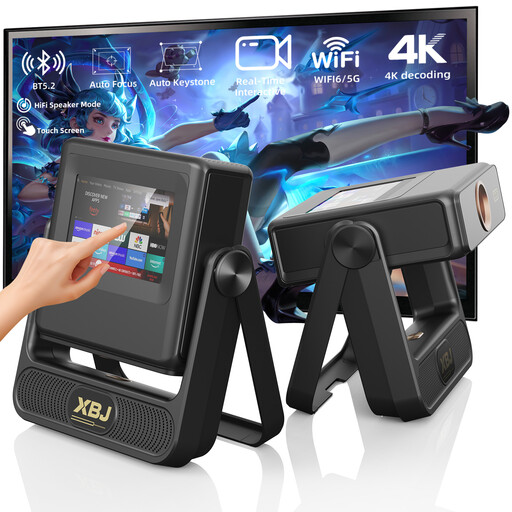
What makes it unique
This model stands out with its highly original control interface: a built-in touchscreen on top. It allows you to navigate menus, launch content, or display the weather without even touching the remote. Its 180° swivel base offers impressive flexibility to project wherever you want: on a wall, ceiling, or even a tent.
Highlights
Who is it for??
For those looking for an innovative and versatile device, equally at home for a movie night at home or as a nomadic projector. Its dual control is a real plus for fans of well-designed gadgets.
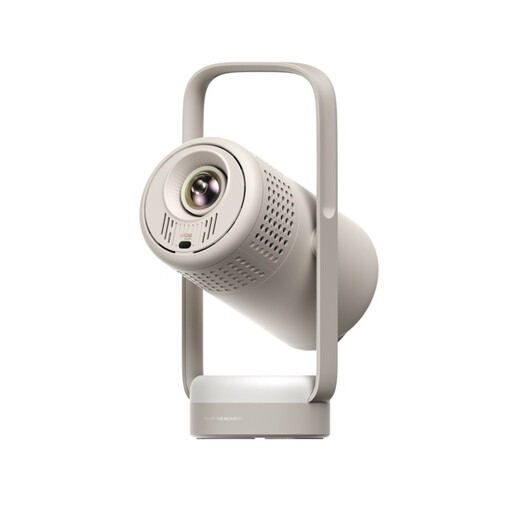
What makes it unique
This mini projector from XGIMI focuses on software fluidity and portability. With Google TV at the helm, it offers an ultra-responsive interface and access to thousands of apps via the Play Store. The package even includes a screen with a stand, making it a ready-to-use solution.
Highlights
Who is it for??
For those who prioritise the simplicity of an ecosystem like Google TV and want a hassle-free, all-in-one solution. Note that its 250 ISO lumens brightness restricts it to use in near-total darkness.
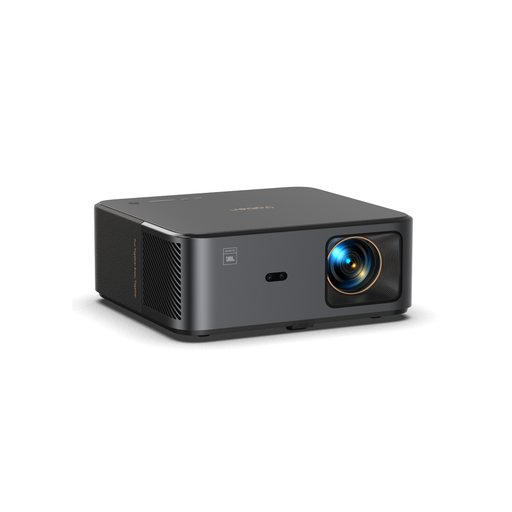
What makes it unique
The YABER K2s goes all-in on audiovisual immersion. It features two powerful 10W JBL speakers with Dolby Audio support, delivering sound so expansive that it often eliminates the need for an external soundbar. Another clever feature is its NFC Screencast function, which allows you to mirror your smartphone's screen with a simple tap on the projector.
Highlights
Who is it for??
For cinephiles and home cinema projector enthusiasts who make no compromises on sound. It's also an excellent choice as a gaming projector thanks to its fast connectivity and immersive audio.
If none of these models check all your boxes, or if your need is more occasional, other solutions exist. For a one-time event, like an outdoor movie night or a professional presentation, renting is a smart alternative.
Discover our selection of Outdoor Cinema Projector Rentals to find a flexible option that suits your needs.
For an outdoor projection after dark, a minimum of 500 ANSI lumens is required for a clear and contrasted image. For optimal comfort and more vibrant colours, aim for models between 800 and 1000 ANSI lumens.
Yes, but on one crucial condition: the projector must have an operating system (like Android TV or Google TV) that is officially certified by Netflix. Only smart Netflix projector models allow you to download and run the app natively. Be careful, the mere presence of Android does not guarantee this: be sure to verify this point before any purchase.
A projector with a native Full HD 1080p resolution (1920?x?1080 pixels) has a chip that physically displays that number of pixels. This is the true sharpness of the image. A model that "supports 4K" can receive a 4K signal (3840?x?2160 pixels), but it downscales it to display on its 1080p chip. The result? A 1080p image that is noticeably richer and more detailed than one from a standard 1080p source.