
Livraison le jour même ou le lendemain

Qualité garantie

Débloquez vos offres de bienvenue: Livraison GRATUITE | Jusqu'à -80 % | 30 jours d'essai gratuits à JoyPlus
Téléchargez l'application
Turn any white wall into a cinema screen, set up an impromptu movie night under the stars, or project a presentation in a flash: that's the enticing promise of a portable mini projector. But with an overwhelming number of options on the market, how do you separate the wheat from the chaff and see through the marketing hype?
This guide is here to help you make sense of it all. We'll break down the essential criteria and present our selection of the best models available, whether you're a demanding cinephile, a nomadic gamer, or simply looking for an ultra-versatile family entertainment solution.
Before diving into our selection, let's review the key technical specs you need to understand to make the right choice.
Image quality hinges on two fundamental criteria: brightness, expressed in ANSI lumens, and native resolution.
A portable mini projector worth its salt must be standalone and easy to connect.
The latest top models incorporate technologies that make setup nearly instantaneous. Autofocus and auto-keystone correction adjust the image for you in seconds, even if the projector is placed at an angle. This is a decisive advantage for a nomadic device that's constantly on the move.
We have selected three models that stand out from the crowd, each with its own distinct positioning.
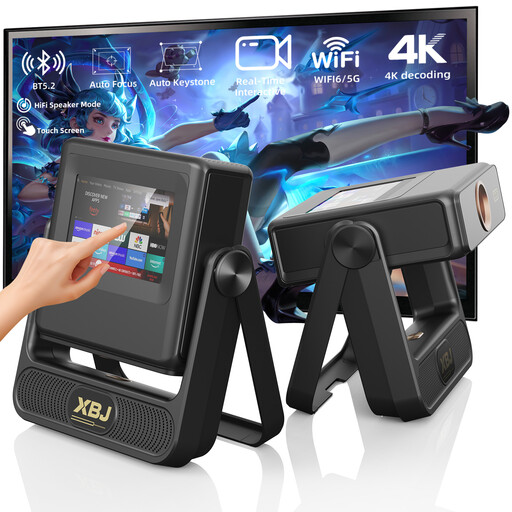
Why it stands out: Its unique feature? An integrated touchscreen that lets you navigate menus, launch content, or display widgets (weather, time) without even touching the remote. This dual interface makes it as practical as it is novel.
Pros:
Who is it for? Tech enthusiasts who love innovative gadgets and are looking for a versatile device for home, the office, or evenings with friends.
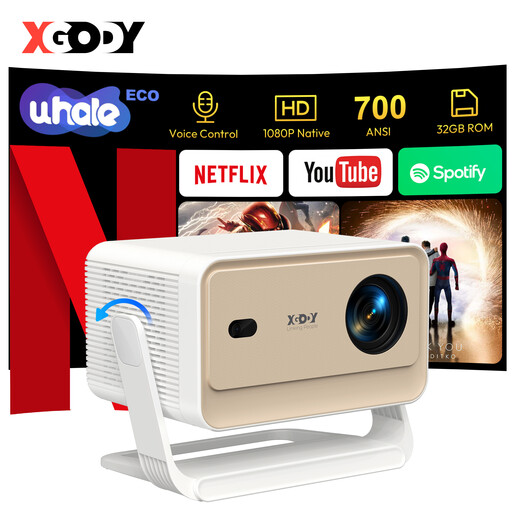
Why it stands out: The XGODY N6 Pro focuses on a "ready-to-use" streaming experience thanks to its official Netflix license and its proprietary WhaleOS 3.0. Add voice control to the mix, and you get the perfect smart home cinema projector, designed for simplicity.
Pros:
Who is it for? Fans of series and movies who want an ultra-simple, all-in-one solution that's ready to go right out of the box and who appreciate the convenience of voice control.
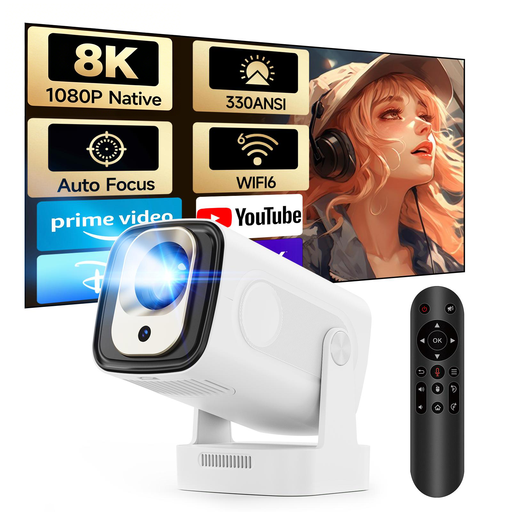
Why it stands out: This pico projector plays the ultra-portability card and offers an excellent feature-to-price ratio. Its key feature: a gyroscopic "Air Mouse" remote that, combined with voice control, makes navigation as intuitive as using a mouse.
Pros:
Who is it for? Those looking for their first portable projector, a secondary solution for a teen's room or for holidays, all on a controlled budget but without sacrificing essential smart features.
These three models are just a glimpse of the possibilities offered by portable projectors. If your needs are different or if you simply want to explore other options, feel free to browse our full catalogue.
Discover Our Complete Collection of Entertainment Projectors
1. What's the difference between lumens and ANSI lumens? The ANSI lumen is the only reliable and standardised brightness measurement. It assesses the average light output across multiple points on a screen. Beware of simple "lumens" (sometimes called "marketing lumens"), an often inflated and non-standardised value. To compare two projectors, only trust the ANSI lumens value.
2. Can you use a mini projector in broad daylight? Let's be clear: it's very difficult, even for the most powerful models. A portable mini projector is designed for environments with controlled lighting (a room with the curtains drawn, evening projection). For very occasional daytime use, a model with over 700 ANSI lumens will produce a visible image, but the result will be incomparably better in a dim or dark setting.
3. Do I need an external device to watch Netflix? Not necessarily. Models equipped with an operating system, like an Android projector, include an app store. You can download and launch Netflix, Prime Video, or YouTube directly from it, just like on a Smart TV. The projector then becomes 100% standalone.