
Livraison le jour même ou le lendemain

Qualité garantie

Débloquez vos offres de bienvenue: Livraison GRATUITE | Jusqu'à -80 % | 30 jours d'essai gratuits à JoyPlus
Téléchargez l'application
Planning a memorable party, livening up a family event, or just want to belt out some tunes at home? You'll need the right equipment for that. Faced with a sea of available models, choosing a portable karaoke speaker can quickly become a headache. Power, battery life, connectivity... what are the criteria that really matter?
This guide is here to help you see things more clearly. As the Head of Product Recommendations at Joybuy, my mission is to give you objective, practical advice to make the right choice, cutting through the marketing jargon and exaggerated claims.
Before diving into our selection, let's review the key points to find the perfect model for you.
Power, measured in Watts (W), determines not only the maximum volume but also the clarity of the sound, especially in the bass.
Battery life is the other critical factor for a portable battery-powered sound system. Rely on the listening time advertised by the manufacturer (rather than the mAh capacity, which can sometimes be misleading). A solid battery life of 6 to 10 hours ensures you won't run out of power mid-chorus.
Ease of connection is essential for a good wireless karaoke system. Bluetooth is an essential standard, but opt for a recent version (5.0 or higher) for a more stable connection. Also, make sure other practical inputs are present:
The number and type of microphones are a deciding factor. Models with one or two included wireless microphones offer complete freedom of movement, ideal for an adult karaoke machine and impromptu duets.
Certain features can turn a simple evening into a real show. A karaoke machine with built-in light effects syncs lighting to the rhythm of the music for an instant disco vibe.
Don't overlook portability either. Sturdy handles, wheels, and a compact design are your best friends for transporting your speaker from the living room to the garden or taking it to a friend's house.
We have selected three models that stand out from the crowd, each catering to different needs and budgets.

Why it stands out: The Rangers S1 shines with its versatility. It's a true Swiss Army knife, serving as both a karaoke speaker and an instrument amplifier, designed for budding artists and party hosts alike.
Key features:
Who is it for? Ideal for mobile musicians who want to practice or perform small gigs, as well as for families looking for a powerful and easy-to-transport system for their parties at home or outdoors.
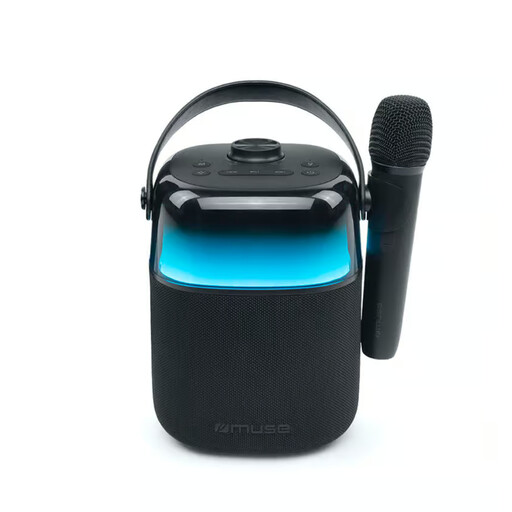
Why it stands out: This model focuses on durability and atmosphere. IPX5 certified, it's not afraid of splashes, making it a great choice for poolside parties or lively barbecues. Its integrated light effects will ignite the party in an instant.
Key features:
Who is it for? Perfect for families and groups of friends who want to host hassle-free parties, especially outdoors, and want a simple, durable speaker that sets the mood.
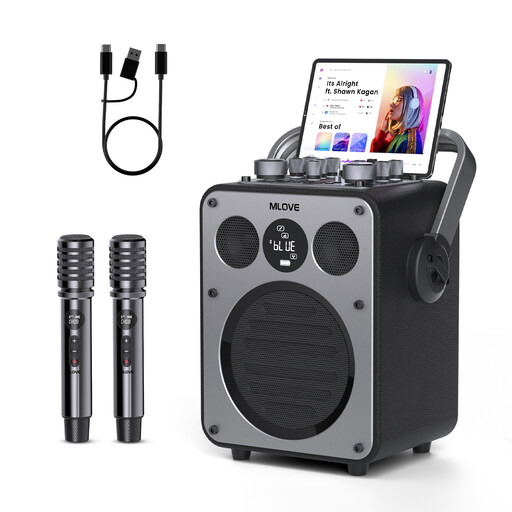
Why it stands out: The Rangers D5 is in a league of its own. A true adult karaoke machine built for performance. With its high power, two wireless microphones, and rolling suitcase design, it's made to provide sound for large spaces and crowded parties.
Key features:
Who is it for? For party planners, associations, or karaoke enthusiasts looking for a complete, powerful, and mobile system to host large-scale events, both indoors and out.
Did none of these models catch your eye? Don't worry, our catalog is full of other hidden gems to discover.
? Explore our entire collection of speakers and microphones
The ideal power depends on your use case. For indoor use in a medium-sized room, 30 to 80 watts is sufficient. For outdoor parties, larger rooms, or if you like powerful sound with deep bass, aim for 100 to 200 watts.
Absolutely. All these speakers function as standard Bluetooth models. You can use them to listen to music from your smartphone, tablet, or computer, without necessarily singing. Models with an instrument input can even serve as a practice amp.
The principle is simple and relies on two separate connections. The speaker connects to your audio source (smartphone, tablet, etc.) via Bluetooth to stream the music. The microphones, in turn, communicate with the speaker using a dedicated radio technology (often UHF). This ensures a stable voice transmission without interference, allowing you to dance around without being tangled in cables.