
Livraison le jour même ou le lendemain

Qualité garantie

Débloquez vos offres de bienvenue: Livraison GRATUITE | Jusqu'à -80 % | 30 jours d'essai gratuits à JoyPlus
Téléchargez l'application
Whether you're looking to liven up a party with friends, practice your singing, or even provide sound for a presentation, finding the right equipment can quickly become a headache. Faced with a jungle of models, choosing the perfect portable karaoke speaker is a real challenge. Power, connectivity, battery life, effects... it's easy to get lost.
Don't panic, our guide is here to help you see things more clearly. Our mission: to give you the keys to making the right choice by decoding the technical jargon and getting straight to the point, cutting through the marketing fluff. We've analysed the criteria that truly matter and selected models that stand out for their versatility and performance.
Before diving into our selection, let's review the key points to find the model that's truly right for you.
Power, measured in watts (W), determines your speaker's maximum volume. For a party in the living room, 50 to 100W is more than enough. However, to provide the soundtrack for a garden party or a large hall, you'll need to aim higher.
Be careful, though: more power often means more weight and a larger size. The ideal portable PA system is one that offers the best compromise between sound performance and ease of transport (weight, handles, wheels, etc.).
This is the crucial part. Most models today function as a Bluetooth speaker with a microphone. Opt for a Bluetooth 5.0 version (or newer) to ensure a stable connection and low latency.
Check that the speaker comes with at least one wireless microphone. For duets, a wireless karaoke machine with two microphones is obviously ideal. Also, remember to take a look at the other available connections:
Certain options can turn a simple singing session into a real show. A good speaker for singing with effects should at least offer a reverb (echo) effect to add depth to your voice.
More advanced models, like a professional home karaoke system, include a Digital Signal Processor (DSP) with preset equalizers (EQ) for music, voice, and instruments, and sometimes recording functions. Also, consider the mic priority feature: it automatically lowers the music volume when you speak, a real bonus for hosts and presenters.
We have selected three models that cater to very different uses, from family parties to musical performances and professional events.
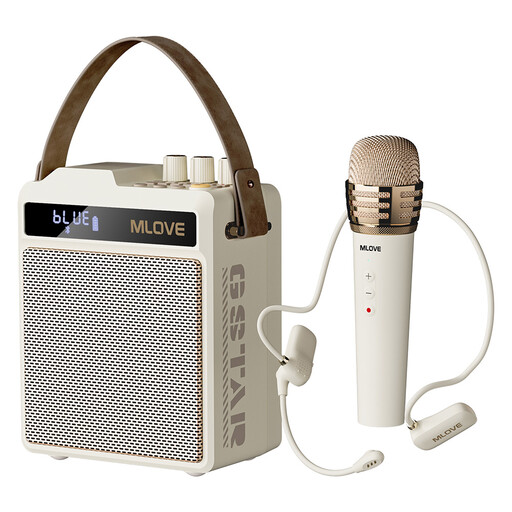
Why it stands out: The MLOVE N5 is the ultimate Swiss Army knife. Supplied with both a handheld and a headset wireless microphone right out of the box, it's perfect for duets, classes, or conferences where keeping your hands free is essential. Compact and featuring fast charging, it's a reliable travel companion.
Key Features:
Who is it for? Ideal for teachers, coaches, event hosts, and families looking for an all-in-one solution that's easy to transport and use for both singing and public speaking.
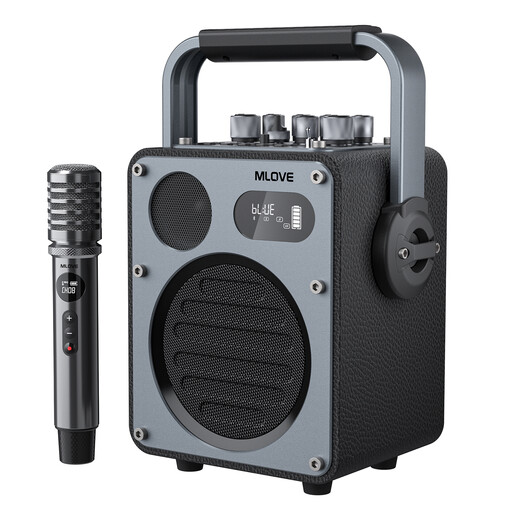
Why it stands out: The Rangers D4 is all about audio quality and premium finish. Its wooden cabinet and zinc alloy chassis house a two-way audio system (woofer + tweeter) that ensures clear and precise sound reproduction. It targets users who demand high-fidelity sound, especially musicians and content creators.
Key Features:
Who is it for? Perfect for amateur musicians, singers, and content creators seeking high-fidelity sound, dedicated audio modes, and the ability to record or live stream.
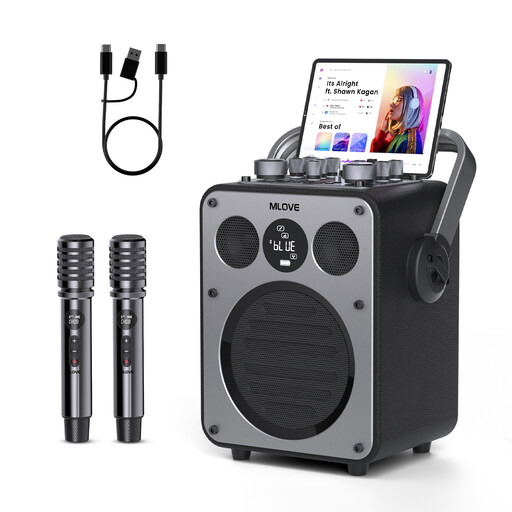
Why it stands out: With 200W under the hood, the Rangers D5 is built for events. Its three-speaker audio system (one subwoofer and two tweeters) delivers powerful, immersive sound. Mounted on wheels with a telescopic handle, it combines the power of a fixed system with the convenience of portability.
Key Features:
Who is it for? For party organizers, small associations, or anyone who wants a solution that packs a serious punch for their karaoke nights, whether at home, in the garden, or in a party hall.
Our selection highlights particularly versatile models, but the world of portable audio is vast. If you have specific needs or simply want to broaden your comparison, many other hidden gems exist.
To discover a wider range of PA systems and audio equipment, explore our mobile musical category.
1. What power level is needed for a home karaoke speaker? For a living room of 20 to 40 m? (215 to 430 sq ft), a power of 50 to 100W RMS is more than enough to create a great atmosphere without starting a war with the neighbours. Remember that sound quality (vocal clarity, bass presence) often matters more than raw power.
2. Can I plug an instrument into a karaoke speaker? Yes, most versatile models have an instrument input, usually a 6.35mm jack. This is perfect for plugging in an electro-acoustic guitar or a keyboard. Some, like the Mlove Rangers D5, even allow you to mix the sound of the instrument and the microphone at the same time.
3. How do the included wireless microphones work? The majority use UHF (Ultra High Frequency) or Bluetooth technology. In any case, the microphones and the speaker are already paired at the factory. You just need to turn everything on, and the connection is made automatically. Enjoy the freedom of movement without tripping over cables