In our all-digital age, paper has lost none of its superb appeal. For jotting down a quick idea, organising your day, or keeping a journal, a good pocket notebook remains an irreplaceable ally. Unlike a smartphone, it doesn't vibrate, never runs out of battery, and connects you directly to your thoughts, without any distractions.
But with the sheer number of options available, how do you find your way? Should you prioritise durability, paper quality, or an ultra-compact size? As the head of product selections, my mission is to guide you. This guide breaks down the essential criteria and presents our selection of the best notebooks for every use case. The goal: to help you find the ideal companion for your journey.
Our Tips for Choosing the Right Pocket Notebook
Before diving into our selection, let's review the key points for making an informed choice, whether you're an on-the-go professional, a student, or a creative at heart.
1. Size: A Matter of Portability and Space
Size is the first criterion. A pocket-sized notepad must be able to slip easily into a jacket pocket, handbag, or satchel. The two most common sizes are:
- The 9?x?14?cm size: This is the quintessential pocket size. Extremely compact and lightweight, it's ideal for quick notes, lists, or fleeting thoughts. It's the preferred choice for those who want a small notebook always within reach.
- The A6 size (10.5?x?14.8?cm): Slightly larger, the A6 lined notebook offers superior writing comfort while remaining highly portable. It's better suited for those who want to write longer paragraphs, make sketches, or use it as a compact personal diary.
2. Paper Quality: Writing Comfort Above All
The paper weight, expressed in grams per square metre (g/m?), determines its thickness and its ability to absorb ink without it bleeding through the page.
- 80?g/m? paper is standard but can be a bit thin for fountain pens.
- 90?g/m? or 100?g/m? paper offers a significantly superior writing experience. More opaque and smoother, it prevents ink from feathering, allowing you to use both sides of the sheet without any issues. A detail that makes all the difference in daily use.
3. Cover and Binding: Durability and Practicality
Essential for protecting your notes, the cover comes in two main types. A hardcover notebook is more robust and provides a stable surface for writing while standing, making it an excellent travel notebook. A softcover will be lighter and more flexible.
The binding also plays a role in practicality:
- Staple-stitched binding: Flexible and lightweight, it's common on the thinnest notebooks.
- Integral binding (sewn or glued): Its main advantage is a perfect lay-flat (180°) opening, which offers maximum writing comfort across the entire double-page spread.
Recommended Pocket Notebooks
After hours of testing and note-taking, here are the models that caught our attention for their quality, practicality, and excellent value for money.
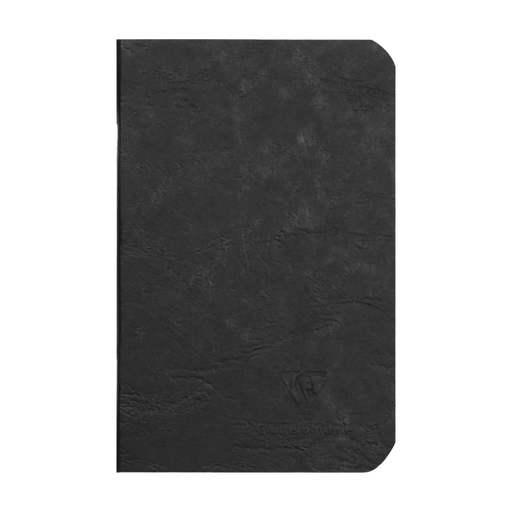
- Why it stands out: With its cover that mimics the grain of leather and its French manufacturing, this notebook is a timeless classic. A beautiful object that is as pleasant to look at as it is to use.
- Advantages:
- Ultra-portable size: Its 9?x?14?cm dimensions are perfect for slipping into any pocket.
- Superior quality paper: The 96 pages are made of PEFC-certified 90?g/m? Clairefontaine velvety vellum paper, offering a perfect glide and excellent opacity.
- Durable cover: The pulp-dyed card with a grained texture stands up well to daily wear and tear.
- Flexible binding: The stitched binding gives it good flexibility.
- Who is it for? For purists who appreciate beautiful objects and are looking for a discreet and effective pocket-sized notepad to capture their ideas on the go.
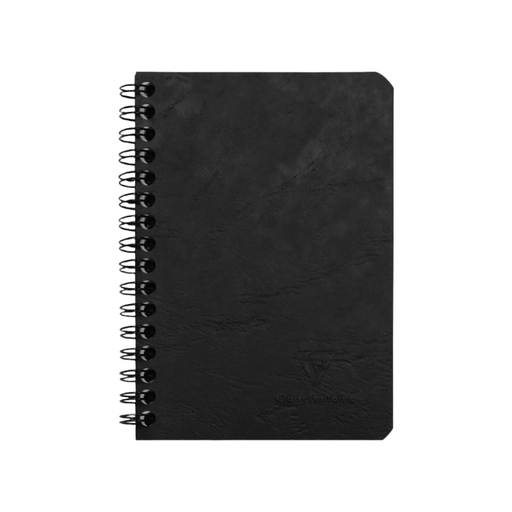
- Why it stands out: Following the same design cues as the collection, this model is distinguished by its integral binding. This design allows for a completely flat (180°) opening, a major advantage for those who like to use the entire surface of the page without being hindered by the curve of the notebook.
- Advantages:
- Lay-flat opening: Ideal for writing or drawing comfortably across both pages.
- Premium Clairefontaine paper: It features the same 90?g/m? velvety vellum paper as the stitched model.
- Increased durability: The hardcover and sewn binding make it a robust companion for intensive use.
- Slightly more pages: It contains 100 pages to record even more notes.
- Who is it for? For meticulous users, journaling enthusiasts, or creatives who need a sturdy travel notebook and an unrestricted writing space.
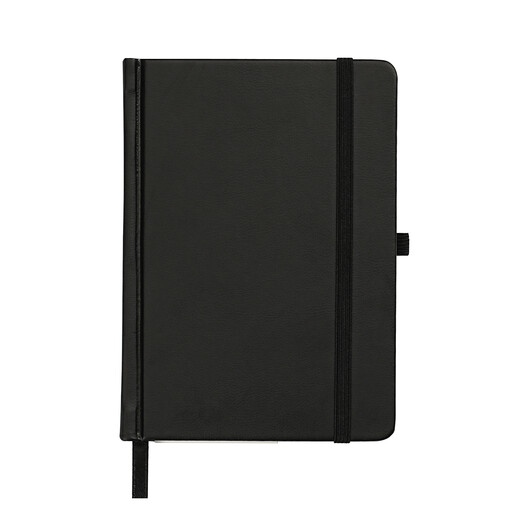
- Why it stands out: This notebook is an all-in-one solution designed for organisation. It integrates practical features that make it more than just a notebook: it's a true portable productivity tool.
- Advantages:
- Integrated accessories: It comes equipped with a ribbon bookmark, an elastic closure, and a pen loop. Everything has its place.
- Thick paper: The 80 sheets (160 pages) are made of 100?g/m? offset paper, ensuring excellent ink handling.
- Practical A6 size: A good compromise between portability and writing surface area.
- PU hardcover: The hardcover notebook offers good protection and a professional look, available in several colours.
- Who is it for? For organised individuals, professionals, and students looking for a functional A6 lined notebook for structured note-taking, planning, or use as a personal diary.
Looking for Other Options?
Our selection covers the most common needs with high-quality products. If you haven't found what you're looking for or if you need more specific materials for your creative projects, other options are available to you.
Discover our wider collection, including options like black paper, to unleash your creativity.
Frequently Asked Questions
What is the difference between an A6 size and a 9?x?14?cm pocket notebook?
An A6 notebook measures 10.5?x?14.8?cm, while a standard pocket notebook measures about 9?x?14?cm. Although the difference seems minimal, the 9?x?14?cm size is noticeably narrower, making it easier to slip into a trouser or shirt pocket. The slightly wider A6 size offers a more comfortable writing surface and fits perfectly in a bag or satchel.
Why is paper weight important for a small notebook?
The weight directly influences the quality of the writing experience. Low-weight paper (less than 80?g/m?) is likely to let ink bleed through, making the back of the page unusable. For a small notebook intended for daily use, a paper of 90?g/m? or more is therefore highly recommended. It ensures smooth writing, without smudging, and better page durability.
Is a hardcover notebook more suitable for a travel notebook?
Yes, in most cases. A hardcover notebook offers better protection against the bumps, folds, and moisture you might encounter while travelling. Furthermore, its rigidity provides a stable writing surface, allowing you to take notes comfortably even without a table or desk nearby, which is a significant advantage for a travel notebook.


