
Livraison le jour même ou le lendemain

Qualité garantie

Débloquez vos offres de bienvenue: Livraison GRATUITE | Jusqu'à -80 % | 30 jours d'essai gratuits à JoyPlus
Téléchargez l'application
Finding the right PLA filament for your 3D printer can be overwhelming. With a multitude of materials, finishes, and technical specifications, it's easy to get lost. This guide is here to cut through the noise and help you choose the perfect filament for your 3D printing projects, whether you're a beginner or a seasoned user. We'll break down the essential criteria and present our top picks to help you make the right choice with confidence.
Before we get to our selection, let's review the key points that will guide your decision.
Choosing the material is the first and most crucial step. PLA filament (Polylactic Acid) is the most popular, and for good reason. It's easy to print, has minimal warping, and is made from renewable resources like corn starch, making it more eco-friendly. It's the perfect material for prototypes, decorative objects, and parts that won't be subjected to high mechanical or thermal stress.
PETG filament (Polyethylene Terephthalate Glycol) is an excellent alternative. It combines the ease of printing of PLA with much better mechanical, thermal, and chemical resistance, bringing it closer to the properties of ABS. If you need to create a durable 3D filament for functional parts, enclosures, or objects intended for outdoor use, PETG is the clear choice.
The vast majority of consumer 3D printers use 1.75 mm diameter filament. It's therefore crucial to check compatibility with your machine before any purchase. As for weight, the 1 kg filament spool is the most common format. It offers an excellent price-to-quantity ratio and prevents you from running out of material in the middle of a long print.
The finish of your print can make all the difference. Standard PLA has a slightly glossy appearance, typical of plastic. For a more professional and artistic look, matte PLA is an excellent option. Its non-reflective surface has a knack for hiding layer lines, giving your creations a smoother, more unified appearance.
To help you turn your ideas into objects, we've selected three filaments that meet very different needs.
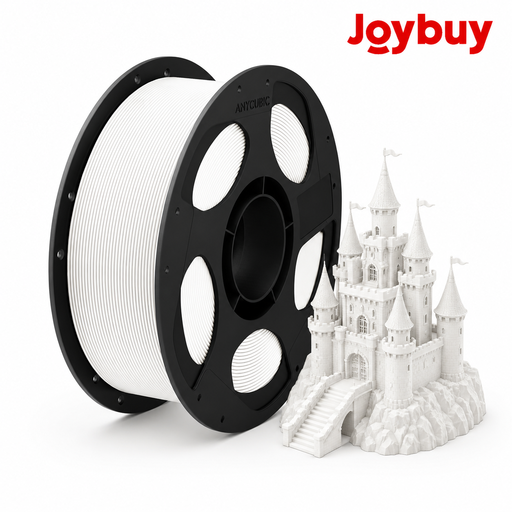
Why it stands out: This filament is a reliable choice for a multitude of applications. Designed for smooth extrusion and excellent layer adhesion, it significantly reduces the risk of failed prints. Its low odour makes it more pleasant to use in a living space or office.
Advantages:
Who is it for? Beginners looking for an easy-to-master filament, as well as experienced users needing a reliable material for rapid prototyping and creating decorative models.
Important Safety Instructions:
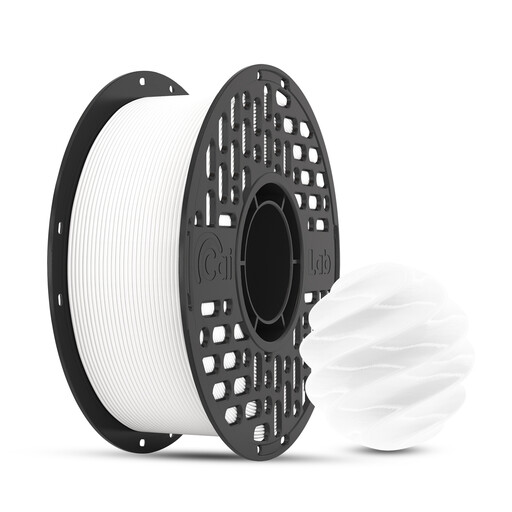
Why it stands out: CaiLab's PETG is an excellent compromise between the toughness of ABS and the ease of printing of PLA. It is designed to produce durable, impact-resistant, and heat-resistant parts, while maintaining excellent dimensional stability during printing.
Advantages:
Who is it for? Makers, DIY enthusiasts, and professionals who need to create functional parts, mechanical components, or everyday objects that must withstand moderate stress.
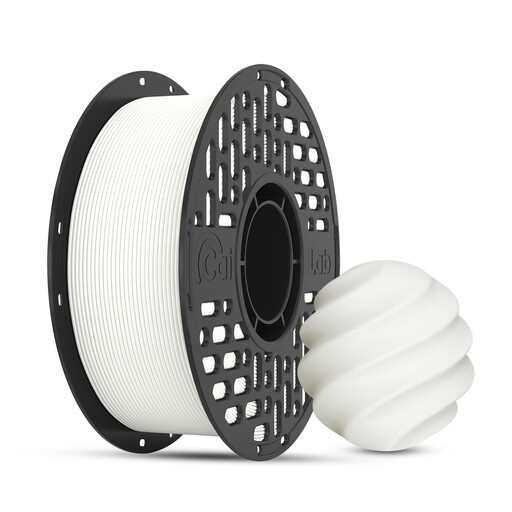
Why it stands out: This filament stands out for its highly sophisticated matte finish. According to CaiLab, its formula has been specially designed to hide layer lines, offering a particularly high-quality result. It is the preferred choice for projects where aesthetics are paramount.
Advantages:
Who is it for? Creators, designers, and artists looking to produce objects with a polished visual finish: figurines, architectural models, decorative items, etc.
If you haven't found what you're looking for in our selection, or if you're specifically searching for a white filament in other materials or from other brands, we've got you covered. Explore a wider range to find the perfect fit for your next creation.
? Discover our entire white PLA filament category
1. What is the difference between PLA and PETG filament?PLA is easier to print, more rigid, and warps very little, making it the champion for decorative objects and prototypes. PETG, on the other hand, is more flexible, more durable, and has better resistance to heat and chemicals. It is therefore perfect for functional parts subjected to stress.
2. How do I properly store a spool of PLA filament? PLA is hygroscopic, meaning it absorbs moisture from the air, which can ruin your prints (causing bubbles, a grainy surface, or brittle filament). To best preserve it, store your 1 kg spool in an airtight bag or box with a few packets of silica gel to absorb moisture.
3. Is PLA filament truly biodegradable? In theory, yes, but it's more complicated in practice. PLA is considered biodegradable, but only under industrial composting conditions (high heat and humidity), which are not found in a garden composter or in nature. To dispose of it, it's best to follow local plastic recycling guidelines.