Pickled radish is a staple in many Asian cuisines. It brings that crunchy, tangy, or spicy touch that elevates any dish. But with the vast array of options—from Japanese takuan to Korean kkakdugi—it can be challenging to navigate the choices and select the right ingredient.
This guide is here to help you make sense of it all and choose the perfect product, whether you're preparing sushi, a Korean barbecue, or a simple bowl of rice.
By our product experts
How to Choose the Right Pickled Radish for Your Needs??
To find the perfect pickled radish, a few simple criteria will help you sort through the options and find the ideal product for your kitchen.
1. Origin for Flavour?: Japan, Korea, or China??
Each country has its own recipe, which directly influences the radish's taste and use.
- Japanese Pickled Radish (Takuan)?: Typically bright yellow, takuan is mild, slightly sweet, and tangy. Its crunchiness makes it an excellent choice as a sushi radish (in maki rolls) or as a side dish in bento boxes.
- Korean Radish Kimchi (Kkakdugi)?: Cut into cubes and fermented with chilli powder (gochugaru), garlic, and fish or shrimp sauce, kkakdugi is spicy, tangy, and packed with flavour. It's an essential banchan (side dish) on the Korean table.
- Chinese Pickled Radish?: Chinese varieties are very diverse. They can be salty, spiced with chilli oil, or sweet and savoury. They are often served as an appetiser or to accompany rice porridge (congee).
2. The Cut?: Whole, Sliced, or Diced??
The cut is also a key factor, chosen based on how you plan to use it.
- Whole?: Ideal if you want to control the thickness of your slices, for example, for custom kimbap or maki rolls.
- Sliced or Diced?: Ready to use, this format is perfect for a quick Asian side dish, to garnish a noodle bowl, or to be mixed directly into a salad.
3. The Ingredients?: With or Without Additives??
A quick look at the ingredient list can be very revealing. Some pickled radishes, particularly takuan, use a colouring agent (like E101, or riboflavin) to achieve their characteristic yellow hue. Sweeteners (E951, E950) may also be present to balance the acidity. This is not unusual, but their presence may guide your choice depending on your preferences.
Our Top Pickled Radish Recommendations
Here is our selection. We have chosen a few products that each meet a specific need.
Obento Whole Pickled Radish (Takuan)

- Why it stands out?: This whole radish offers great flexibility. Its crunchy texture and mild, refreshing flavour are typical of traditional Japanese pickled radish.
- Highlights?:
- Cut?: Whole, to be sliced as needed.
- Texture?: Firm and crunchy.
- Flavour?: Mild and tangy, not spicy.
- Use?: Ready to eat, ideal as a sushi radish, for kimbap, and in bento boxes.
- Who is it for???: Home cooks or professional chefs who want to prepare authentic Japanese dishes and have full control over how their ingredients are cut.
Wu Jiang Crisp Radish
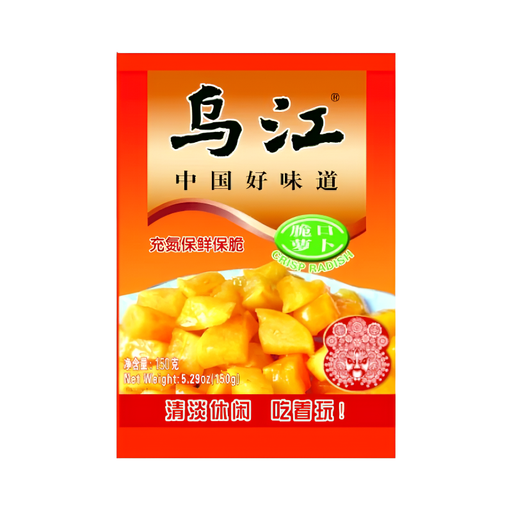
- Why it stands out?: This version of Chinese pickled radish is seasoned with rapeseed oil and chilli, offering a spicy and savoury flavour profile that's a departure from the ordinary.
- Highlights?:
- Flavour?: Bold and spicy, with notes of garlic and spices.
- Texture?: Very crunchy.
- Format?: 150g packet, convenient for one meal.
- Use?: Ready to use, perfect as an Asian side dish with rice, noodles, or porridge.
- Who is it for???: Those who enjoy spicy flavours and are looking for a quick condiment to liven up their everyday meals.
Delief Diced Radish Kimchi (Kkakdugi)
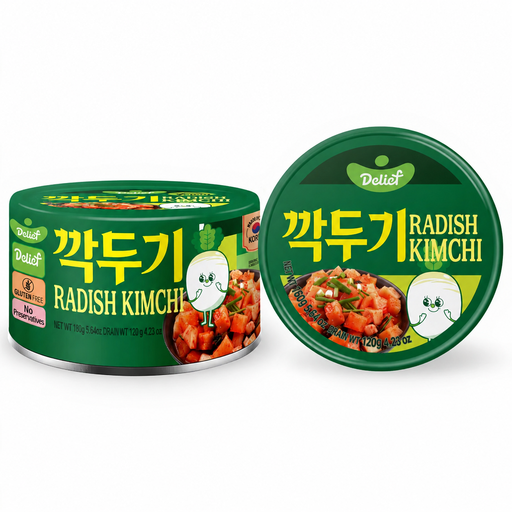
- Why it stands out?: This product captures the authentic flavour of Korean radish kimchi in a convenient can. The cubes are pre-cut and marinated in a traditional blend of chilli, garlic, and shrimp extract.
- Highlights?:
- Authenticity?: Traditional Korean recipe for a true kkakdugi taste.
- Format?: Diced and canned for a long shelf life and easy use.
- Ingredients?: Contains shrimp extract for a deeper umami flavour.
- Use?: Ideal as a banchan to accompany a Korean barbecue, a bibimbap, or simply a bowl of rice.
- Who is it for???: Fans of Korean cuisine looking for a spicy, fermented, ready-to-serve side dish without the prep work.
Looking for Other Options??
Our selection is, of course, just a starting point. If you want to explore other varieties, cuts, or flavours to find the pickled radish that will elevate your next recipe, feel free to browse our complete collection.
? Discover our full range of pickled radishes
Frequently Asked Questions (FAQ)
What is takuan??
Takuan is the Japanese name for pickled daikon radish. It is traditionally sun-dried then pickled in a mixture of salt, rice bran, and sometimes sugar. Its distinctive yellow colour comes from either gardenia fruit or a food colouring like riboflavin. It is prized for its crunchy texture and sweet-and-sour flavour.
How should I store pickled radish after opening??
Once opened, it is best to store pickled radish in an airtight container in the refrigerator. This helps preserve its texture and flavour. For optimal freshness, it should be consumed within a few days of opening.
Is pickled radish always spicy??
Not at all! The flavour depends entirely on the recipe. Japanese pickled radish (takuan) is almost always mild and sweet-and-savoury. In contrast, Korean radish kimchi (kkakdugi) is spicy by definition due to the use of chilli powder. Chinese varieties can be either. Check the product description to avoid any surprises.


