
Livraison le jour même ou le lendemain

Qualité garantie

Débloquez vos offres de bienvenue: Livraison GRATUITE | Jusqu'à -80 % | 30 jours d'essai gratuits à JoyPlus
Téléchargez l'application
Switching to an electric toothbrush is a significant step up for your oral hygiene. If you're reading this, the Philips Sonicare technology has likely piqued your curiosity. But with an overwhelming array of models, features, and prices, it can be difficult to navigate.
This guide is here to help you make sense of it all. Our mission?is to break down the features that truly matter and present a curated selection of the best models for 2026, all without the unnecessary marketing jargon. Let's dive in and help you find the toothbrush that's right for you.
Before we unveil our favourite models, let's review the essential criteria for making the right choice. The sonic toothbrush technology, Philips' signature, uses ultra-high-frequency vibrations (up to 62,000 brush movements per minute). These vibrations create micro-bubbles that deliver a deep clean, even in the hardest-to-reach areas.
Because every mouth is unique, Sonicare models offer different programs tailored to specific needs?:
Some models also allow you to adjust the intensity (low, medium, high) for customised comfort.
Far from being mere gadgets, these technological innovations are designed to guide you. The pressure sensor is arguably the most useful?: it alerts you with a vibration or a light signal if you're pressing too hard, thereby protecting your enamel and gums.
Other features like the SmarTimer (which ensures a 2-minute brushing time) and the QuadPacer (which prompts you to switch quadrants every 30 seconds) coach you into a professional routine. For the more tech-savvy, a connected toothbrush linked to its mobile app offers detailed tracking and personalised tips to perfect your technique.
For travellers or those who are often on the move, battery life (typically 2 to 3 weeks) and the inclusion of a travel case are key considerations. Some cases even allow you to charge the toothbrush via a USB port?: a game-changing detail that ensures you never run out of battery.
We have selected three key models from the Philips Sonicare range, each catering to a specific user profile.
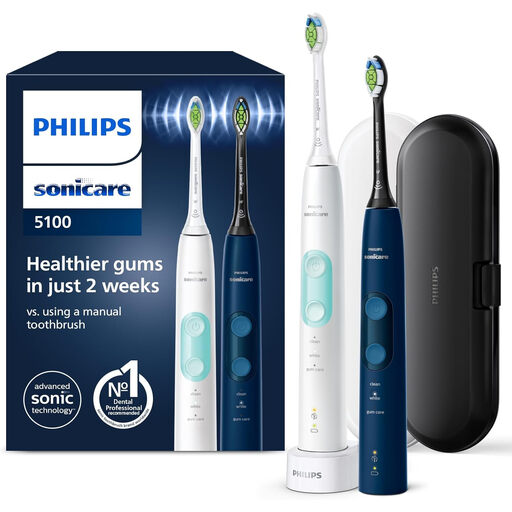
Why It Stands Out: The Philips Sonicare ProtectiveClean 5100 strikes the perfect balance. Sold as a two-pack, it's ideal for a couple or family looking to make the switch to electric. It gets straight to the point?: effectiveness and protection, without the fluff.
Key Features:
Who Is It For? Those looking for the best feature-to-price ratio and who want to share the Sonicare experience. A smart choice for a clean that is far more effective than a manual brush.
See the Philips Sonicare ProtectiveClean 5100
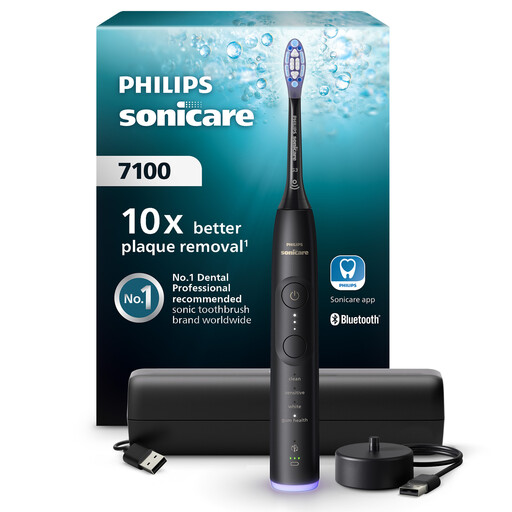
Why It Stands Out: The Philips Sonicare 7100 is a connected toothbrush that turns brushing into an interactive experience. Through the Philips Sonicare app, it tracks your habits and guides you in real-time to ensure no area is missed. With its advanced customisation, it becomes a true oral health coach.
Key Features:
Who Is It For? Tech enthusiasts and anyone who wants to perfect their brushing technique with precise feedback. It's the ideal tool for achieving specific goals, such as improving gum health.
See the Philips Sonicare Series 7100
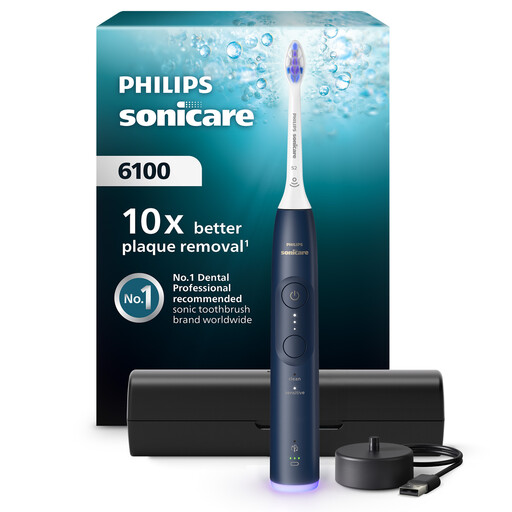
Why It Stands Out: The Philips Sonicare 6100 is specifically designed for users with sensitive teeth and gums. It comes with the S2 Sensitive brush head, whose ultra-soft bristles ensure an effective yet gentle clean. It combines performance with care, a promise that's often hard to keep.
Key Features:
Who Is It For? Ideal for people with sensitive gums, those prone to bleeding, or anyone who finds conventional electric brushes too aggressive. This model delivers all the effectiveness of sonic technology, with added gentleness.
See the Philips Sonicare Series 6100
Wellness is a holistic concept. After an effective brushing session, why not treat yourself to a moment of relaxation??
Discover our selection of tea makers to prepare your favourite infusions and perfect your ritual.
Explore our range of tea makers
1. What's the difference between a sonic and an oscillating-rotating toothbrush? Sonic technology, used by Philips Sonicare, vibrates the brush head at a very high frequency. This rapid movement creates a dynamic cleaning action that drives the water and toothpaste mixture between teeth and along the gumline. In contrast, oscillating-rotating technology uses a small, round brush head that rotates and pulsates. The choice between the two largely depends on personal preference and the sensation in the mouth.
2. How often should I replace my Philips Sonicare brush head? It is recommended to replace the brush head every three months, or as soon as the bristles begin to fray. Worn bristles are significantly less effective and may no longer clean properly. Many Sonicare models, like the 6100, feature BrushSync technology, which automatically alerts you when it's time for a replacement.