
Livraison le jour même ou le lendemain

Qualité garantie

Débloquez vos offres de bienvenue: Livraison GRATUITE | Jusqu'à -80 % | 30 jours d'essai gratuits à JoyPlus
Téléchargez l'application
Whether it's for the back-to-school season, stocking your office, or starting a creative project, choosing the right writing tools is essential. Yet, faced with a jungle of options, it's easy to end up with a disappointing product. A highlighter that bleeds through the page, a felt-tip whose point frays after a few scribbles, an ink that fades in a matter of weeks… We've all been there. This guide is here to help you decode the labels, avoid marketing traps, and finally find the perfect tool for your needs.
Before diving into the technical details, let's review the most common frustrations that can turn writing into a nightmare.
To avoid falling into these traps, two elements must be examined closely: the type of ink and the shape of the tip.
The ink is the heart of your tool. Its properties determine its finish, its use, and its compatibility with different surfaces.
The tip gives your stroke its character. Choosing the right one is essential to achieve the desired result.
No endless catalogue here. Instead, we've unearthed three gems that meet specific needs, always keeping our standards of quality and durability in mind.
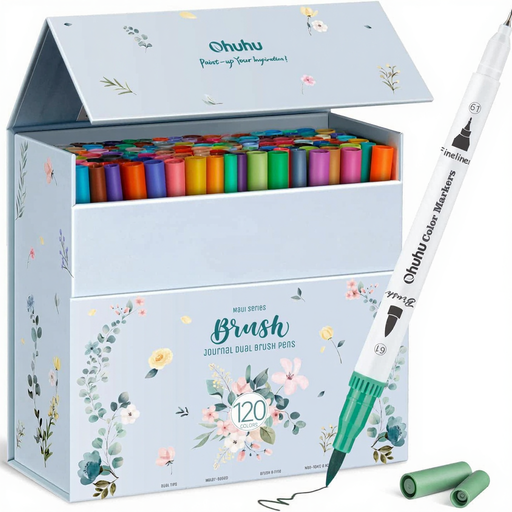
Why we recommend it: This kit is a true pocket-sized studio for anyone passionate about drawing, colouring, or calligraphy. The dual tip (brush and fine) offers impressive versatility, while the wide palette of 120 numbered colours allows you to tackle ambitious projects with subtle gradients.
Its water-based ink is designed to blend colours without bleeding through the paper (provided you use a suitable paper weight). No more " ghosting "! The tips, meanwhile, are built to withstand hours of creation.
Versatile dual tip: a flexible brush tip (1-6 mm) for fills and calligraphy, and a fine tip (0.4 mm) for details. The icing on the cake: the set includes replacement tips, a rare and highly appreciated guarantee of longevity.
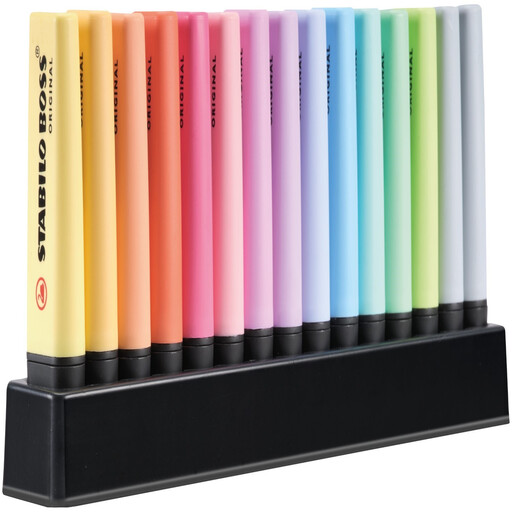
Why we recommend it: For organising notes, highlighting documents, or decorating a planner, the Stabilo BOSS is a classic for a reason. Its pastel shades, which are easier on the eyes than harsh fluorescent colours, ensure perfect readability without visual fatigue.
Stabilo's famous anti-dry-out technology delivers on its promise: you can leave the cap off for up to 4 hours. Say goodbye to markers headed for the bin after a single moment of carelessness! Its water-based ink is designed not to bleed through most papers.
Reliability and performance: Its endurance is legendary (up to 375 m of highlighting advertised) and its robust chisel tip lets you switch between a wide (5 mm) and fine (2 mm) line. The included desk stand is a practical bonus for keeping your workspace tidy.
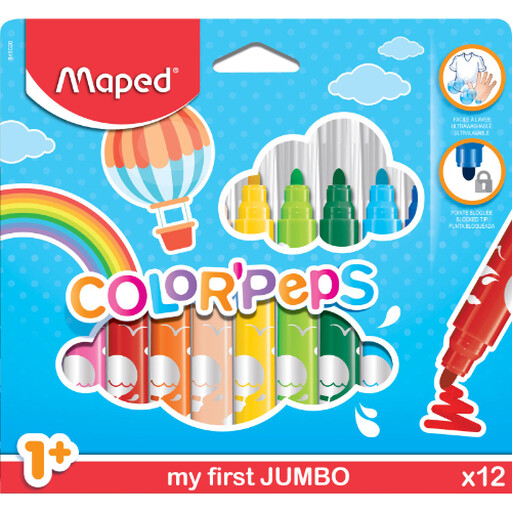
Why we recommend it: Designed for toddlers (from 1 year old), these "jumbo" sized felt-tip pens are perfect for their little hands. Here, safety is king: washable ink and an ultra-durable tip make them the peace-of-mind choice for parents.
Maped tackles two major problems: the tip is locked to prevent it from being pushed in, even under the most enthusiastic pressure. Furthermore, the "ultra-washable" ink comes off skin and most textiles effortlessly. No more stain drama!
Safety and durability: The wide, locked tip is designed to withstand heavy use. The jumbo size and ergonomic triangular shape promote a good grip for toddlers.
We have compiled a complete and up-to-date list of products that meet our strict selection criteria and current safety standards.
Most manufacturers recommend storing them horizontally. This allows the ink to feed the tip evenly and prevents it from pooling on one side. And the most basic but essential tip: always recap them immediately after each use to prevent the ink from drying out.
Water-based ink is perfect for standard paper, colouring, and everyday use, as it generally doesn't bleed through pages. Alcohol-based ink, the star of art markers, dries faster and allows for colour layering, but it requires thicker or coated paper (like Bristol board) to avoid bleeding through.
Acrylic markers are true Swiss Army knives. Their opaque, paint-like ink adheres to a host of smooth or porous surfaces: wood, metal, ceramic, glass, stone, canvas, plastic, and more. A word of advice: always do a small test on an inconspicuous area before you start, as adhesion can vary depending on the surface finish.