
Livraison le jour même ou le lendemain

Qualité garantie

Débloquez vos offres de bienvenue: Livraison GRATUITE | Jusqu'à -80 % | 30 jours d'essai gratuits à JoyPlus
Téléchargez l'application
Choosing a pen might seem simple, even trivial. Yet, finding the perfect one—the one that truly fits your needs—can often feel like an uphill battle. Drowned in marketing promises and a massive range of options, it's easy to end up with a product that's a letdown. The wrong writing tool is a surefire way to ruin a creative project or turn simple note-taking into a chore. To avoid disappointment, let's review the common pitfalls to avoid.
Who hasn't cursed at ink that smudges or bleeds through the page, ruining a brand-new notebook or drawing in the process? Another classic problem: a tip that flattens or frays after just a few hours, sending a fine-point marker straight to the trash. And what about ergonomics sacrificed for the sake of design, leading to hand cramps and fatigue? It's a nightmare for students, professionals, and artists who spend hours writing or drawing.
This guide is here to arm you with the knowledge to decipher technical specs and sort through the options. The goal: to make your next purchase the right one.
Forget the flashy packaging. To make the right choice, focus on a few objective technical criteria. Here are the points to examine closely.
This duo defines 90% of your writing or drawing experience.
Often overlooked, comfort is essential. A barrel that's too thin, too heavy, or made of a slippery material can quickly turn writing into a torture session. Models with a rubber grip or a triangular barrel aren't just gimmicks: they promote a proper hold and reduce fatigue. The quality of the barrel and mechanism materials (for retractable models) directly impacts the product's lifespan. A cap that doesn't close properly or a flimsy clip are tell-tale signs of poor quality.
Instead of an endless catalog, we've selected three standout products, each tailored for a specific use. This makes it easy to picture which one is right for you.
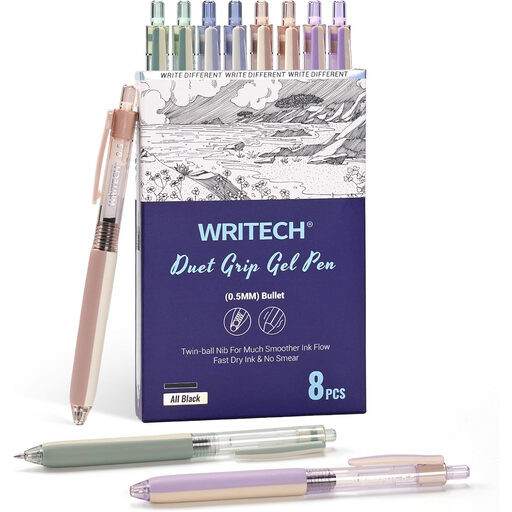
Why we chose it: The ideal companion for students and professionals who fill pages all day long. Its triangular barrel encourages a proper grip, significantly reducing fatigue during long sessions. The added perk? Its silent click mechanism is a real relief in libraries or open-plan offices.
Its gel ink dries almost instantly, ending the nightmare of smudges (lefties, we're thinking of you!). Its thoughtful ergonomics directly tackle the problem of fatigue.
The combination of a quiet click and a fine 0.5mm tip delivers writing that is smooth, precise, and suitable for any situation.
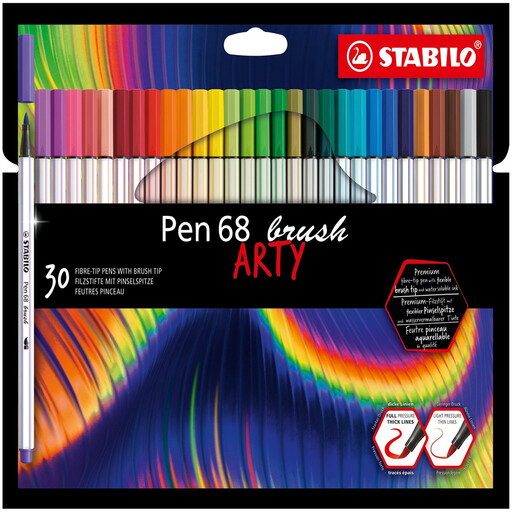
Why we chose it: The perfect entry point into **lettering**, adult coloring, or illustration. This **marker set** offers a generous color palette and, most importantly, a flexible brush tip that makes it fun to vary line thickness, effortlessly creating those famous thick and thin strokes.
Its brush tip is surprisingly sturdy and won't fray prematurely. The water-based, watercolor-friendly ink is easy to control and won't bleed through decent-weight paper.
Its greatest strength is versatility. A single box lets you try a multitude of creative techniques, from simple drawing to watercolor effects.
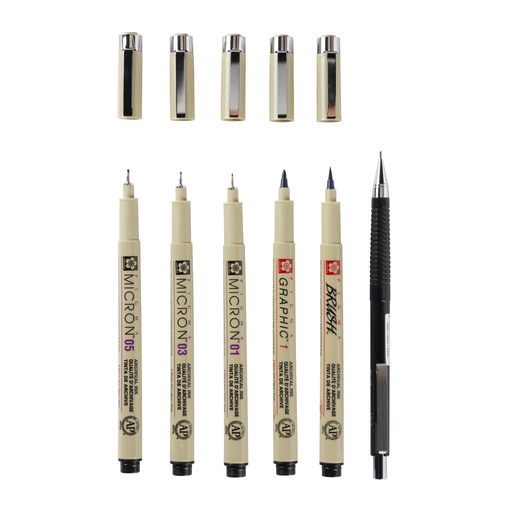
Why we chose it: The industry standard, favored by illustrators, architects, and manga artists. This set of **drawing pens** includes several calibrated tips of different sizes, which are essential for highly detailed work. Its Pigma ink is legendary for its archival quality.
The pigment ink doesn't smudge, is waterproof, and won't budge an inch if you go over it with alcohol markers or watercolor. The tips are designed to last and ensure a consistent line.
The archival quality of the Pigma ink (pH-neutral, lightfast, and waterproof) is life insurance for your creations: they won't fade or deteriorate over time.
We've put together a complete selection of products that meet our quality criteria and current standards.
This is often caused by paper that is too lightweight. For alcohol markers or very liquid inks, aim for paper that is at least 120 g/m?. With watercolor brush pens, paper specifically designed for watercolor (around 300 g/m?) is ideal. Pro tip: always slip a scrap sheet underneath to protect the next page.
It's all in the ink. Gel pens use a thick, opaque ink—a water-based gel loaded with pigments. The result is vibrant colors, but sometimes a slightly slower drying time. Rollerball pens use a much more liquid ink that saturates the paper fibers more deeply. The glide is unparalleled, but watch out for the risk of bleeding if the ink doesn't dry very quickly.
The golden rule for most markers, especially dual-tip models or brush pens, is to store them horizontally. This ensures the ink is evenly distributed within the barrel and prevents one of the tips from drying out. And of course, the basic habit: always cap the pen tightly right after use. You should hear a click.