
Livraison le jour même ou le lendemain

Qualité garantie

Débloquez vos offres de bienvenue: Livraison GRATUITE | Jusqu'à -80 % | 30 jours d'essai gratuits à JoyPlus
Téléchargez l'application
Finding the perfect pen for your bullet journal, sketches, or notes can turn an ordinary task into a moment of pure creative joy. But faced with a maze of options—fine-tipped pens, highlighters, gel ink pens—it's easy to feel overwhelmed. Smudging ink, a crushed tip, or colour that bleeds through the page: these frustrations can quickly ruin your finest creations.
This guide is here to help you navigate the vast world of creative stationery. We'll review the essential criteria and present our selection of top picks, whether you're a student, an artist, or an organisation pro.
Before you settle on a model, let's review a few technical details that will make all the difference in your writing or drawing.
This is arguably the number one criterion. An ink that doesn't bleed through the paper is the top priority for notebook enthusiasts.
The shape and size of the tip define the line you'll create.
Opting for an assorted pen set is often a smart choice. It ensures perfect consistency in colour and ink quality. A set can offer a harmonious palette, like pastel highlighters, or a range of tip sizes to cover all your drawing needs.
Here are our current top picks, chosen for their performance and suitability for the needs of creatives and organisation addicts.
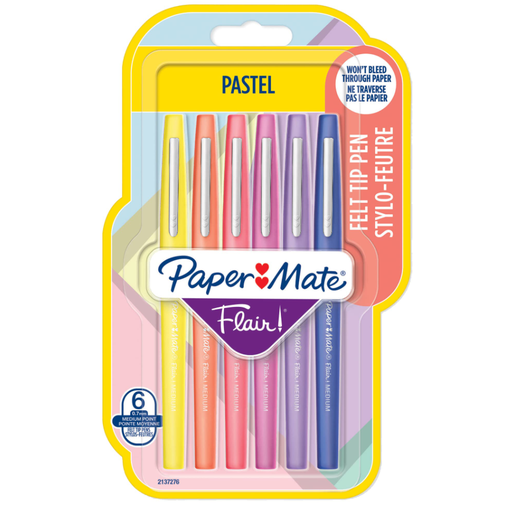
Why it stands out?: This pack of Paper Mate Flair pens combines the reliability of a classic with a trendy pastel colour palette. Ideal for adding a soft touch to your visual organisation without being harsh on the eyes, it's perfect for the office or a planner.
Advantages?:
Who is it for? Bullet journal enthusiasts and students who like to organise their notes with a harmonious yet discreet colour code. Their versatility also makes them excellent companions for daily office use.
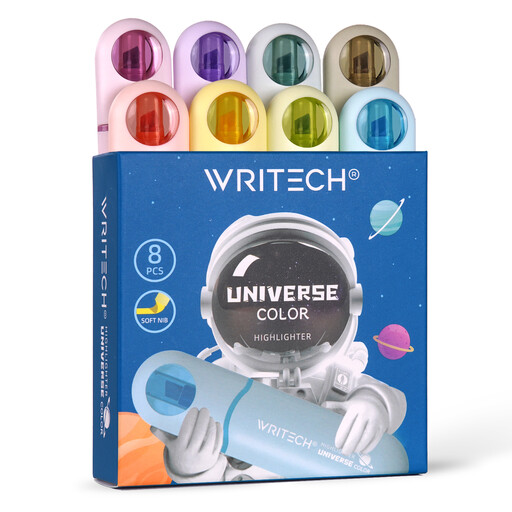
Why it stands out?: WRITECH highlighters stand out from the crowd with their flexible chisel tip and clever design. The tip's flexibility allows you to vary the line thickness with ease, while the flat body provides an excellent grip and prevents it from rolling off your desk. A smart touch!
Advantages?:
Who is it for? Students, researchers, and avid readers who heavily annotate documents, books, or planners and are looking for a tool that's as effective as it is comfortable.
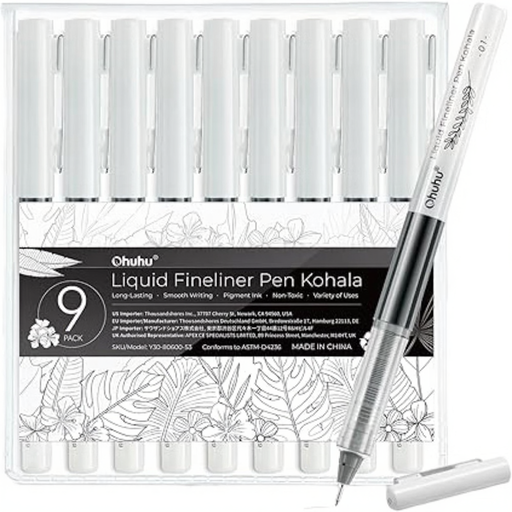
Why it stands out?: This set of Ohuhu black drawing pens is the all-in-one solution for artists and technical illustrators. It features a comprehensive range of tip sizes, from ultra-fine to a brush tip, all equipped with high-quality pigment ink.
Advantages?:
Who is it for? Artists, illustrators, architects, and calligraphy enthusiasts who require reliable drawing pens for precision work, outlining illustrations, or mixed media techniques.
Our selection is just a taste of what's possible. To explore an even wider range of writing instruments, notebooks, and accessories to bring your projects to life, take a look at our full collection.
Discover Our Full Pen and Paper Collection
Water-based ink, the most common type, uses soluble dyes. Ideal for everyday writing and colouring, it rarely bleeds through paper. Pigment-based ink, on the other hand, contains fine particles of colour. Once dry, it is resistant to water and light, making it perfect for artworks or important documents you want to preserve.
It's all about the pen-and-paper combination. For the pen, choose inks formulated to be no-bleed, such as water-based or certain quick-drying gel inks. For the paper, opt for a heavier weight: above 90?g/m?, most sheets provide a much better barrier against even the most stubborn inks.
For detail work, nothing beats a fine-tipped pen, also known as a fineliner. A tip of 0.3?mm or smaller is perfect for creating ultra-precise lines, delicate hatching, and flawless outlines. A set offering multiple sizes, like the Ohuhu set, will give you all the flexibility you need to play with line weights.