
Livraison le jour même ou le lendemain

Qualité garantie

Débloquez vos offres de bienvenue: Livraison GRATUITE | Jusqu'à -80 % | 30 jours d'essai gratuits à JoyPlus
Téléchargez l'application
Paper towels, also known as kitchen roll, are a staple in our kitchens. Yet, when faced with shelves overloaded with marketing promises, finding the perfect roll can feel like an uphill battle. Who hasn't cursed at a roll that tears at the slightest drop of water, or an "eco" size that disappears in the blink of an eye? To stop throwing your money (and your sanity) down the drain, it's crucial to know how to avoid marketing traps and focus on the criteria that truly make a difference.
First, let's review the most common mistakes people make when buying paper towels:
To make a smart choice, forget the packaging and focus on a few objective characteristics. They will help you evaluate the real performance and true cost of your paper towels.
A paper towel's ability to soak up liquids without disintegrating rests on two pillars: its ply count and its composition.
To find out if an offer is truly a good deal, especially for a bulk purchase, the calculation is simple:
Cost per sheet = Total package price / (Number of rolls × Number of sheets per roll)
This magic formula allows you to accurately compare a 4-pack of standard rolls with a 2-pack of "jumbo" rolls. You might be surprised: the biggest isn't always the most economical.
Beyond pure performance, certain options can genuinely simplify your daily life or align with your personal values:
To help you make your choice, we have selected products that meet different needs, based on the objective criteria discussed above.
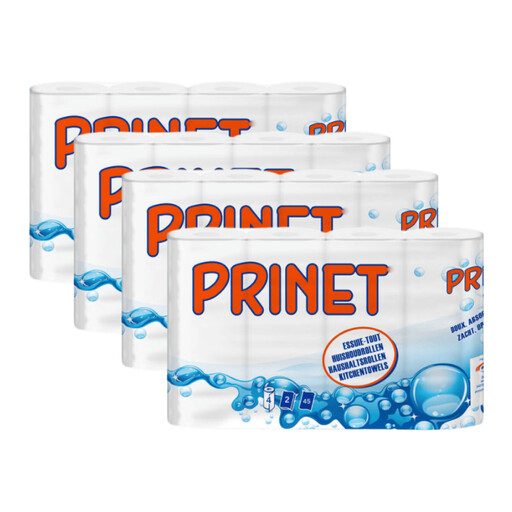
Why we recommend it: For families, buying in bulk often means savings. This 16-roll pack ensures a comfortable stock at a controlled unit cost, perfect for heavy daily use.
This XXL format offers a very competitive price per roll, far from the "small packs" that are often more expensive on a pro-rata basis.
An excellent quantity-to-price ratio for a versatile 2-ply paper that's suitable for all daily household tasks.
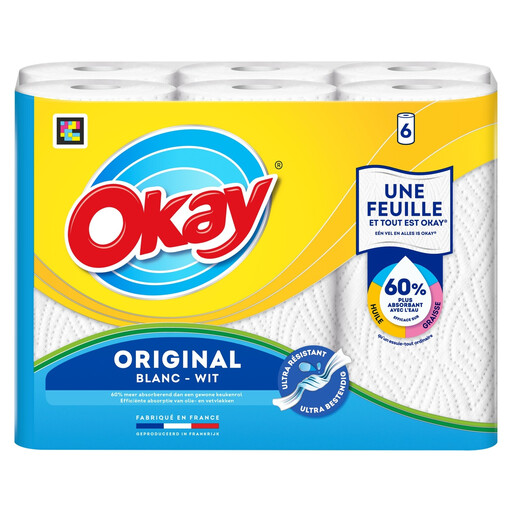
Why we recommend it: For those who swear by efficiency. An ultra-absorbent paper towel lets you tackle disasters in the blink of an eye and with fewer sheets, which proves economical in the long run.
The manufacturer (Essity) claims it's 60% more absorbent than a standard paper towel. This performance directly combats the waste caused by using multiple ineffective sheets.
Impressive absorption for maximum efficiency. Bonus: the sheets are advertised as compostable.
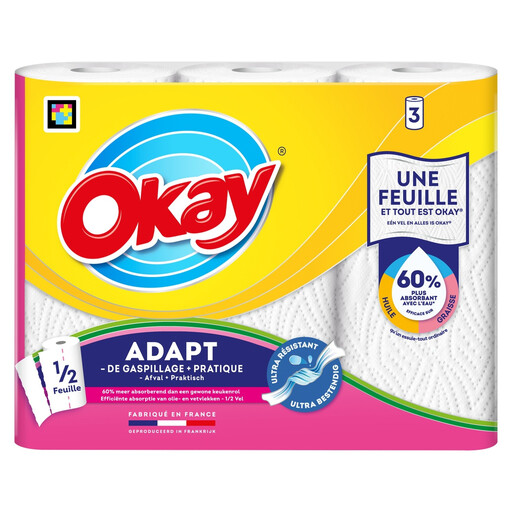
Why we recommend it: Perfect for those who want to cut down on waste in their daily routine. The half-sheet format lets you match the sheet size to the mess, an approach that's as economical as it is ecological.
This format tackles waste at its source by offering smaller perforated sheets. No more unrolling a full sheet for a single drop of coffee!
The half-sheet perforation for tailored use, combined with certified compostable sheets.
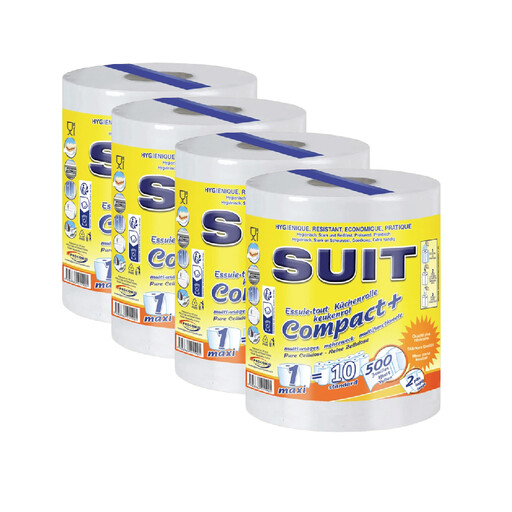
Why we recommend it: For small businesses, office kitchens, or large families, constantly changing the roll is a real headache. This ultra-compact format with 2000 sheets per roll is designed to last, and last.
It shatters the "jumbo roll" illusion by displaying an unambiguous sheet count. Calculating the cost-per-use becomes crystal clear, and inventory management a breeze.
Record-breaking longevity thanks to its 2000 sheets per roll, making it the choice for peace of mind and savings for heavy users.
We've compiled a complete selection of products that meet our selection criteria and current standards.
A 2-ply paper towel is made of two layers of paper, versus three for a 3-ply. The latter is therefore logically thicker, stronger, and more absorbent. It's best reserved for big messes or intensive cleaning. The 2-ply remains the versatile and economical choice for everyday use.
Yes, some paper towels, especially those made of pure cellulose wadding without chemical treatments, are compostable. Be sure to check for the "Compostable" label on the packaging. However, be careful: never compost sheets soiled with cleaning products, oil, or large amounts of grease. And most importantly, never flush them down the toilet! Unlike toilet paper, they do not disintegrate and can clog your pipes.
Don't just look at the package price. For a fair and unbiased comparison, divide the total price by the total number of sheets it contains (number of rolls × number of sheets per roll). This will give you the cost per sheet: the only reliable indicator for finding the best deal.