
Livraison le jour même ou le lendemain

Qualité garantie

Débloquez vos offres de bienvenue: Livraison GRATUITE | Jusqu'à -80 % | 30 jours d'essai gratuits à JoyPlus
Téléchargez l'application
Those long summer evenings that stretch on in the garden or on the patio… a true delight, often cut short by a lack of light. But does that mean you have to get tangled up in complex and costly electrical work just to see clearly? Not necessarily. There's a much simpler, more economical, and eco-friendly solution: the outdoor solar light.
The principle is simple: these self-contained lights store the sun's energy during the day to illuminate your evenings. Whether you're looking to create a soft, ambient atmosphere, secure a pathway, or mark a walkway, there's a model out there for you. Our guide is here to help you see things more clearly and make the right choice, without drowning you in technical jargon.
Before you dive in, let's review a few essential criteria. This is what will make the difference between a successful purchase and a long-term disappointment.
It all depends on what you want to do with it.
The brightness of a light is measured in lumens. The higher the number, the more intense the light. For ambient lighting, 10 to 50 lumens per light is sufficient. To light up a walkway or an entrance, aim for 100 to 300 lumens, or even more for security floodlights.
Battery life is just as crucial. It depends on the battery's capacity and the solar panel's efficiency. A good model should be able to last between 6 and 10 hours after a full day's charge. Make sure the product is designed to work even after overcast days.
Wireless outdoor lighting means exposure to the elements. The Ingress Protection (IP) rating indicates its level of resistance to dust and water.
To move from theory to practice, here are three products that caught our attention. Each meets a specific need, with a good balance of design, efficiency, and ease of installation.
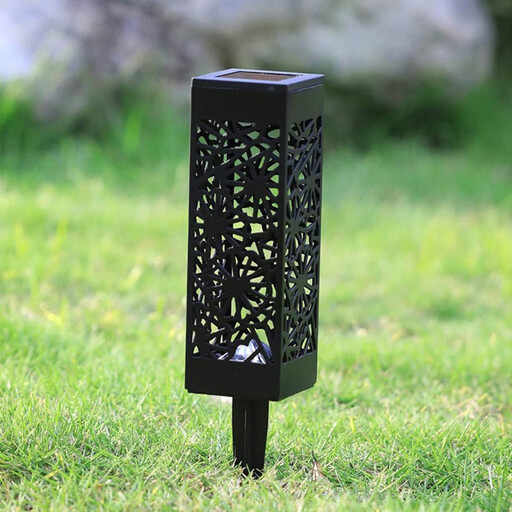
Why this model stands out: This set of solar stakes is distinguished by its cut-out design that projects elegant floral patterns onto the ground. It doesn't just illuminate: it decorates and transforms a simple path into a poetic scene at nightfall.
Key features:
Who is it for? Ideal for those looking to add a decorative touch and a warm atmosphere to their pathways, flower beds, or patio borders.
See the VIVREAL TYD-002 product
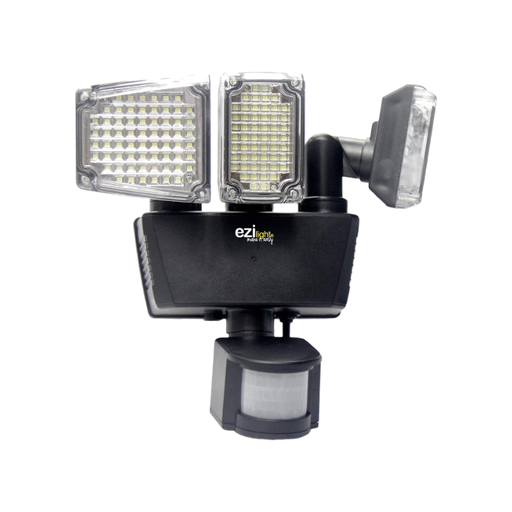
Why this model stands out: The EZIlight Solar Pro 3 is a modular and powerful security solution. Its three LED panels are fully adjustable, allowing you to direct the light precisely where you need it and cover a wide area with a single device.
Key features:
Who is it for? Perfect for homeowners wanting to secure high-traffic areas like entrances, garages, yards, or the sides of a house with powerful, responsive lighting.
See the EZIlight Solar Pro 3 product

Why this model stands out: This solar post cap light is an elegant and practical solution for illuminating the tops of fence or deck posts. Its main advantage is its versatility, thanks to several included bases that adapt to different post sizes (from 4x4 to 6x6 inches).
Key features:
Who is it for? For anyone with a fence, railing, or deck with posts who wants to turn them into functional and aesthetic light points.
See the LUTEC 2-piece solar pole cover light product
Our selection is just a glimpse, as the world of solar lighting is vast! If you're looking for other styles or more specific fixtures, feel free to explore our full collection.
Discover a wider range of Solar Garden Post Lights and find inspiration for all your outdoor design projects.
1. What brightness should I choose for good outdoor solar lighting? The required brightness depends on the use. For a decorative ambiance (stakes, string lights), 10 to 50 lumens is enough. To mark a pathway, opt for 50 to 150 lumens. For security lighting (wall light with a detector), a brightness of 300 to 800 lumens or more is recommended for a deterrent effect and optimal visibility.
2. Does a solar light work in winter or on cloudy days? Yes, but with reduced performance. Modern solar panels can capture energy even in overcast weather, but charging will be less efficient than in direct sunlight. The runtime will naturally be shorter in winter or during long periods of bad weather. Pro tip: always place your light where it will get the most direct and prolonged sunlight.
3. Is installing wireless outdoor lighting really simple? Absolutely. That's one of the main advantages of solar lighting. Most models, like stakes or bollards, require no tools: you just push them into the ground. For wall lights or post caps, installation is limited to securing a bracket with a few screws. No electrical connection is needed, making it a project within reach of any DIYer, even a beginner.