
Livraison le jour même ou le lendemain

Qualité garantie

Débloquez vos offres de bienvenue: Livraison GRATUITE | Jusqu'à -80 % | 30 jours d'essai gratuits à JoyPlus
Téléchargez l'application
Transforming your garden into an outdoor cinema for summer evenings, or your living room into a stadium for the World Cup... It's a dream scenario. But the project can quickly become a headache: which screen should you choose? How can you install it effortlessly? And most importantly, how do you get a great picture without breaking the bank?
Faced with a multitude of options, it's easy to feel lost. This guide is here to help. Our mission: to give you clear, practical advice to find the perfect outdoor projector screen for you, all without unnecessary technical jargon.
For a successful viewing experience, a few criteria deserve your attention. Here are the essential points to help you make the right choice.
Screen size is often the first thing that comes to mind. Popular diagonal sizes, like a 100-inch screen, offer a spectacular, immersive experience for an outdoor home theatre. Be careful, though—bigger isn't always better. Consider the space you have available and your viewing distance.
The 16:9 aspect ratio is the absolute standard today, whether for films or sports broadcasts. It guarantees perfect compatibility with modern projectors and helps you avoid those infamous black bars.
A portable projector screen should be simple to set up and take down. The most convenient models are those that include everything you need: ropes, hooks, and even adhesives. A foldable, wrinkle-free screen slips easily into a backpack or suitcase, making it ideal for holidays or evenings at a friend's house. Check that the mounting system is quick to set up; some models can be installed in less than five minutes.
The projection screen is the heart of your setup. For a sharp, bright image, opt for a thick screen made of polyester fibre. This type of fabric offers several advantages:
Here is our selection of models that tick all the boxes: versatility, image quality, and ease of use.
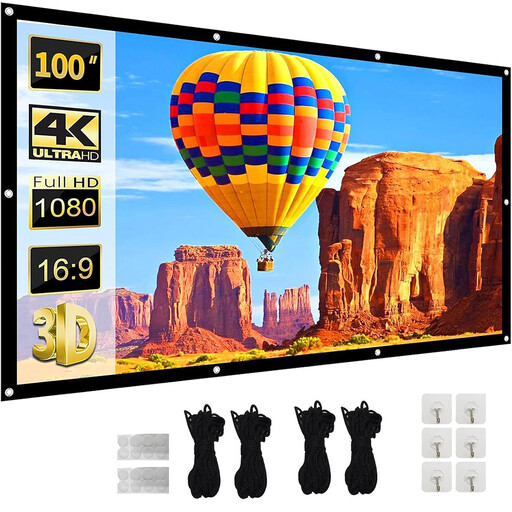
Why it stands out: This model is an excellent starting point for creating your home or outdoor cinema. Its polyester and "milk silk" fabric is thicker than average, ensuring excellent colour reproduction and a perfectly smooth surface. Designed as a foldable, wrinkle-free screen, it makes storage and transport incredibly simple.
Pros:
Who is it for? Ideal for families looking for a simple and effective solution for regular movie nights, whether in the garden or the living room.
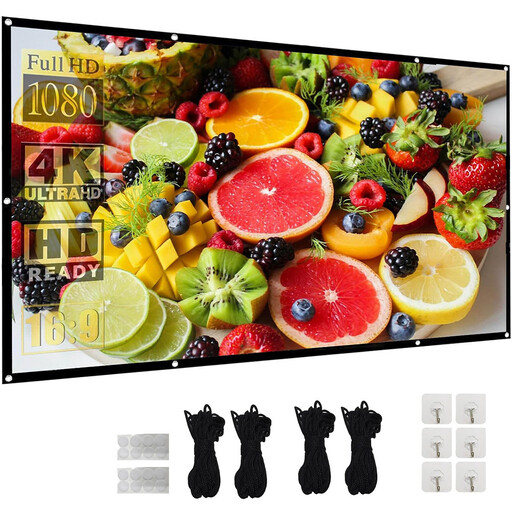
Why it stands out: For those who think big, this 120-inch version offers a truly immersive experience. It shares the same high-quality construction as the 100-inch model (wrinkle-free fabric, 4K compatibility), but on a much more generous projection surface.
Pros:
Who is it for? Perfect for large gardens, community groups, or groups of friends who want to enjoy the thrill of a World Cup match or a movie.
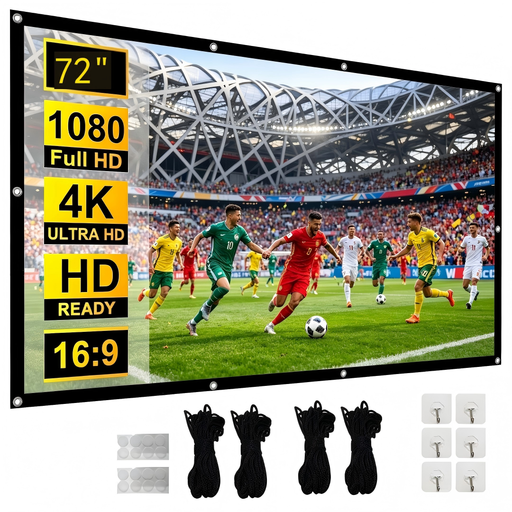
Why it stands out: This more compact model is the ideal solution for smaller spaces. It retains all the advantages of the range (wrinkle-free fabric, easy transport), but in a more discreet format that's even quicker to set up in a living room, bedroom, or on a balcony.
Pros:
Who is it for? For city dwellers, students, or as a secondary screen for professional presentations and gaming nights.
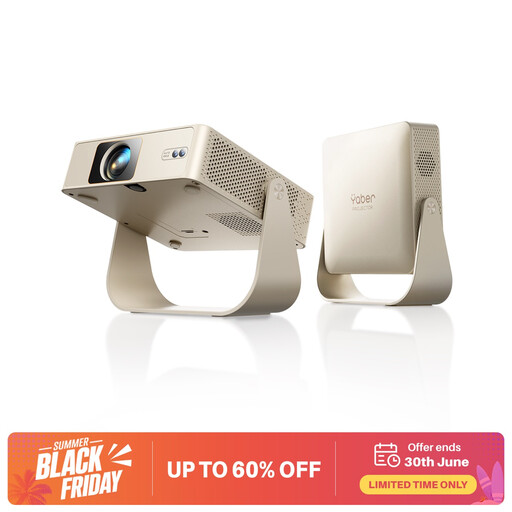
Why it stands out: A great screen isn't everything: it needs a great projector. The Yaber L1 Pro is a smart choice for its portability and clever design. Its integrated stand swivels 330°, allowing you to project an image onto the ceiling or any wall without needing a tripod.
Pros:
Who is it for? For those who aren't yet equipped and are looking for a portable, simple, and complete solution to go with their new screen.
Your cinema setup is ready, but you need an idea to spice up the evening? Discover our selection of dance accessories to get the party started after the show.
1. Can you use an outdoor projector screen indoors? Yes, absolutely. Screens designed for outdoor use perform just as well indoors. Their portable nature and ease of installation even make them an excellent temporary solution for a home cinema in a living room or game room.
2. How do you prevent wrinkles on a foldable projection screen? The models in our selection use a polyester fabric specially designed to be wrinkle-free. For optimal results, simply stretch the screen tightly during installation using the provided ropes and hooks. Any minor creases from storage will naturally disappear once the screen is taut.
3. What is the difference between front and rear projection? Front projection is the classic setup: the audience and the projector are on the same side of the screen. Rear projection involves placing the projector behind the screen. The advantage? You can hide the device and prevent anyone from walking in front of the light beam. Screens that are compatible with both modes, like those in our selection, offer much more flexibility in organising your setup.