
Livraison le jour même ou le lendemain

Qualité garantie

Débloquez vos offres de bienvenue: Livraison GRATUITE | Jusqu'à -80 % | 30 jours d'essai gratuits à JoyPlus
Téléchargez l'application
Whether you're hiking in the mountains, spending a weekend camping, or simply relaxing in the garden, the right gear is essential for a great experience. But with a jungle of options out there, how do you navigate it all? As our editorial team's product expert, my mission is to do the groundwork for you. Follow this guide to make the right choices and discover our selection of the best outdoor equipment for 2026.
Before diving into our top picks, let's review the essential points to check so you can make an informed decision, whether you're looking for a camping tent or a garden parasol.
The durability of your gear depends primarily on its construction. For a camping tent, check the waterproof rating (expressed in mm). A 2000?mm rating is a good baseline for occasional use, while models for demanding conditions go up to 4000?mm and beyond. Aluminium poles are generally lighter and stronger than fibreglass ones. In the garden, for sun protection, an aluminium pole will resist corrosion better than steel, and a water-repellent polyester canopy will save you from a surprise shower.
Weight is a decisive factor, especially for hiking gear and bivouac equipment where every gram counts. An ultralight tent under 2?kg is a game-changer on long treks. Conversely, for outdoor furniture like a parasol, a heavier weight ensures stability, but be mindful of how easy it is to handle. It's all a matter of balance and intended use.
Ask yourself the right questions. A one-person tent is completely different from a family tent. Likewise, a parasol for a small balcony doesn't have the same requirements as one meant to shade a large dining table. Consider the frequency of use, the weather conditions you're likely to face, and the number of people who will be using the equipment.
We've selected a few standout gems that shine for their performance and practicality.
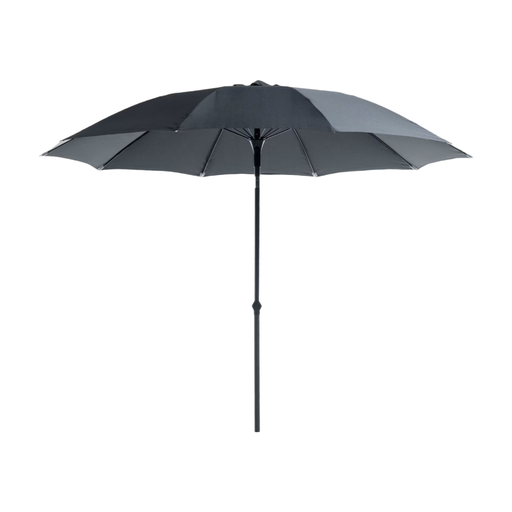
This parasol is a smart shade solution, perfectly sized for balconies or small patios.
Why it stands out: Its 270?cm diameter offers an excellent compromise between comfortable shade coverage and a minimal footprint. Its telescopic and tilting aluminium pole allows you to adjust the shade throughout the day, while its 10 fibreglass ribs provide good flexibility in the wind.
Its strengths:
Who is it for? Ideal for anyone with a balcony or small patio, or for those looking for a portable shade solution for a dining or lounge area.
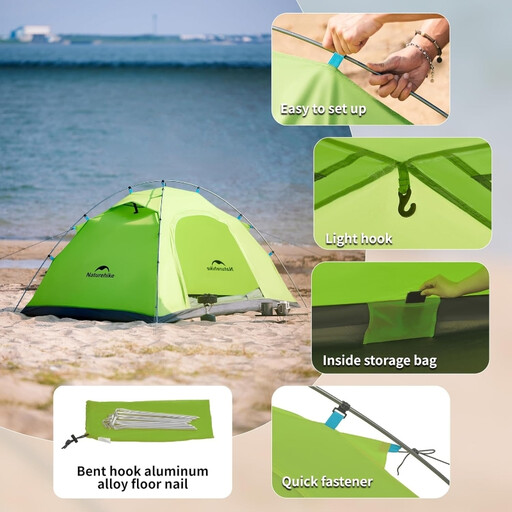
A tent designed for adventurous duos who aren't afraid of any season.
Why it stands out: Its 4-season design ensures all-weather versatility, whether for camping, hiking, or family outings. It combines excellent waterproofing and UV protection (UPF) with a comfortable interior space for two adults (200 x 130 x 100?cm).
Its strengths:
Who is it for? Perfect for couples or friends who camp in all weather and are looking for the best balance of comfort, protection, and weight.
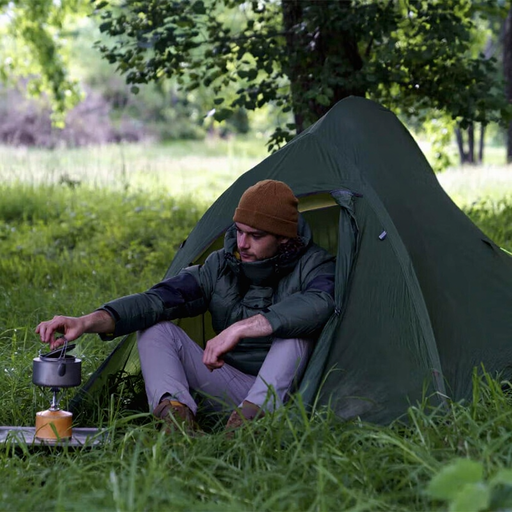
For solo adventurers where every gram is counted, this ultralight tent is the clear choice.
Why it stands out: Its main advantage: a feather-light weight. Made from 20D silicone-coated nylon with aircraft-grade 7001 aluminium poles, it provides a robust shelter for a total weight of around 1.5?kg. It's the very definition of optimised bivouac gear.
Its strengths:
Who is it for? For solo hikers, trekkers, and mountaineers who make lightness an absolute priority for their 3-season outings.
Our selection focuses on specific needs. If you're looking for a larger tent, a cantilever parasol, or simply want to compare other models, there's no shortage of choice.
Discover our full range of waterproof camping shelters and find the right model for your next adventure.
To find the perfect tent, evaluate four key points:
The choice depends on the area you need to cover and the flexibility you want. The garden parasol remains the simplest and most versatile solution: a centre-pole model for a table, or a cantilever model for an outdoor lounge set. Shade sails are a modern and stylish alternative for covering larger areas, but their installation is fixed. In any case, opt for a canopy with good UV protection and a water-repellent treatment.
For a successful bivouac, the essentials revolve around your "sleep system" and having what you need to eat. Here is the basic kit: