
Livraison le jour même ou le lendemain

Qualité garantie

Débloquez vos offres de bienvenue: Livraison GRATUITE | Jusqu'à -80 % | 30 jours d'essai gratuits à JoyPlus
Téléchargez l'application
Want to brighten up your balcony, patio, or garden all year round, with no watering or diseases to worry about? That's the appealing promise of outdoor artificial flowers. But be warned: the market is saturated with models that, while pretty in photos, often turn out to be poor investments. To prevent your arrangements from fading after the first summer or falling apart at the first downpour, it's crucial to know how to avoid the most common pitfalls.
As a product expert at Joybuy, I'm here to help you see things more clearly. Let's skip the marketing jargon and get straight to the point. Here are the two most frequent mistakes and how to avoid them?:
To choose faux outdoor flowers that will keep their vibrancy season after season, there are three technical criteria to watch closely.
This is THE non-negotiable criterion for outdoor use. A quality artificial flower is made with materials specifically treated to filter ultraviolet rays.
The visual appearance and sturdiness of your outdoor artificial plants depend directly on the materials used for the petals, leaves, and stems.
A bouquet that looks sparse or too stiff will sorely lack a natural feel. For an artificial flower for a planter or flowerbed, density is a key factor.
To help you see how these criteria translate in practice, here are a few products that meet different needs.
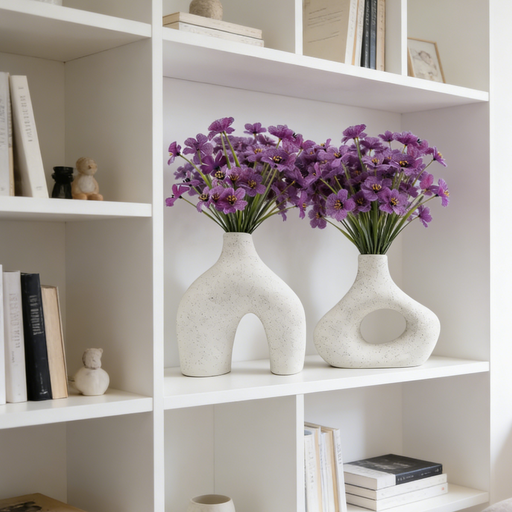
Why we chose it : Perfect for filling large spaces (planters, flowerbeds) on a budget, while still achieving a dense and colourful look.
This set of 4 dense bouquets (72 heads in total) avoids the sparse look common in entry-level products. The PE plastic is advertised as UV and fade-resistant, which prevents premature dulling.
Excellent value for the volume. The flexible branches make it easy to shape for a more natural and less rigid appearance.
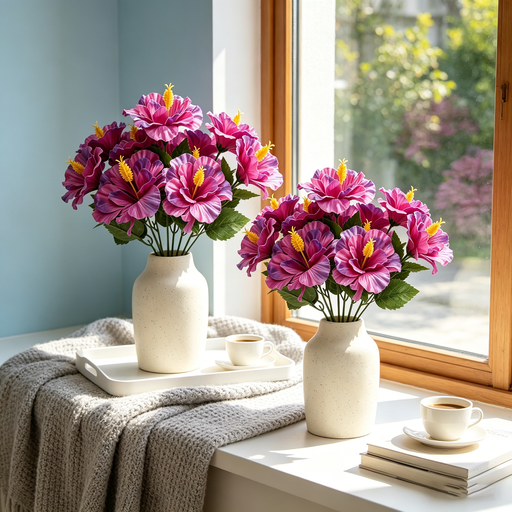
Why we chose it : Ideal for artificial balcony plants, porches, or patios—places where flowers are seen up close and realism is essential for an elegant look.
The high-quality silk petals, with their detailed veins, perfectly mimic a real flower, avoiding a cheap "plastic" look. The manufacturer also states they are highly water-resistant.
Strikingly realistic to both the eye and the touch. The sturdy stems combining metal and plastic ensure excellent wind resistance and enhanced durability.

Why we chose it : A solution designed for memorial sites (cemeteries) or highly exposed locations, where weather resistance is the number one criterion for artificial cemetery flowers.
The materials are advertised as resistant to UV rays, rain, and wind—a direct solution to the problem of rapid degradation in harsh outdoor conditions.
Unbeatable resistance to the elements. Being completely maintenance-free makes it a perfect solution for a lasting, hassle-free tribute.
Discover our full selection of products that meet these criteria for quality and durability.
Maintenance is virtually non-existent. For most plastic or treated silk models, a simple spray with clean water is enough to remove dust and pollen. For stubborn dirt, a soft, damp cloth will do the trick. Absolutely avoid harsh detergents, which could damage the UV-protective coating.
It all depends on the quality of the materials and their exposure to the elements. Well-made, UV-resistant artificial flowers can retain their colour and shape for several seasons, or even several years. Conversely, entry-level models are likely to fade in a single summer.
High-quality plastic models (like polyethylene) are generally designed to withstand freezing temperatures without cracking. However, a deep and prolonged frost can make any plastic brittle. Silk, on the other hand, is more sensitive to moisture combined with frost. In regions with harsh winters, it's safer to bring them indoors or protect them.