
Livraison le jour même ou le lendemain

Qualité garantie

Débloquez vos offres de bienvenue: Livraison GRATUITE | Jusqu'à -80 % | 30 jours d'essai gratuits à JoyPlus
Téléchargez l'application
For any parent, the organic baby food aisle can feel like a minefield. Between marketing slogans and endless ingredient lists, choosing the right organic baby fruit pouch is a challenge. Yet, this ultra-convenient format is a daily lifesaver, whether for introducing solids or for on-the-go snacks.
The real challenge isn't finding a pouch, but avoiding the common pitfalls that can turn a convenient purchase into a disappointment. Because behind reassuring packaging, some products hide formulas that are far from meeting the nutritional needs of little ones. Here are the key things to watch out for before you make your choice.
To make the right choice, you just need to focus on a few key parameters. These indicators will help you decipher labels and select a product that truly meets your expectations.
This is the non-negotiable criterion. A good baby fruit pouch should contain, above all... fruit.
The age indicated on the packaging is an invaluable guide, as it corresponds to the development of your baby's chewing and swallowing abilities.
The pouch format is popular for its portability, but not all packaging is created equal.
To help you see more clearly, we've identified a few products that tick all the boxes, matching them with different parent and child profiles.
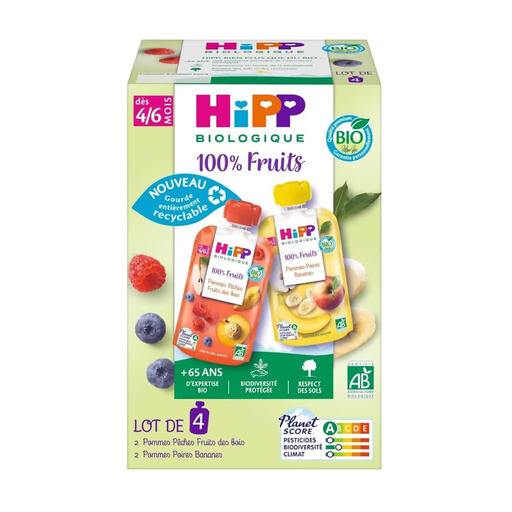
Why we chose it: Perfect for those very first spoonfuls. This pack focuses on simple flavours (apple, pear, banana...) and an ultra-smooth texture, ideal from 4 months. A reliable choice for gently introducing your baby to fruit.
The promise is kept: an ingredient list that is 100% fruit, with no added sugar, no concentrated juices, and no gimmicks. It avoids the trap of hidden sugars and overly complex recipes for a developing palate.
Its mono-material polypropylene packaging (aluminium-free) is fully recyclable. A real plus for eco-conscious parents. The 4x90g format is perfect for introducing several tastes to your baby without waste.
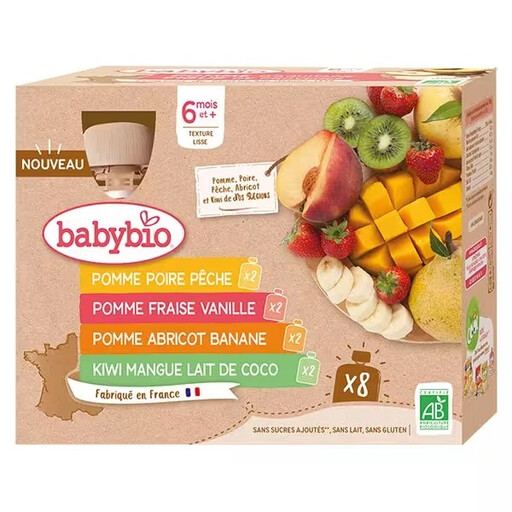
Why we chose it: Ideal for taking things to the next level (from 6 months)! Babybio is renowned for its original flavour combinations that go off the beaten path. The ingredient quality, a signature of the Babybio brand, is guaranteed.
The brand is transparent about the origin of its fruit (Aquitaine, Ecuador...). Despite the adventurous recipes, the ingredient list remains simple and always free from added sugar.
This pack contains 4 different recipes (including a bold Kiwi/Mango/Coconut) to add variety and avoid routine. Perfect for a weaning journey full of discovery.
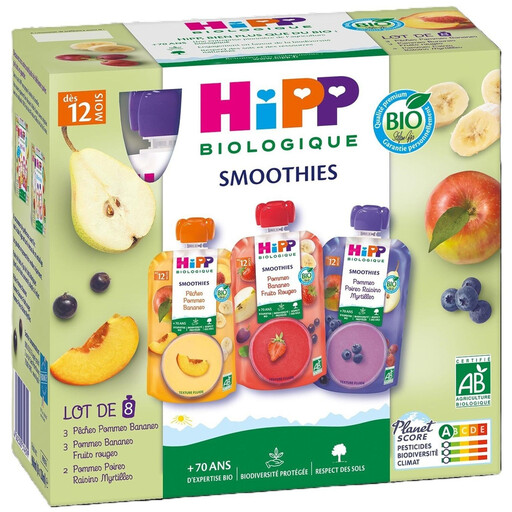
Why we chose it: Designed for older babies (from 12 months) and parents who are always on the move. The 120g size satisfies bigger appetites, and the safety cap allows for independent eating without (too much) mess.
Its texture, halfway between a purée and a smoothie, is perfectly suited for older babies. No more overly smooth textures that don't satisfy: this gently prepares them for the transition to more solid foods.
The generous 120g size and the 8-pouch pack make it the ideal stock for nursery, weekend outings, or simply for always having a healthy and filling snack on hand.
If you prefer the homemade approach, discover our selection of fresh organic fruit, perfect for preparing healthy and delicious purées.
You can start from the beginning of weaning, which is between 4 and 6 months, as long as you choose a suitable recipe. Make sure to check for the "from 4 months" label on the packaging. The texture must be perfectly smooth. For the first few times, it's also recommended to serve the purée with a spoon, rather than letting your baby drink directly from the pouch.
The "no added sugar" claim is a good start, as it guarantees the absence of refined sugar or syrups. But the key is to check the "of which sugars" line in the nutritional information. By comparing several products, you'll quickly spot those that only use the natural sugars from fruit, without concentrated juices to boost the taste.
Absolutely. An organic fruit pouch is an excellent option for a healthy, on-the-go snack. It's a portion of fruit that's easy to slip into a bag and a much better alternative to processed biscuits, which are often too sugary. The most important thing is to incorporate it into a varied and balanced diet.