Joybuy Insights

Open-Ear Earbuds for Sports and Everyday Listening

Listening to music or a podcast while running, cycling, or even at the office has become second nature for many of us. The problem? Completely isolating yourself from the outside world isn't always a good idea, and can even be dangerous. While in-ear earbuds are perfect for immersion, they can become uncomfortable over long periods and block out essential sounds: an approaching car, a colleague calling your name.

This is where open-ear earbuds, also known as open-design headphones, come in. By delivering sound without ever blocking your ear canal, they offer the ideal compromise for enjoying your playlists while staying aware of your surroundings. This guide breaks down the technology and presents our selection of the top models to help you make the right choice.

How to Choose the Right Open-Ear Earbuds

Before you dive in, let's review the key criteria for finding the perfect pair for your needs.

1. Fit and Comfort: The Foundation of Everything

Comfort is non-negotiable, especially if you plan on wearing your earbuds for several hours at a time. Open-ear earbuds come in several form factors:

  • Ear-clips: Discreet and modern, they simply attach to the outer ear.
  • Ear-hooks: These wrap around the ear for maximum stability, making them a top choice for sports earbuds.
  • Neckband: Often used for bone conduction models, this design connects the two earpieces via a flexible band that goes behind the head.

For high-intensity activities like running, stability is the number one priority. The best sound in the world is useless if you have to readjust your earbuds every five minutes.

2. Audio Technology: Air Conduction vs. Bone Conduction

Two main technologies compete in the open-ear earbuds market:

  • Air conduction: The most common type. Tiny speakers project sound towards your ear canal without obstructing it. This approach generally delivers richer sound and more present bass.
  • Bone conduction: Here, sound is transmitted through vibrations sent through the jawbones to the inner ear. The ear remains completely open, but low-frequency bass response is often lacking.

The models in our selection primarily use air conduction, which currently offers the best balance between sound quality and environmental awareness.

3. Battery Life and Durability

For sports or long days, battery life is crucial. Be sure to check not only the earbuds' endurance on a single charge but also the number of additional cycles provided by the case. For athletic use, a water-resistance rating (IP) is essential. An IPX4 rating, which guarantees resistance to sweat and splashes, is the bare minimum for running earbuds.

Top Open-Ear Earbuds to Consider

Our editors have scoured the market to bring you three models that truly stand out, each with its own strengths.
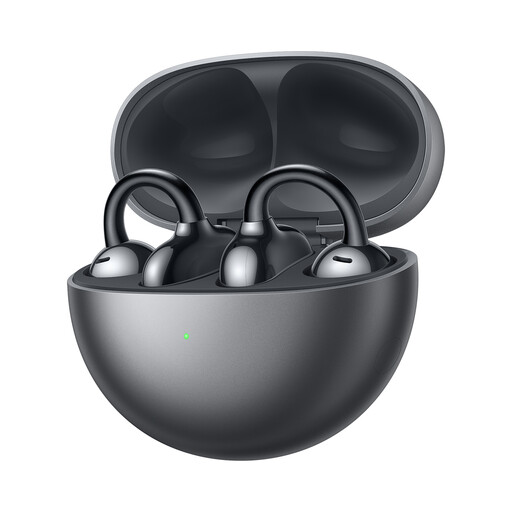
Huawei FreeClip

?couteurs Huawei FreeClip noirs
  • Why it stands out: Its design is simply one-of-a-kind. With its "C-bridge" structure, the FreeClip grips the ear without ever pinching, for a fit that is both stable and surprisingly comfortable. The game-changing detail: the two earbuds are interchangeable (left/right), a real plus for daily use.
  • Key features:
    • Innovative design: A unique look and comfort engineered for extended wear.
    • Impressive battery life: Up to 36 hours of listening time with the case.
    • Durability: IP54 certified, they are resistant to both dust and splashes.
  • Who is it for?: For mobile professionals and city dwellers who want stylish, comfortable earbuds to seamlessly switch between calls and music, without being cut off from office chatter or city hazards.

View the Huawei FreeClip

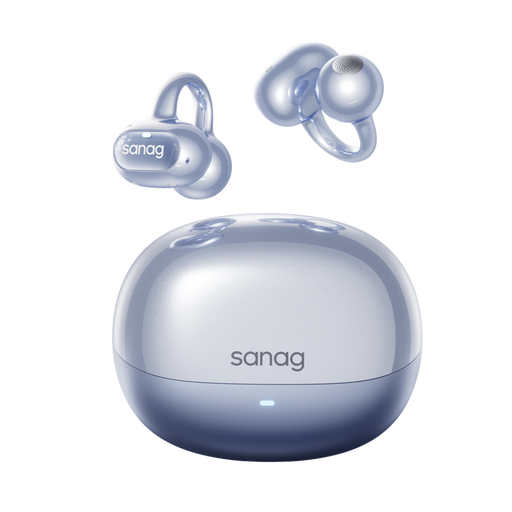
Sanag S8S Ultra

?couteurs Sanag S8S Ultra
  • Why it stands out: The Sanag S8S Ultra offers a sporty, accessible option. Although they mention a "bone conduction concept," they are indeed air conduction earbuds in an ear-clip format designed for a reliable fit during exercise. They are an excellent entry point into the world of open-ear audio without breaking the bank.
  • Key features:
    • Sports-oriented design: The clip-on design is engineered for stability during physical activities.
    • Lightweight: Designed to be unobtrusive during your workout.
    • Accessible price point: An attractive gateway into the world of open-design earbuds.
  • Who is it for?: For casual athletes and runners who prioritize safety (hearing traffic is vital!) and are looking for an effective solution without requiring the audio fidelity of a premium model.

View the Sanag S8S Ultra

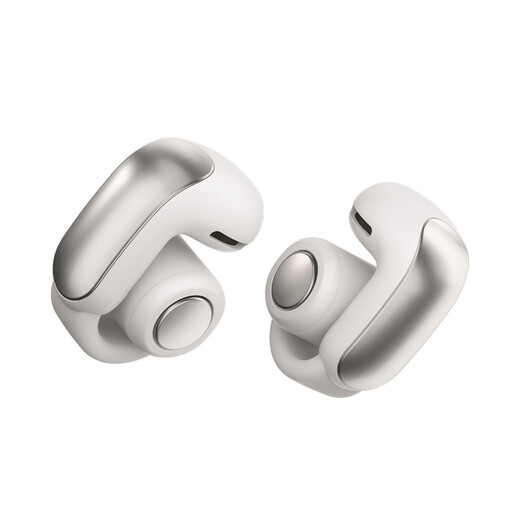
Bose Ultra Open Earbuds

?couteurs Bose Ultra Open Earbuds blancs
  • Why it stands out: When Bose enters a new market segment, it's always a significant event. The brand brings all its expertise to the open-ear format with its OpenAudio technology. The promise? Immersive sound and a wide soundstage that envelops you without cutting you off from the world. The flexible design and light weight are engineered to be unnoticeable.
  • Key features:
    • Signature Bose sound quality: The promise of a rich and immersive audio experience.
    • Comfort and stability: The flexible joint and silicone finish are designed for a stable and pleasant fit.
    • Advanced features: Multipoint connectivity and simple touch controls.
    • Durability: The IPX4 certification makes them perfect for workouts, even in light rain.
  • Who is it for?: For those who refuse to compromise between audio quality and an open-ear design. These earbuds are aimed at audiophiles on the go as well as demanding athletes who want the best of both worlds.

View the Bose Ultra Open Earbuds

Looking for Other Options?

Our selection is just a taste of what the open-ear earbud market has to offer. If you haven't found your perfect match among these three models—whether for reasons of design, features, or budget—don't give up.

Explore our full category to discover a wider range of products and find the hidden gem that will go everywhere with you.

Discover All Headphones & Earbuds

Frequently Asked Questions (FAQ)

Q1: What's the difference between open-ear and bone conduction earbuds?

Air conduction models (like those in our selection) use mini-speakers that project sound towards the ear. Bone conduction models transmit sound via vibrations applied to the jawbones. In both cases, the ear canal remains open, but the sensation and sound signature are very different. Air conduction is generally considered more natural and to have better bass performance.

Q2: Are open-design earbuds suitable for sports?

Yes, and it's actually one of their main strengths! Many models are designed as sports earbuds. Their key advantage is safety: you remain aware of your surroundings (traffic, pedestrians, etc.). For this use case, look for a model with an excellent fit (clip or hook) and a sweat-proof rating (IPX4 minimum).

Q3: Is the audio quality of open-ear earbuds comparable to in-ear models?

By design, an open-ear model allows for some sound leakage and offers no passive noise isolation. In a subway or on a very noisy street, the immersion and bass depth will therefore be less pronounced than with in-ear earbuds that seal the ear canal. That said, the technology is advancing rapidly. Models like the Bose Ultra Open Earbuds prove that it's possible to combine excellent audio quality with the benefits of an open design.