
Livraison le jour même ou le lendemain

Qualité garantie

Débloquez vos offres de bienvenue: Livraison GRATUITE | Jusqu'à -80 % | 30 jours d'essai gratuits à JoyPlus
Téléchargez l'application
Whether you're working from home, in the middle of intense gaming sessions, or just spending hours at the computer, choosing the right office chair is no longer a luxury—it's a necessity for your well-being. Poor posture almost guarantees back pain, not to mention a plummet in concentration. To help you navigate the jungle of available models, our experts are sharing their advice and their selection of the best office chairs for 2026.
Before diving into our selection, let's review the essential criteria for making the right choice—one that adapts to both your body and your interior design.
An ergonomic chair isn't a luxury; it's an investment in your health. Prioritise models that offer the maximum number of adjustment points. While a height-adjustable office chair is the bare minimum, other features are crucial:
Your chair's upholstery plays a dual role: comfort and style. Mesh is highly sought after for its breathability—a major advantage during long workdays, especially in the summer. Classic fabric offers a warmer feel and a wide range of colours. Finally, velvet or faux leather adds a touch of elegance. A designer office chair can thus become a decorative piece in its own right, whether in a bedroom, a home office, or at a vanity.
A sturdy base, most often a five-star design, ensures overall stability. A swivel chair with casters will give you complete freedom of movement to grab a file or move around without getting up. Be sure to check that the casters are suitable for your flooring (hardwood, carpet, tile) to prevent scratches and ensure smooth, silent rolling.
We've selected models that stand out from the crowd, whether you're looking for an ergonomic champion or a piece with a bold design.
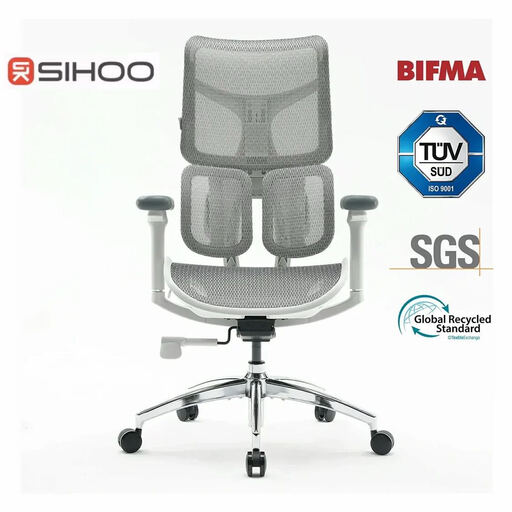
Its strengths: This chair goes all-in on cutting-edge ergonomics. Its dual dynamic lumbar support adjusts to your movements in real time, thanks to an ingenious four-spring mechanism. The result: flawless, custom support from morning to night.
Key features:
Who is it for? Intensive remote workers, gamers, and anyone who spends hours in front of a screen and wants a first-rate ally against back pain.
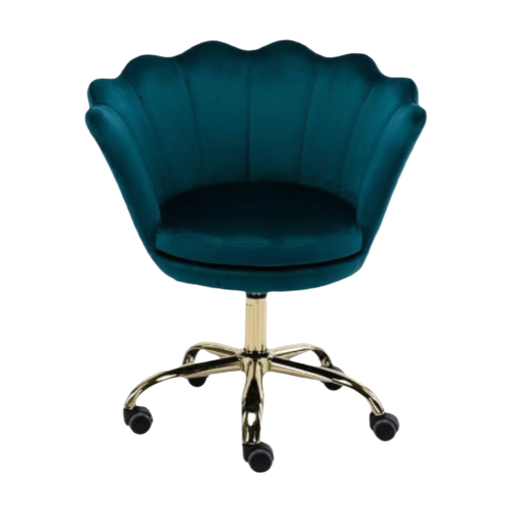
Its strengths: With its seashell-inspired design and soft velvet, this chair proves that aesthetics don't have to compromise on comfort. It's the splash of colour and elegance your office, bedroom, or vanity area has been missing.
Key features:
Who is it for? Those who want to create a stylish office nook and prioritise design without sacrificing comfort for daily use.
See the Ya-Home Turquoise Chair
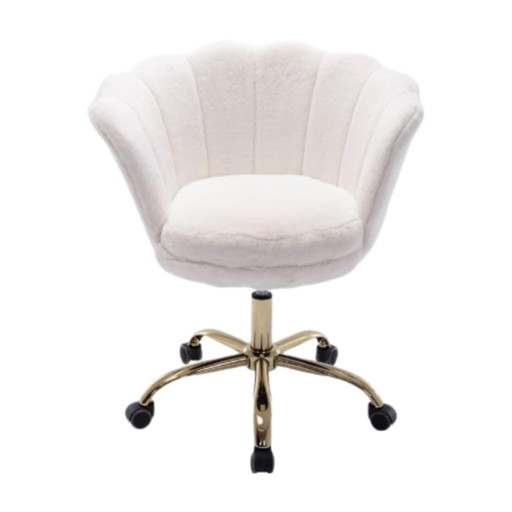
Its strengths: This chair features the same elegant silhouette as the previous model but is upholstered in an ultra-trendy white bouclé ('teddy' style) fabric. It brings a cosy and modern touch, perfect for Scandinavian or contemporary-inspired interiors.
Key features:
Who is it for? Decor enthusiasts who want a designer office chair that is as comfortable as it is stylish, perfect for a student's room, a secondary workspace, or a vanity area.
See the CHAIRUS Ya-Home White Chair
A good chair is fundamental. But for a truly ergonomic and productive work environment, the desk is just as crucial. To optimise your posture and easily alternate between sitting and standing, a height-adjustable desk is the ideal solution.
Discover our selection of standing desks with storage to create a functional space that reflects your style.
Sit all the way back in the seat. Adjust the height so your feet rest flat on the floor and your knees form a 90-degree angle. Adjust the lumbar support to match the curve of your lower back. Finally, set the armrests so your shoulders are relaxed and your forearms are parallel to the desk when typing.
The term office armchair generally refers to a larger model with a higher backrest, integrated armrests, and more generous padding. An office chair is often more compact and sometimes places a greater emphasis on fine-tuned ergonomic adjustments. In practice, the line is often blurry, and the two terms are frequently used interchangeably.
The longevity of a chair depends on the quality of its materials and the intensity of its use. An entry-level model will last an average of 2 to 3 years. A high-quality ergonomic chair, especially if it's certified, can last for 7 to 10 years, or even longer. Regular maintenance and adhering to the manufacturer's recommended maximum weight capacity are essential for extending its lifespan.