
Livraison le jour même ou le lendemain

Qualité garantie

Débloquez vos offres de bienvenue: Livraison GRATUITE | Jusqu'à -80 % | 30 jours d'essai gratuits à JoyPlus
Téléchargez l'application
Is the check engine light on in your dashboard? That's the start of the anxiety and the fear of a hefty garage bill. However, many diagnostics and minor maintenance tasks are well within the reach of car owners and mechanics enthusiasts. Getting an OBD2 car diagnostic scanner is the first step to taking back control, understanding the source of a fault, and, most importantly, making significant savings.
But with an overwhelming number of options on the market, it's hard to know where to start. This guide is here to shed light on the essential criteria and present our selection of the best tools, whether you're just curious or a seasoned mechanic.
Before you dive in, there are a few key concepts to understand to choose the tool that will truly meet your needs.
The first and most obvious criterion is the tool's compatibility with your vehicle. A multi-brand diagnostic scanner is, by definition, designed to work with most European, Asian, and American manufacturers. As a reminder, in Europe, the EOBD standard (derived from the American OBD2) has been mandatory on all new petrol vehicles since 2001 and diesel vehicles since 2004. Make sure the tool you're considering covers your model and supports recent communication protocols like CAN FD, which is essential for the most modern vehicles.
When it comes to features, there's a huge gap between a simple code reader and a comprehensive diagnostic tool.
There are two main types: traditional scanners, which are standalone units with their own screen, and a now very popular alternative: the Bluetooth OBD2 scanner. The latter is a small adapter that plugs into the OBD2 port and communicates wirelessly with an app on your smartphone or tablet. This solution is not only more compact but also easier to update and often has a more polished interface through its dedicated app. If you choose this option, just remember to check for compatibility with your smartphone (Android and iOS).
Keeping these criteria in mind, we have selected three tools that cater to very different needs and budgets.
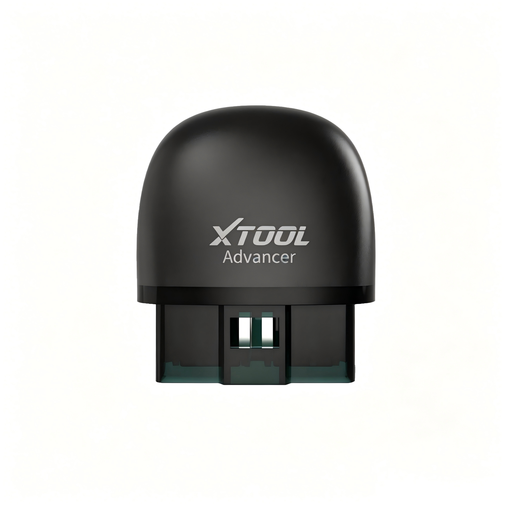
Why it stands out: The XTOOL AD20Pro is an ultra-compact Bluetooth dongle that turns your smartphone into a powerful car diagnostic tool. Its ease of use makes it an excellent entry point for anyone wanting to perform their first diagnostics without getting lost in complex menus.
Strong points:
Who is it for? Ideal for car owners and DIY mechanics who want to understand the cause of a warning light, perform their own oil resets, and keep an eye on vehicle data in real-time.
See the product on Joybuy.fr >
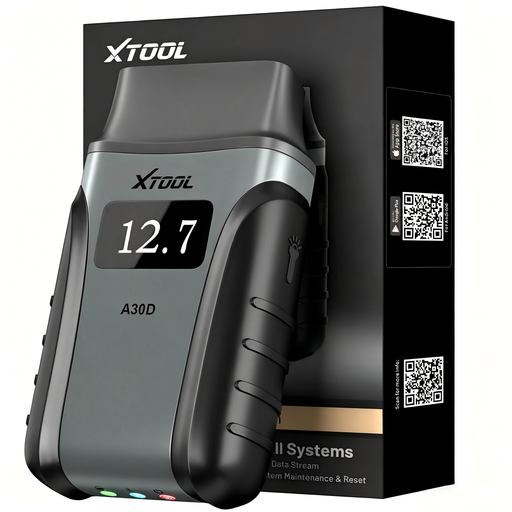
Why it stands out: The XTOOL A30D takes things to the next level by incorporating bi-directional control. This feature, usually reserved for much more expensive professional equipment, allows you to send commands to the vehicle's ECU to perform an actuator test. This is a major advantage for pinpointing a fault with surgical precision.
Strong points:
Who is it for? For advanced enthusiasts and small workshops looking for a tool that can not only read codes but also actively test components and perform a wide range of maintenance operations.
See the product on Joybuy.fr >
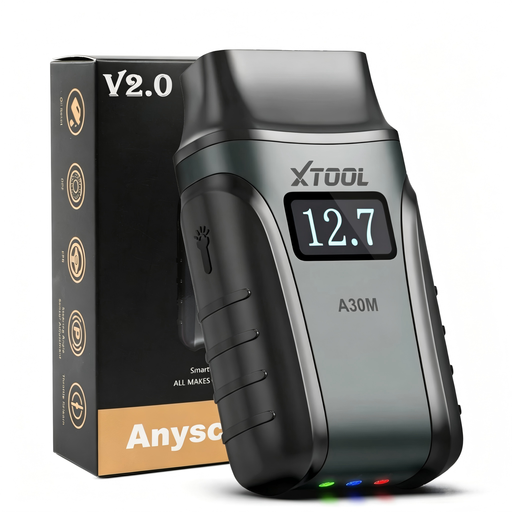
Why it stands out: The XTOOL A30M is the flagship of this range. It includes all the strengths of the A30D and adds an even wider array of service functions. It's hard to find a more versatile tool in such a compact format. This is the choice for those who want to make no compromises on diagnostic and maintenance capabilities.
Strong points:
Who is it for? For expert DIY mechanics, semi-professionals, or collectors who want the maximum number of reset and testing functions in a portable format.
See the product on Joybuy.fr >
Our selection highlights highly versatile Bluetooth tools, but the world of car diagnostics is much broader. If you prefer a model with a built-in screen, are looking for niche functions, or other brands, take a look at our complete catalog.
Discover our full range of OBD2 diagnostic tools >
Absolutely. An auto diagnostic tool can read and clear the check engine light and its associated fault codes. Be careful, though: if the fault is not repaired, the light will inevitably come back on after a few miles. The tool is used to identify the problem; it doesn't magically fix it!
In Europe, the rule is simple: all new petrol vehicles since 2001 and diesel vehicles since 2004 are compatible with the EOBD/OBD2 standard. For older or imported models, a case-by-case check is necessary. The famous 16-pin trapezoidal OBD2 port is usually hidden in the cabin, under the steering wheel, or near the fuse box.
It all depends on the manufacturer. This is one of the major strengths of the XTOOL models presented here (AD20Pro, A30D, A30M): they all include lifetime software updates at no extra cost. You pay for the device once and benefit from all future developments. This is a strong selling point that guarantees a future-proof investment.