
Livraison le jour même ou le lendemain

Qualité garantie

Débloquez vos offres de bienvenue: Livraison GRATUITE | Jusqu'à -80 % | 30 jours d'essai gratuits à JoyPlus
Téléchargez l'application
Choosing a notebook? On the surface, nothing seems simpler. Yet, the market is a jungle where it's easy to get lost among attractive promises. A seductive cover often hides mediocre paper, and it's easy to make a mistake. The result: a frustrating note-taking experience and a system that falls apart. To prevent your purchase from turning into a regret, let's review the three most common errors.
Fortunately, avoiding these traps is just a matter of keeping an eye on a few technical criteria that make all the difference.
By mastering a few key points, you'll be able to separate the wheat from the chaff and find the notebook that's truly right for you, whether for classes, the office, or your personal journal.
Paper weight, expressed in grams per square metre (g/m?), is the most reliable indicator of the paper's thickness and opacity.
The ruling is the framework that will guide your thoughts on paper. The choice is strategic.
The format must fit your daily life, while the binding guarantees robustness and user comfort.
To move from theory to practice, here are a few models that tick all the right boxes for different profiles.
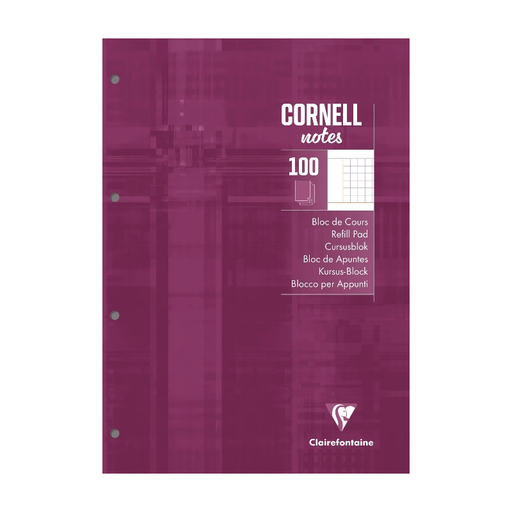
Why we chose it : Specially designed for methodical note-taking, this A4 notebook incorporates the famous Cornell method, which facilitates revision and memorisation. Its detachable and perforated sheets are ready to be filed in a binder.
The Clairefontaine 90g paper is a guarantee against feathering, while the ultra-rigid cardboard back and sturdy binding ensure excellent long-term durability. Say goodbye to pages falling out!
The integrated Cornell method and perforated sheets make it the ultimate study tool.
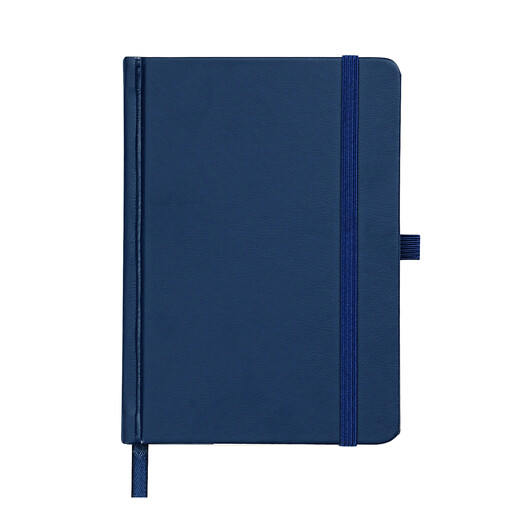
Why we chose it : Compact and elegant, this A6 notebook is the perfect companion for professionals on the move. Its rigid PU cover, elastic closure, and pen loop make it ultra-practical for meetings and travel alike.
Its A6 pocket notebook format is built for on-the-go use, sidestepping the trap of a bulky notebook. The thick 100g paper protects against any ink show-through, even with a felt-tip pen.
A well-designed all-in-one solution: elastic closure, bookmark, and pen loop in a compact format with an impeccable finish.
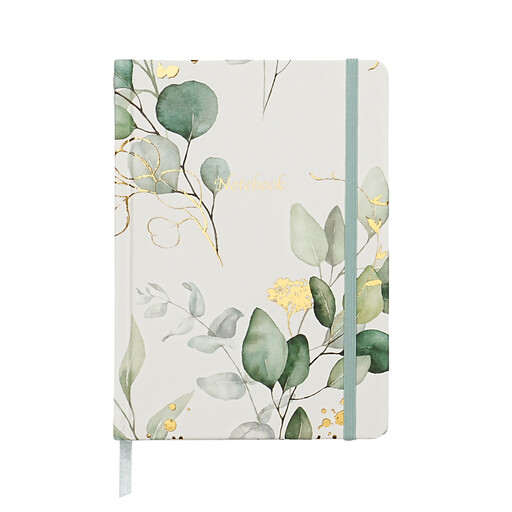
Why we chose it : The A5 format offers a perfect balance for daily use. Its textured cover and 100g cream paper provide an exceptionally pleasant writing experience, ideal for a **personal journal** or creative notebook.
The hardcover and meticulous binding are a guarantee of durability. The cream-coloured 100g paper is the perfect defence against ink bleed-through, even with the most generous fountain pens.
The combination of a refined aesthetic (textured cover) and high-quality paper makes it an object as beautiful to look at as it is to use.
Explore our full selection of products that meet our strictest quality standards.
For a fountain pen, aim for a minimum of 90?g/m? paper to prevent ink from feathering or bleeding through. The ideal? A 100g paper (or higher) for perfect opacity and optimal writing comfort. Papers like Clairefontaine 90g are a reliable choice.
Seyes ruling (or "grands carreaux") is the standard in the French school system. It consists of a complex grid of fine lines with a main line every 8?mm to guide handwriting. The grid notebook with "petits carreaux," on the other hand, simply has a basic 5x5?mm grid, favoured for scientific subjects and diagrams.
It all depends on your habits. A spiral-bound notebook is unbeatable for its 360° opening, which allows you to write flat anywhere. On the other hand, a sewn-bound (or case-bound) notebook is often more robust against the wear and tear of transport and offers a continuous writing surface across the double page, without the interruption of the binding in the centre.