
Livraison le jour même ou le lendemain

Qualité garantie

Débloquez vos offres de bienvenue: Livraison GRATUITE | Jusqu'à -80 % | 30 jours d'essai gratuits à JoyPlus
Téléchargez l'application
Finding the perfect skillet can be a daunting task. Between promises of durability and health concerns about coatings, it's easy to feel lost. The goal? To combine the searing performance of stainless steel with the convenience of a non-stick coating—all without compromising your health or the lifespan of your cookware. This guide breaks down today's leading technologies and presents a selection of models that deliver on their promises, helping you make a confident, informed choice.
But before we get to our top picks, let's review the key criteria that should guide your decision.
The coating is the heart of the matter. Technology has taken a leap forward, offering healthy alternatives to older coatings. Today, all eyes are on options that are PFOA- and PFAS-free. The ceramic-titanium coating is a popular choice, valued for its durability and for being chemically inert. Another major innovation is the hybrid pan, which combines a stainless steel structure with a raised non-stick pattern. This design allows you to sear meats just like with a stainless steel pan, while ensuring nothing sticks.
A great skillet should adapt to your kitchen and your cooking style. Always check for compatibility with all stovetops, including induction. As a reminder, induction cooking requires a ferromagnetic base to work. Furthermore, being oven-safe is a significant advantage. It's a real bonus for starting a dish on the stovetop and finishing it in the oven—an ideal technique for a duck breast or a thick-cut steak. Be sure to check the maximum oven temperature it can handle, as well as the handle material, which must also be designed to withstand heat.
The manufacturing quality has a direct impact on your pan's lifespan and its ability to distribute heat evenly. Multi-layered models (or multi-ply, 3- or 5-ply) are an excellent indicator of quality, as they bond different metals, like stainless steel and aluminum, for perfect thermal conductivity. Finally, for many, Made in France remains a decisive factor, a guarantee of renowned expertise and high quality standards.
Here are three models that stand out for their technical features and design.
Why It Stands Out
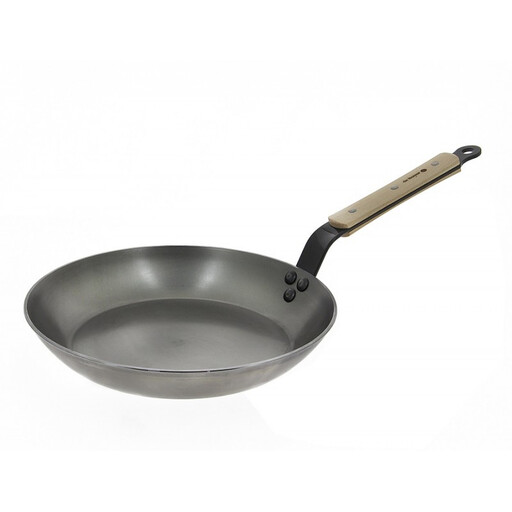
This model from the renowned brand De Buyer is not your average non-stick pan. Made from carbon steel, it develops a natural patina over time to create its own non-stick layer. This is the famous "seasoning" process. It's a traditional approach, favored by chefs for its robustness and exceptional cooking performance. Its Made in France origin is a mark of true craftsmanship.
Pros
Who It's For For passionate home cooks who appreciate traditional cookware and aren't intimidated by the specific maintenance (seasoning, hand-washing only) that carbon steel requires to reach its full potential.
Why It Stands Out
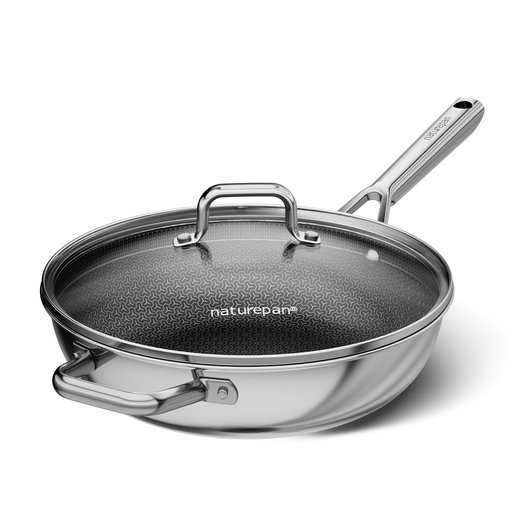
This 28 cm (11-inch) skillet is a true workhorse in the kitchen. Its high sides and included lid make it an ideal sauté pan for saucy dishes or slow-simmered meals. Its diamond-reinforced ceramic-titanium coating is guaranteed PFOA- and PFAS-free, offering peace of mind to health-conscious users.
Pros
Who It's For For those looking for a do-it-all pan that can go from a quick sear to a slow-simmered dish. Its ease of maintenance is a major plus for everyday use.
Why It Stands Out
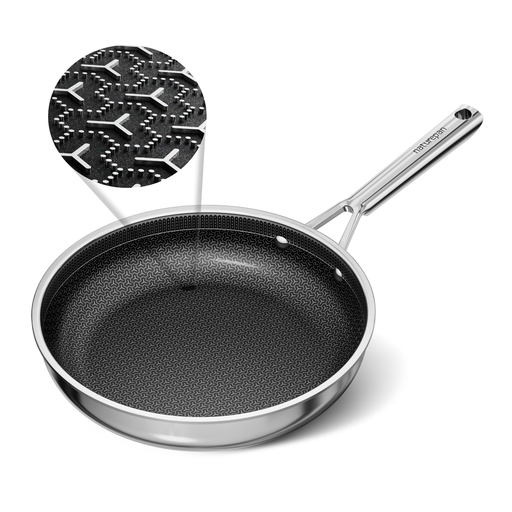
This 28 cm (11-inch) hybrid pan successfully marries two worlds. Its surface combines a laser-etched stainless steel hexagonal mesh with a ceramic-titanium coating nestled in the valleys. This technology allows you to sear food on the stainless steel peaks while benefiting from the non-stick properties of the hollows. Its 5-ply construction ensures fast, even heating and heat distribution.
Pros
Who It's For For demanding, tech-savvy cooks who want the best of both worlds: searing capability worthy of a professional chef's pan and the convenience of a high-performance, healthy non-stick surface.
Our selection highlights some of the most promising technologies on the market today. To explore a wider range of cookware, feel free to browse our complete category.
Discover Our Full Range of Professional-Grade Frying Pans
Even though most are dishwasher-safe, hand-washing with a soft sponge is the best way to preserve the coating in the long run. Avoid metal utensils that could scratch the surface, even if it's advertised as highly durable. Always opt for wood, silicone, or nylon spatulas.
Modern ceramic coatings stand out for being free of controversial chemical compounds like PFOA and PFAS, which were long used in older generations of coatings. Their composition, based on inert materials (derived from sand and silicon), makes them an excellent alternative for anyone wanting to keep these substances out of their kitchen.
Absolutely, especially with the latest-generation models. Hybrid pans are specifically designed for this, thanks to their raised stainless steel mesh. For 100% ceramic pans, the secret is simple: let the pan preheat over medium heat before adding your food. Even heat and a quality surface are the keys to achieving a beautiful Maillard reaction.