
Livraison le jour même ou le lendemain

Qualité garantie

Débloquez vos offres de bienvenue: Livraison GRATUITE | Jusqu'à -80 % | 30 jours d'essai gratuits à JoyPlus
Téléchargez l'application
The key to healthy, flavourful meals ready in a flash, wok cooking is more popular than ever. But with an overwhelming number of options on the market, finding the ideal non-stick induction wok can feel like an uphill battle. Material, coating, diameter, compatibility... it's easy to get lost.
As the Head of Product Curation at Joybuy, I'm here to break down the market for you. The goal of this guide is to give you all the tools you need to make the right choice and to introduce our top picks, designed for every type of cook. Follow our guide to find the wok that will earn its place on your hob.
Before you commit to a wok, let's review the essential criteria. This ensures you'll choose a model that's perfectly suited to your cooking habits and your equipment.
The material of your wok pan directly impacts heat distribution and maintenance.
The coating is a crucial factor, especially on an induction hob that delivers intense, near-instant heat. The hunt for controversial substances like PFOA (perfluorooctanoic acid) is on: consumers now demand a PFOA-free wok. Fortunately, modern technologies offer high-performance alternatives:
The diameter of the wok should be chosen based on the number of people you're cooking for:
Don't underestimate the usefulness of a wok with a lid. It proves indispensable for slow-cooking, steaming, or simply keeping a dish warm.
To guide your purchase, we've scrutinised several models compatible with all hobs, including induction. Here are three woks that particularly caught our eye.
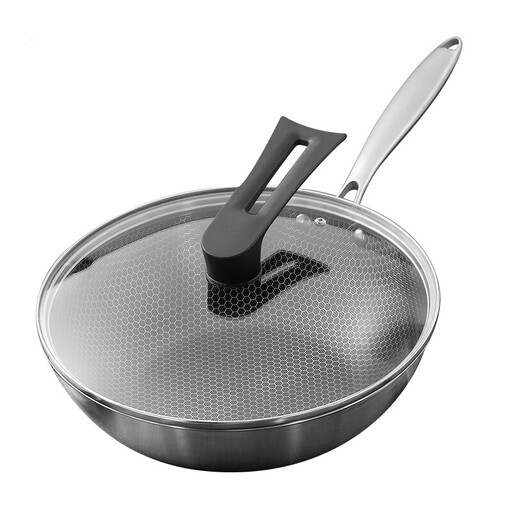
Why it stands out: This model successfully combines the durability of stainless steel with the effectiveness of a protected non-stick coating. Its signature honeycomb structure slightly elevates food, reducing sticking while allowing the use of metal utensils. A real bonus for a non-stick wok!
Advantages:
Who is it for? For those who want a versatile wok built for everyday use, without the constant worry of scratching the coating.
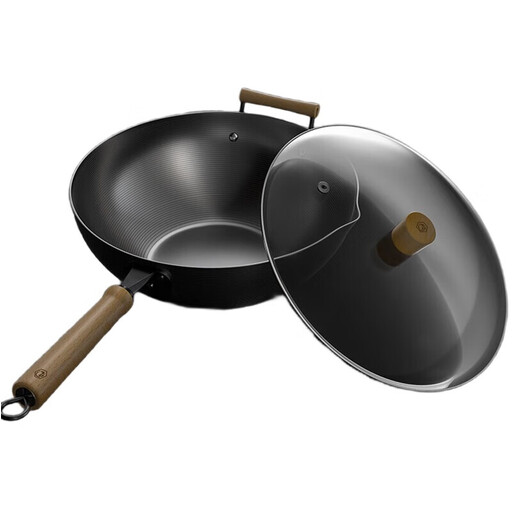
Why it stands out: This iron wok is aimed at purists and lovers of traditional cooking. Made from high-purity iron (99.65%), it is surprisingly lightweight while ensuring exceptional thermal conduction. Its secret: a nitriding surface treatment that protects it from rust, the usual weak point of iron woks.
Advantages:
Who is it for? For Asian cuisine enthusiasts in search of the famous "wok hei" (the breath of the wok), who don't mind spending a little time on maintenance for an authentic result.
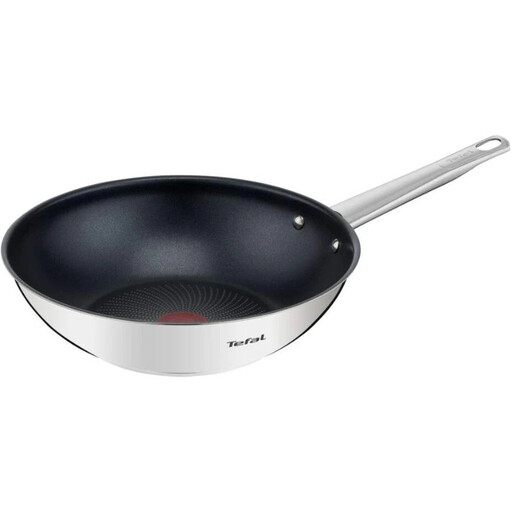
Why it stands out: The reliable choice from Tefal. This wok is the ideal solution for anyone seeking everyday efficiency and simplicity. Its Titanium coating and Thermo-Signal indicator make it an ultra-reliable cooking partner. Its stainless steel body ensures perfect compatibility with induction and excellent durability.
Advantages:
Who is it for? For those who prioritise convenience and peace of mind: a high-performance wok that's simple to use and maintain, backed by a major brand.
Our selection is just a taste of what we offer. Looking for a different size, a specific design, or a particular feature? Feel free to browse our full range to find the wok of your dreams among a wider variety of models.
Discover our entire collection of wok utensils
The difference is primarily a matter of shape. The traditional wok (or wok pan) has high, curved sides and a very narrow, rounded bottom. This shape is ideal for quickly stir-frying food at very high temperatures with minimal oil. The wok-style sauté pan, on the other hand, has a wider, flat bottom and slightly less flared sides. More stable on modern hobs (induction, ceramic), it is also more versatile, equally at home with stir-fries and simmered dishes.
A few simple steps can help prolong the life of your coating. Rule #1: never heat it empty at full power. Use wooden or silicone utensils (unless the manufacturer states otherwise). Even if it's listed as dishwasher-safe, hand washing with a non-abrasive sponge is always preferable. Finally, to avoid fatal thermal shock, always let it cool down before running it under cold water.
Absolutely not, and this is THE number one thing to watch out for! For a wok to work on an induction hob, its base must be ferromagnetic (meaning a magnet will stick to it). This is naturally the case for cast iron, iron, and most stainless steels. For aluminium or copper woks, manufacturers must integrate a ferromagnetic disc into the base. The key is to always look for the "all hobs, including induction" pictogram (often a coil symbol) on the packaging or product description.