
Livraison le jour même ou le lendemain

Qualité garantie

Débloquez vos offres de bienvenue: Livraison GRATUITE | Jusqu'à -80 % | 30 jours d'essai gratuits à JoyPlus
Téléchargez l'application
Navigating the jungle of cookware to find the perfect pot can quickly become a headache. Yet, a good non-stick induction-compatible Dutch oven has everything it takes to become the workhorse of your kitchen: it can single-handedly replace frying pans and saucepans, simplifying your daily meal prep. But how do you make the right choice when it comes to compatibility, coating safety, and versatility?
This guide reveals our selection criteria and top picks to help you make an informed decision, without all the unnecessary marketing jargon.
Before we dive into our top picks, here are the key points to check to find the versatile cooking pot that will truly meet your needs.
The "all stovetops, including induction" label is essential if your kitchen is equipped with an induction cooktop. These cooktops use a magnetic field to heat the vessel directly. For the magic to happen, the base of your all-stovetop induction pot must contain a ferromagnetic material. A flat, thick base also guarantees even heat distribution—a crucial detail for successfully simmering dishes or searing meat without creating hot spots.
The coating is central to your cooking experience. It allows for healthier cooking with little to no fat and turns the chore of cleaning into a mere formality.
A multi-purpose Dutch oven should fit your habits. A 28 cm sauté pan offers a generous diameter, ideal for families or for batch cooking. A non-stick shallow casserole shape is perfect for simmering, browning, or even finishing a dish in the oven (be sure to check the compatibility of the handles and lid). Finally, a Dutch oven with a glass lid is a real plus for keeping an eye on your cooking without lifting the lid, which preserves heat and flavour.
Here are a few models that tick all the boxes for versatility, compatibility, and ease of maintenance.
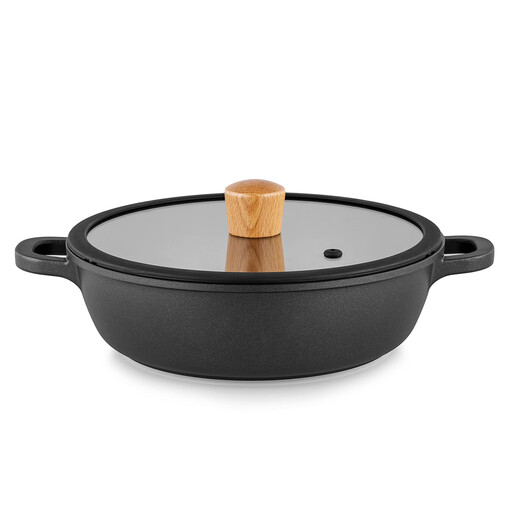
Why we love it
This model stands out for its die-cast aluminium construction, a guarantee of sturdiness and even heat distribution. Its non-stick coating, provided by the Swiss brand ILAG, is guaranteed PFOA-free. The handles feature removable silicone sleeves, a thoughtful detail for moving the pot without getting burned (they must be removed before placing it on the heat or in the oven!).
Advantages
Who is it for?
For those looking for a large, do-it-all Dutch oven that's as comfortable searing meat as it is simmering a saucy dish. An excellent choice for intensive daily use, with the promise of a quick cleanup.
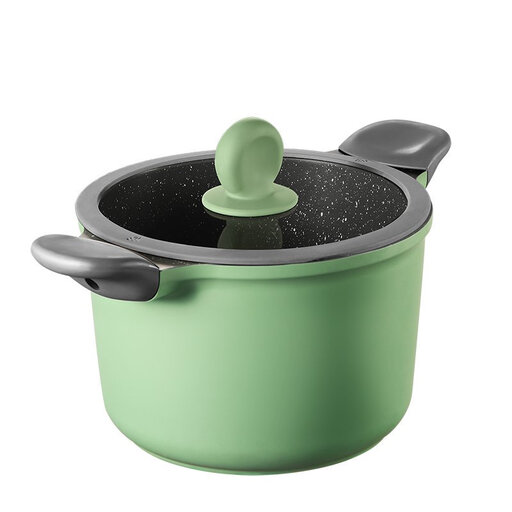
Why we love it
This COOKER KING model stands out with its ingenious lid that creates a slight overpressure. The idea? To speed up cooking while better preserving the food's nutrients. Its more compact 22 cm size and stone-effect non-stick coating make it a prime ally for stews and soups.
Advantages
Who is it for?
For fans of soups, stews, and simmered dishes who are looking for a compact and efficient induction stockpot to optimise cooking times.
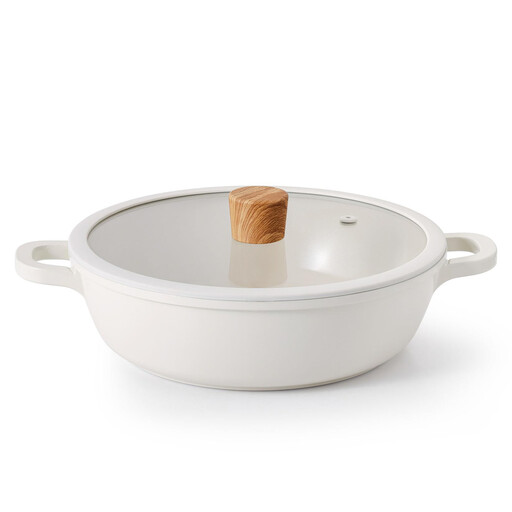
Why we love it
This version of the SENSARTE Dutch oven uses the same sturdy base as its cousin but swaps the ILAG coating for a ceramic surface. It shares the same strengths: die-cast aluminium construction, all-stovetop compatibility, and handles with silicone protection. It will appeal to those who, by conviction or habit, swear by ceramic.
Advantages
Who is it for?
For those who want a large, versatile, and high-performing Dutch oven, but with the peace of mind and specific feel of a ceramic coating.
If our selection doesn't tick all your boxes, or if you need a different size or material, a wider range of options awaits.
Discover More Induction Stockpots and Dutch Ovens
To preserve the coating, the golden rule is to avoid metal utensils and opt for wood, silicone, or nylon instead. Always let the pot cool down before cleaning it with a non-abrasive sponge. Although many models are dishwasher-safe, hand washing is still the best way to preserve the coating in the long run.
PFOA (perfluorooctanoic acid) is a chemical compound that was long used in the manufacturing of certain non-stick coatings. Rest assured, this compound has been banned from the manufacturing processes of most major brands. The "PFOA-free" label indicates that the product was made without the intentional addition of this substance.
It all depends on the materials, especially the handles and the lid. Handles made of bakelite, silicone, or plastic have limited heat tolerance. For example, the silicone sleeves on the SENSARTE Dutch ovens must be removed. The key is to always check the manufacturer's instructions before the first oven use.