
Livraison le jour même ou le lendemain

Qualité garantie

Débloquez vos offres de bienvenue: Livraison GRATUITE | Jusqu'à -80 % | 30 jours d'essai gratuits à JoyPlus
Téléchargez l'application
Whether you need to block out the din of your commute, focus in an open-plan office, or simply immerse yourself in your music, noise-cancelling headphones have become an essential companion. But with an overwhelming number of models and technologies, it can be tough to navigate the options.
Our mission?: to equip you to make the right choice, cutting through the marketing hype. We're breaking down the essential features and presenting a selection of headphones that truly stand out from the crowd.
Before you jump on the latest models, it's crucial to understand the criteria that define a great pair of headphones. Here are the three points you should never overlook.
ANC (for Active Noise Cancellation) is the core technology. The principle is simple?: microphones capture ambient sounds, and the headphones generate an opposing sound wave to neutralise them before they reach your ears. High-performance ANC excels at erasing low, constant noises, like the drone of an airplane engine or the rumble of a subway train.
Most models also include a "transparency mode" (or Aware mode). It uses the same microphones to let you hear your surroundings without taking off the headphones. This has become an indispensable feature for hearing an announcement or having a quick conversation.
A good pair of noise-cancelling headphones shouldn't compromise on sound quality. You should expect a balanced sound signature, with present but controlled bass, clear mids, and crisp highs. High-fidelity headphones remain a must-have for audiophiles.
The big new trend is spatial audio. This technology creates a 3D soundstage, making it feel as though the sound is coming from all around you, not just from the earcups. It's a real bonus for total immersion in movies, video games, or compatible tracks.
Since headphones are often worn for hours at a time, comfort is non-negotiable. Over-ear headphones, which fully enclose the ear, are the best choice for long listening sessions. The weight and the clamping force of the headband are also points to watch closely.
For nomads and frequent flyers, long-battery-life headphones are a key criterion. Most current models offer over 20 hours of listening with ANC enabled. Finally, multipoint Bluetooth connectivity, which lets you seamlessly switch between two devices (like a computer and a smartphone), is a daily convenience you won't want to live without.
Keeping these criteria in mind, here are the models that we believe stand out from the pack in 2026.
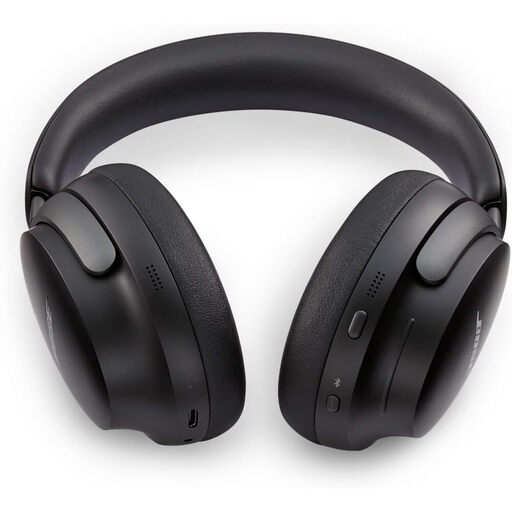
The Bose QuietComfort Ultra headphones establish themselves as the benchmark for immersive sound. They combine stunning noise cancellation with cutting-edge audio technologies.
See details for the Bose QuietComfort Ultra
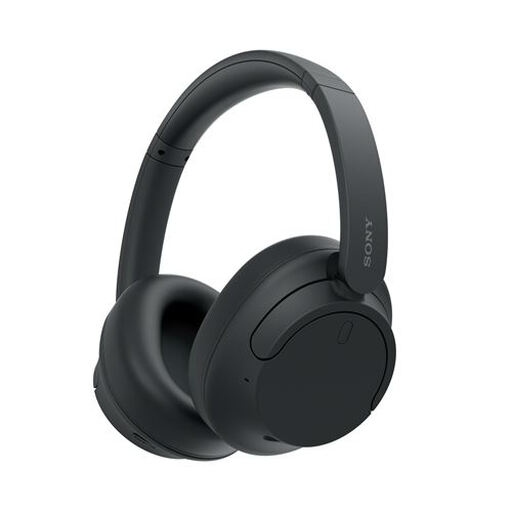
The Sony WH-CH720N noise-cancelling headphones are an excellent alternative that prioritises lightness and battery life without sacrificing audio quality.
See details for the Sony WH-CH720N
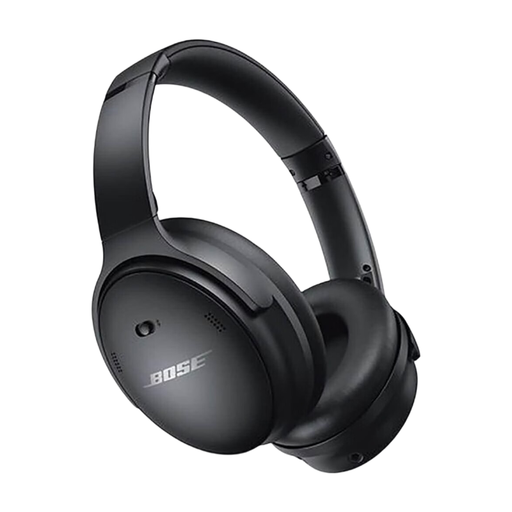
The Bose QuietComfort headphones are a true classic and a safe bet in the market. This model carries on the range's legacy by offering a perfect balance of noise cancellation, comfort, and sound quality.
See details for the Bose QuietComfort
Our selection is an excellent starting point, but the market is full of other gems. To explore other designs, features, or price points, feel free to browse our full collection.
Discover our full collection of black wireless headphones
Passive isolation is mechanical?: it's the headphones' ability to block sound through their physical design (dense earcups, closed-back shells). Active noise cancellation (ANC) is electronic?: microphones analyse ambient noise and generate an opposing sound wave to cancel it out. The best headphones brilliantly combine both.
No, ANC technology itself is safe. On the contrary?! By filtering out ambient noise, it often allows you to listen to your music at a more moderate volume, thus helping to protect your hearing. The danger, as with any headphones, comes from prolonged listening at excessive volumes.
Yes, the vast majority of over-ear wireless headphones, including those in our selection, have a 3.5mm jack. This allows you to switch to wired mode, which is very useful for plugging into an airplane's entertainment system or simply continuing to listen when the battery is dead.