
Livraison le jour même ou le lendemain

Qualité garantie

Débloquez vos offres de bienvenue: Livraison GRATUITE | Jusqu'à -80 % | 30 jours d'essai gratuits à JoyPlus
Téléchargez l'application
Navigating the endless condiment aisle can be tricky! Between the sharp kick of Dijon mustard, the unique crunch of whole-grain mustard, and more adventurous creations, it's easy to feel lost. Yet, the right jar of mustard is more than just a simple side; it's the secret ingredient that can turn an ordinary dish into a true feast.
Our goal with this guide is simple: to give you the keys to decode labels and choose with confidence. Forget the marketing jargon—let's focus on flavour! We'll help you find the perfect condiment for your taste buds and your recipes.
Before you click "Add to Cart", a few criteria deserve your attention. Once you've mastered these basics, you'll be choosing your mustard online like a pro.
Whether smooth or grainy, texture is the first thing you'll notice (both on the plate and on the palate!).
The heat, or "strength", of a mustard depends on the seed used (brown, black, or yellow) and the liquid in the recipe (vinegar, water, verjuice). A strong mustard will have that classic kick that goes right up your nose, as is tradition with Dijon mustard. Milder or flavoured versions, on the other hand, focus more on a complex bouquet of flavours than on pure heat.
There's a mustard for every dish! Think about how you plan to use it. For a homemade vinaigrette recipe that holds together, nothing beats a strong, smooth mustard. To add character to a pork chop or a roast, whole-grain mustard is unbeatable. And to elevate your sandwiches or marinades, a flavoured mustard like Savora will work wonders.
To help you choose, we've reviewed three essential must-haves, celebrated for their quality and versatility.
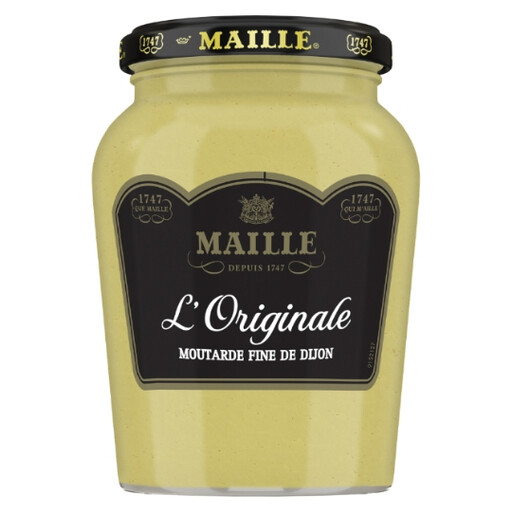
Why it stands out: It's THE benchmark for Dijon mustard. Since 1747, the house of Maille has offered a recipe with a bold character and an ultra-fine texture that has built its reputation. Its instantly recognisable heat and smoothness make it a pillar of French gastronomy.
Key features:
Who is it for?: For purists and lovers of French cuisine looking for a reliable choice that's as effective in a vinaigrette as it is on the side of a plate.
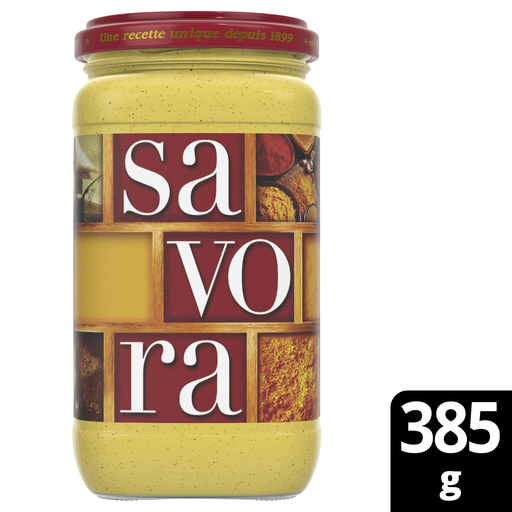
Why it stands out: Savora isn't strictly a mustard, but a cult-favourite condiment with a mustard base. Its secret recipe, which blends 11 spices and herbs (turmeric, paprika, coriander, celery...), gives it a mild, rich, and incredibly aromatic flavour.
Key features:
Who is it for?: For curious foodies who want to try something different, and for anyone who finds traditional Dijon mustard a bit too strong.
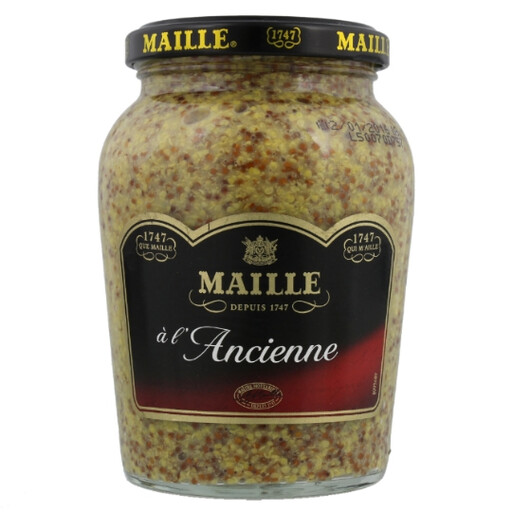
Why it stands out: Maille'sold-style version is all about the crunch of its seeds and the delicacy of its flavours. The whole mustard seeds not only provide texture but also add subtle nutty notes.
Key features:
Who is it for?: For fans of rustic textures and flavours. It's the perfect choice for those who like to see and feel the product in their dish.
Of course, there's no accounting for taste! Your ideal mustard might not be in this short selection. If you're looking for other varieties, different formats, or more specific flavours (like honey, tarragon, etc.), the possibilities are endless.
Feel free to explore our full range to find the hidden gem that will liven up your dishes.
Discover our entire category of sauces and mustards
It's all in how the seeds are prepared. For Dijon mustard, the seeds are ground very finely and then sifted to create a smooth paste. For whole-grain mustard (moutarde à l'ancienne), the seeds are left whole or just lightly crushed, which gives it its characteristic grainy texture.
Once opened, store it in the refrigerator with the lid tightly sealed! This is the best way to preserve its heat and flavours for as long as possible. Under the right conditions, it will easily keep for several months.
That famous heat that goes right up your nose comes from a chemical reaction triggered when mustard seeds (especially the feistier brown or black varieties) are crushed and mixed with a liquid. The vinegar used in Dijon mustard helps to stabilise this reaction and prolong that pungent sensation.