
Livraison le jour même ou le lendemain

Qualité garantie

Débloquez vos offres de bienvenue: Livraison GRATUITE | Jusqu'à -80 % | 30 jours d'essai gratuits à JoyPlus
Téléchargez l'application
Bikes, scooters, skateboards, roller skates... Urban mobility and recreational sports are more diverse than ever. With this versatility, the idea of a single multi-sport helmet is a clear choice for many. But how can you be sure you're making the right decision—one that balances safety, comfort, and price—without getting lost in marketing jargon?
As a Product Recommendation Officer at Joybuy, my role is to cut through the market noise to provide you with objective, practical buying advice. This guide is designed to help you identify the key criteria and discover a selection of products perfectly suited for your activities.
Before focusing on design or features, a few technical fundamentals are essential to guarantee your safety and comfort.
This is the non-negotiable criterion. For use in Europe, a helmet intended for cycling, skateboarding, or roller skating must be certified to the EN 1078 standard. This certification ensures the helmet has passed a series of tests for impact resistance and retention. Always check for this standard on the product label or in its description. A helmet without this certification should not be considered for purchase.
A helmet that is too loose or poorly positioned loses much of its effectiveness in a fall. A good adjustable helmet should offer two complementary adjustment systems:
To find your size, measure your head circumference with a tape measure, placing it about 1 to 2 cm above your eyebrows.
Comfort is crucial, especially during extended use. An effective ventilation system, with multiple vents, helps keep your head cool and wicks away sweat.
Other features can be very practical depending on your needs. A helmet with an integrated light at the rear is a significant visibility asset for an urban cycling helmet. A removable visor or magnetic goggles can also enhance the experience by protecting you from the sun or debris.
Based on criteria of safety, versatility, and features, here are two options from OutdoorMaster that cater to different needs.
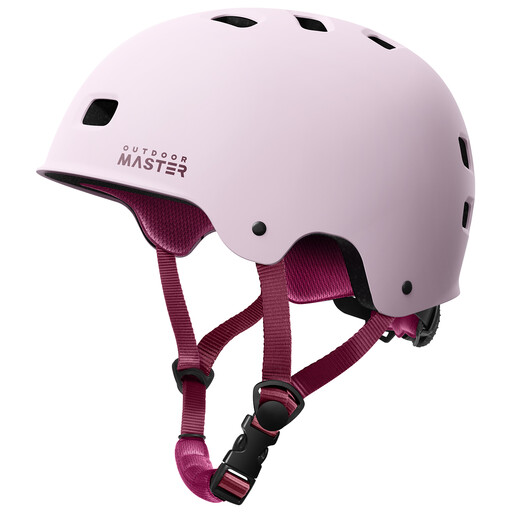
Why We Recommend It
This model is the archetype of an effective, no-frills multi-sport helmet. Its design features a reinforced ABS shell and a thick EPS foam liner, a combination renowned for its impact resistance. Its main advantage is its high degree of adaptability: it comes with two sets of removable liners of different thicknesses. This not only allows for a perfect fit but also makes it easy to wash the pads for impeccable hygiene.
Pros
Who Is This Product For?
This helmet is aimed at users looking for a single, simple, and reliable solution for multiple urban sports. If you switch from a scooter to a skateboard on the weekend, this is a highly relevant option. Its understated design, shown here as a pink helmet, makes it a discreet and functional choice.
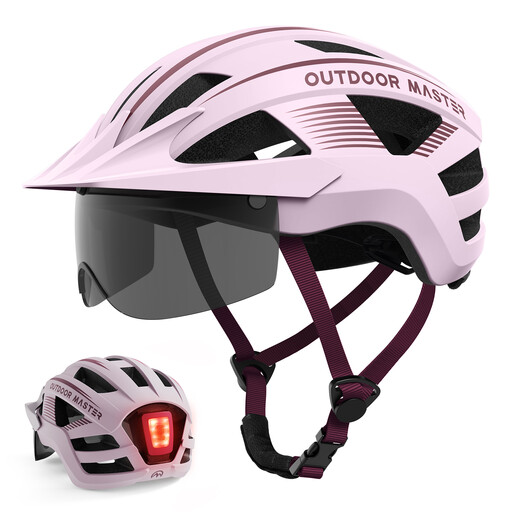
Why We Recommend It
This model is specifically designed for urban bike commuting. It integrates features that enhance both the cyclist's safety and comfort. The standout feature is undoubtedly its helmet with an integrated light at the rear, rechargeable via USB-C, which offers several modes to signal your presence to other road users. It also comes with removable magnetic goggles that protect against UV rays, wind, and rain, as well as a sun visor.
Pros
Who Is This Product For?
This adult bike helmet is a prime choice for commuters and urban cyclists looking for a complete package. If your daily rides expose you to varying light conditions and traffic, this helmet's features (light, goggles) provide real added value.
If visibility is your top priority, complementing your gear with high-performance lighting is an excellent idea. Beyond the helmet, consider lights for your bike or scooter.
For those who appreciate a coordinated aesthetic, there are lighting solutions that combine performance and style. For example, a [pink light](https://www.joybuy.fr/explore/lampe-rose/trJZlg5b) can perfectly complement a helmet of the same colour while boosting your visibility on the road.
1. Can you really use the same helmet for cycling and skateboarding?
Yes, provided the helmet complies with the European EN 1078 standard. This standard covers "helmets for pedal cyclists and for users of skateboards and roller skates." An EN 1078 certified helmet is therefore a true multi-sport helmet suitable for these different activities.
2. When should you replace your sports helmet?
It is imperative to replace your helmet after any significant shock or impact, even if no damage is visible on the outside. The internal shock-absorbing structure may be compromised. Additionally, it is generally recommended to replace your helmet every 3 to 5 years, as the materials (plastics, foams) degrade over time due to UV exposure and temperature changes, which reduces their protective capabilities.
3. How do you properly measure your head circumference for a helmet?
Use a soft tape measure. Place it around your head, about 1 to 2 centimetres above your eyebrows and ears, at the widest part of your skull. Read the measurement in centimetres. Do not pull the tape too tight. This measurement corresponds to the helmet size you should look for (e.g., 54-58 cm). An adjustable helmet will then allow you to fine-tune the fit for perfect comfort.