
Livraison le jour même ou le lendemain

Qualité garantie

Débloquez vos offres de bienvenue: Livraison GRATUITE | Jusqu'à -80 % | 30 jours d'essai gratuits à JoyPlus
Téléchargez l'application
A warning light illuminates your dashboard, and anxiety sets in. Before rushing to the garage fearing a hefty bill, know that there's a solution to take back control. A multi-brand car diagnostic tool allows any passionate mechanic or budget-conscious driver to identify the source of a fault, perform routine maintenance themselves, and ultimately, achieve significant savings.
This guide is designed to help you choose the car diagnostic tool that best fits your needs and budget. We've broken down the essential features and selected relevant models for you, all without unnecessary marketing jargon.
With the multitude of models available, it's hard to know where to start. To make the right choice, three criteria should be scrutinised.
The term "multi-brand" is a good starting point, but don't trust it blindly. While most tools are compatible with the OBD2 protocol (mandatory in Europe for petrol vehicles since 2001 and diesel since 2004), things get more complicated for more advanced diagnostics. To access advanced systems (ABS, airbag, transmission, etc.), it is imperative to verify the exact compatibility with your car's make, model, and year. The latest models also support more modern protocols like CAN-FD, a significant advantage.
A simple fault code reader only reads and clears errors related to the engine control unit. A diagnostic scanner with reset functions goes much further. It gives you control over essential maintenance tasks:
Bidirectional car diagnostics are another step above. This feature allows you to send commands directly to a component to test its response (for example, activating a fan, controlling an EGR valve, etc.). This is a major asset for pinpointing a fault with surgical precision.
The most common models today are Bluetooth OBD2 scanners. This small device plugs into the car's OBD2 port and communicates wirelessly with a dedicated app on your smartphone or tablet (Android and iOS). It's a solution that is as practical as it is compact. Pay close attention to the pricing model: while some manufacturers include lifetime software updates, others impose an annual subscription to maintain access to advanced functions. For a private individual, a model without recurring fees is by far the most cost-effective.
We have selected three models with an unbeatable feature-to-price ratio, each catering to a different user profile.
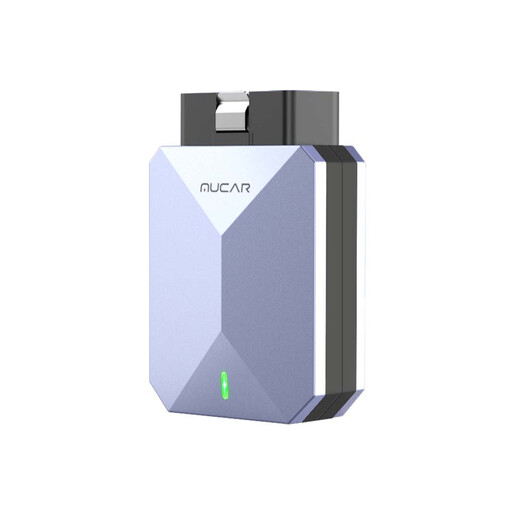
Its Strong Suit: The BT200 MAX features an intelligent, AI-based diagnostic assistant. Instead of just displaying an obscure error code, it analyses it, explains it, and suggests potential repair solutions. This is a decisive advantage for beginners who want to not only fix but also understand the issue.
Advantages:
Who is it for? Ideal for the demanding home mechanic looking for an ultra-comprehensive tool, but also for the novice who will be perfectly guided by the AI assistant during their first diagnostics.
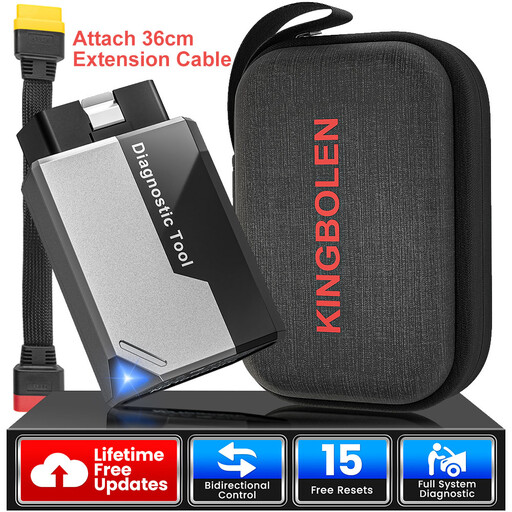
Its Killer Feature: Its knockout argument: lifetime free updates for ALL its functions (full diagnostics, 15 reset services, and bidirectional control). It's a one-time investment with no nasty surprises or future subscriptions.
Advantages:
Who is it for? Perfect for the forward-thinking car owner who wants a powerful and future-proof DIY car diagnostic tool, but also for tradespeople or small garages looking for a versatile device without breaking the bank on subscriptions.
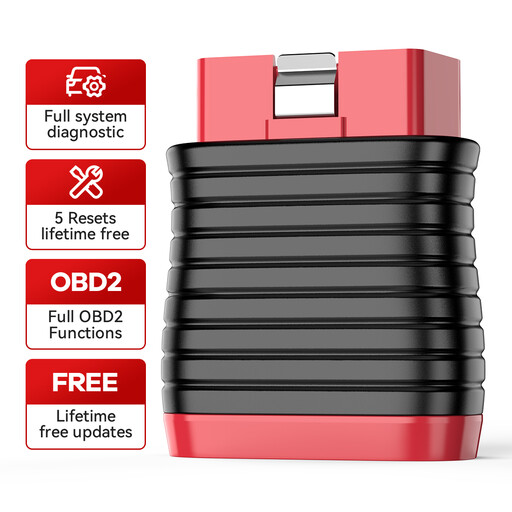
Its Strong Suit: The THINKDIAG BD6 gets straight to the point with formidable efficiency. It offers full-system diagnostics and includes 5 of the most useful reset functions, all with a lifetime free license. Its simplicity makes it an excellent first purchase.
Advantages:
Who is it for? The perfect tool for the car owner who wants to do their own basic maintenance (oil changes, brake pads) and be able to diagnose any warning light, without paying for advanced features they will never use.
Our selection focuses on the best feature-to-price ratios for private individuals and enthusiasts. However, the world of car diagnostics is much broader, with professional tools offering even more advanced capabilities. If none of these models check all your boxes, feel free to browse our complete catalogue.
Discover our full range of vehicle diagnostic scanner tools
A code reader is the most basic diagnostic tool. It connects to your car's OBD2 port to read standard error codes (those starting with "P0", "P2", "P3", etc.) issued by the engine control unit. It can also turn off the famous "Check Engine" light by clearing these codes. Its functionality is almost exclusively limited to the engine and emissions system.
No, and this is a crucial point. Even a multi-brand car diagnostic scanner is not 100% compatible with the entire vehicle fleet. While reading and clearing engine fault codes (via the OBD2 protocol) works on almost all post-2001 cars, compatibility for advanced diagnostics (ABS, airbag, DPF, etc.) and service functions (resets, coding) depends specifically on the make, model, and year. The rule of thumb: always consult the manufacturer's detailed compatibility list before you buy.
Absolutely, and the math is simple. A single "diagnostic scan" at a garage costs between €50 and €100. With your own tool, this step is free. You can then judge the severity of the problem yourself: is it just a dirty sensor or a more serious fault? By performing the reset yourself after an oil change or brake pad replacement, you also save on labour costs. The investment in a scanner therefore usually pays for itself after the first or second use.