Label-conscious shoppers
You want to compare similar biscuits before serving them during a film. The nutrition table lets you check things like sugars, fat and salt per 100 g. If shown, Nutri-Score can help you make the comparison too.


For movie night, choose a digestive biscuit if you’re after that classic recipe, an oat biscuit if you’d like to compare the stated fibre content, or individually wrapped portions if serving size matters most. In each case, compare the nutritional information per 100 g and check the allergens for the exact product. According to the DGCCRF, Nutri-Score is voluntary in France, so if it’s not shown, you’ll need to read the label instead.
You want to compare similar biscuits before serving them during a film. The nutrition table lets you check things like sugars, fat and salt per 100 g. If shown, Nutri-Score can help you make the comparison too.
You’re after the flavour and texture of a classic digestive. The name doesn’t guarantee any digestive benefit or a particular nutritional profile, so the ingredients list is still what matters.
If gluten or an allergen is a concern, check the exact product you plan to buy, including highlighted allergens and any ‘may contain’ warnings. The name of a biscuit type alone isn’t enough to establish whether it’s suitable.
For biscuits to enjoy during a film, start with your main priority, then compare the labels of products that meet your needs.
| What matters to you | What to check | Who it matters to |
|---|---|---|
| Nutritional information | Compare sugars, saturated fat and salt per 100 g. Check the Nutri-Score if it’s shown on comparable products. | If I’m snacking during a film, I want to be able to read the label before choosing a packet. Around 50% of consumers put this nutritional comparison first. |
| Flavour and serving | Check the type of biscuit, packet weight and whether it comes in individual packs. | When sharing biscuits during a film, I look for a recipe the group will enjoy and a format that’s easy to serve. This is the priority for around 30% of consumers. |
| Dietary restrictions | Read the ingredients, highlighted allergens and any ‘may contain’ warnings for the exact product. | Before choosing a flavour or format, I need to rule out biscuits that aren’t suitable for the dietary restrictions in question. This comes first for around 20% of consumers. |
The name of the biscuit doesn’t prove that it offers any digestive benefit. Carrefour France’s product page for McVitie's Digestive Original lists 483 kcal and 21.3 g of fat per 100 g. Those are the figures for that particular product, not all digestives.
Compare the ingredients and values per 100 g for the packets you’re interested in, rather than assuming anything from their name.
The DGCCRF describes Nutri-Score as a voluntary label in France, separate from the nutrition declaration required for most prepacked foods.
If it’s shown, use it to compare similar products. Otherwise, read the nutrition table and ingredients list.
It can be harder to keep track of how much you’re eating when a packet is passed around during a film. Manger Bouger also highlights snacking in front of screens.
You could put a portion in a bowl before the film starts, or choose individual packs if they suit the group.
An oat biscuit isn’t necessarily wheat-free: Auchan France’s product page for one Bjorg whole oat product lists wheat and egg, among other ingredients.
Check the ingredients and any ‘may contain’ warnings for the exact product, even if its name highlights oats or says it’s gluten-free.
The details below relate to the specific products mentioned, not every biscuit made by each brand.
A classic digestive to compare if you’re looking for this type of biscuit to share.
An alternative to a classic digestive if you’d like to look at a recipe made with whole oats.
An option to consider when smaller portions matter more than a digestive recipe.
A digestive to consider when you need a ‘gluten-free’ option.
A range of biscuits with recipes and formats to compare product by product.
If you’d like to check the label before serving biscuits on movie night, this fig and bran option is another recipe to consider. It isn’t being presented as a classic digestive.
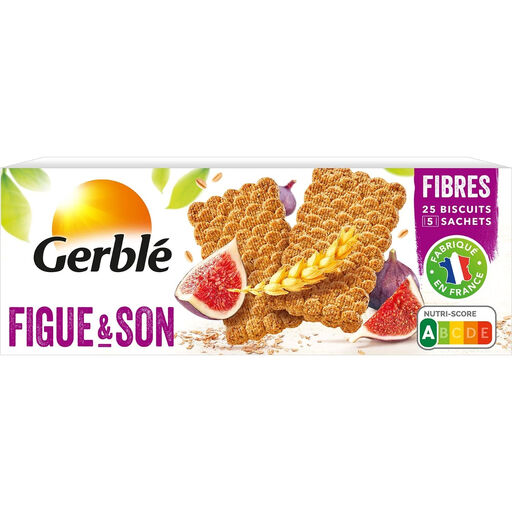 Image unavailable
This fig and bran recipe is worth considering if you’d like to try a different type of biscuit for the film. The packet contains 210 g. Check the label to compare nutritional information and see whether it meets the group’s allergen requirements.
No. According to the DGCCRF, Nutri-Score is a voluntary label in France, while a nutrition declaration is required for most prepacked foods. If the logo isn’t shown, compare the nutritional information per 100 g and the ingredients.
Compare the values per 100 g for similar biscuits, rather than comparing portions of different sizes. The DGCCRF says that nutrition declarations are shown on this basis. Pay particular attention to sugars, saturated fat and salt, then consider how much you plan to serve.
Read the ingredients list for each product you choose: allergens are highlighted there, as the DGCCRF explains. Also check for any relevant ‘may contain’ warnings, rather than relying on the recipe name alone.
No. The Anses explains that having no added sugars doesn’t rule out sugars naturally present in the ingredients. To find out the stated sugar content of the biscuit, check the ‘of which sugars’ line in the nutrition table.