
当日/次日达

品质保障

开启新人专享福利: 全场免邮 | 低至 2 折 | 免费试用 30 天 JoyPlus 会员
下载 Joybuy
By Joybuy, Our Product ExpertPublished on?: August 26, 2026
Does your skin feel tight, turn red at the slightest touch, and seem to react to everything?? Finding the right moisturizer for sensitive skin can quickly become an uphill battle. The market is saturated with promises, but not all formulas are created equal when it comes to providing lasting relief for reactive skin.
Before making your choice, it's crucial to know how to avoid the most common marketing traps, which can worsen discomfort instead of relieving it.
To make an informed choice, focus on concrete criteria rather than slogans. Here are the three key steps to take before any purchase.
The first step?: turn the product over and decode its composition. For a moisturizer for sensitive skin, look for ingredients with proven effectiveness for their soothing and restorative properties?:
Conversely, be especially vigilant about potentially irritating ingredients like denatured alcohol (Alcohol Denat.), perfumes (Parfum/Fragrance), and certain essential oils. A hypoallergenic moisturizer is often formulated without these components.
Sensitive skin is, above all, skin with an impaired barrier function. This barrier, or hydrolipidic film, normally protects it from aggressors (pollution, bacteria, allergens) and maintains its hydration. When damaged, the skin becomes permeable, reactive, and prone to facial tightness.
The main role of your cream is not just to hydrate the surface, but to provide the necessary elements to rebuild this protection. A skin barrier repair cream is therefore a fundamental investment for achieving lasting relief and reducing sensitivity in the long run.
Sensitivity can affect all skin types, and the texture of your skincare must be adapted for optimal comfort.
To help you see more clearly, we have analyzed several formulas based on their simplicity, ingredient efficacy, and suitability for specific needs.
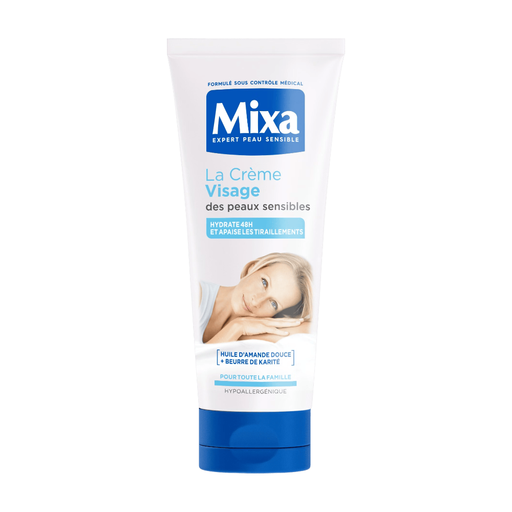
Why we chose it : A formula designed for the whole family, including the delicate skin of children. It gets straight to the point : hydrating and soothing with sweet almond oil and vitamin E, with no frills. Its generous size makes it a budget-friendly option for daily use.
It proves that effectiveness isn't a matter of price. Its formula is simple, dermatologically tested, and hypoallergenic, focusing on soothing relief rather than complex marketing promises.
Universal and affordable formula, tested on sensitive skin to calm redness and tightness.
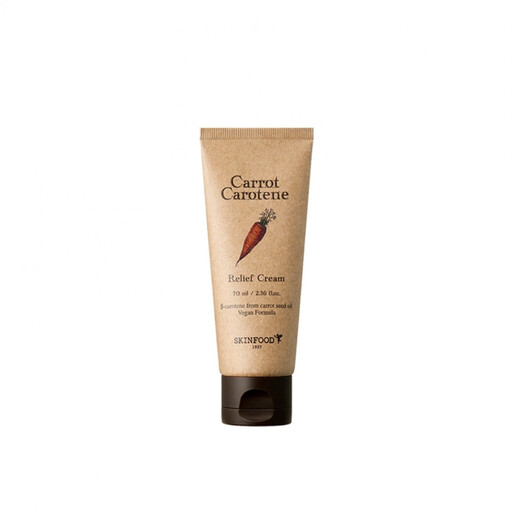
Why we chose it : Ideal for those whose main concern is calming redness and irritation. Its vegan formula uses carrot extract and β-Carotene, known for their soothing properties. Its lightweight gel-cream texture is refreshing and absorbs quickly.
It steers clear of the vague "natural" trap by focusing on a specific plant-based ingredient (carrot) for targeted action. It's an anti-redness cream that focuses on immediate relief without irritating the skin.
Lightweight gel-cream texture and a β-Carotene-based formula for a soothing and calming action on irritated and reactive skin.
We've compiled a complete, up-to-date list of proven products that meet these strict selection criteria.
Yes, most soothing moisturizers can be used morning and evening. A day cream might sometimes contain a sunscreen (SPF), which isn't necessary at night. If your cream doesn't have SPF, you can absolutely apply it twice a day after cleansing your skin. Consistency is key to helping the skin barrier strengthen itself.
The soothing effects on tightness can be almost immediate after application. However, for deep repair of the skin barrier and a visible reduction in redness and reactivity, it generally takes 3 to 4 weeks of regular use, which is the length of a skin cell renewal cycle.
Yes, it's possible, although the risk is minimal. The term "hypoallergenic" means the product has been formulated to minimize the risk of allergies. It generally doesn't contain the most common allergens. However, every skin is unique and can react to a specific ingredient. As a precaution, it's always recommended to do a patch test on a small area (like the crook of your elbow or behind your ear) 24 hours before applying a new product to your entire face.