
Livraison le jour même ou le lendemain

Qualité garantie

Débloquez vos offres de bienvenue: Livraison GRATUITE | Jusqu'à -80 % | 30 jours d'essai gratuits à JoyPlus
Téléchargez l'application
Whether you're an artist, illustrator, or art student, finding the right surface is the first step in any creative process. But juggling one paper for pencil, another for ink, and a third for paint quickly becomes a hassle... and a financial drain. This is where mixed media paper comes in—a versatile surface designed to handle both wet and dry techniques.
But be warned, not all mixed media papers are created equal. Weight, grain, composition... every detail influences how colour is applied, how water is absorbed, and how well the paper withstands corrections. To help you see more clearly, we've broken down the essential criteria and selected the best papers on the market today.
Before diving into our selection, let's review the three characteristics that define a good paper for drawing and painting.
Expressed in grams per square metre (g/m? or gsm), weight is arguably the number one criterion for mixed-use paper. It determines the paper's ability to handle moisture without buckling or tearing.
The paper's grain is simply the texture of its surface. The choice will depend entirely on your style and preferred media.
From a portable sketchbook you can take anywhere to a large format for the studio, the choice is vast. Glued pads are perfect for cleanly detaching sheets, while highly practical spiral-bound pads fold back completely for a flat working surface. The most common formats remain the classic A5, A4, and A3.
Now, let's move on to our selection. We've chosen several fine art papers that shine for their versatility and reliability, with options for all needs and budgets.
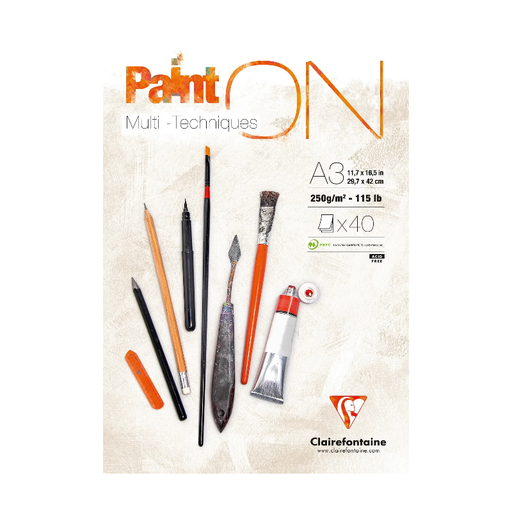
A true benchmark in the Clairefontaine Paint'ON range, this paper has it all. Made of 100% cellulose, its sturdy 250 g/m? weight ensures excellent performance with wet media. Its extra-white, very fine-grained surface makes colours pop, while also lending itself beautifully to detail work.
For artists, illustrators, and students who want a single, reliable surface to juggle multiple media, especially gouache and ink.
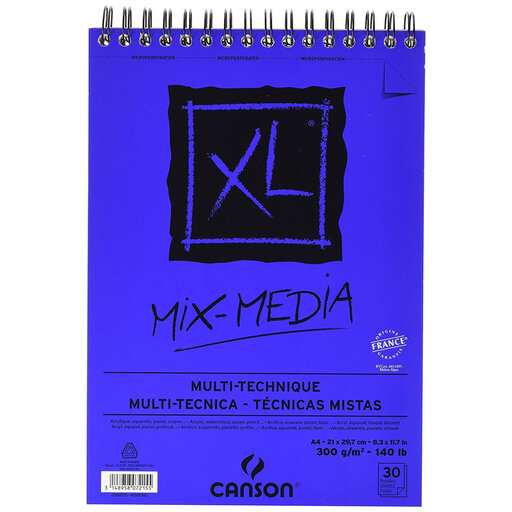
The Canson XL range is a classic in art schools, and for good reason: its value for money is unbeatable. This spiral-bound drawing pad comes in several weights, but it's the 300 g/m? medium-grain version that interests us here. Particularly robust, it's built for wet media like acrylic or watercolour. Bonus: the spiral binding, which is always practical for working flat.
For artists and students who heavily use wet media and are looking for the convenience of a spiral-bound pad, whether for sketches or finished pieces.
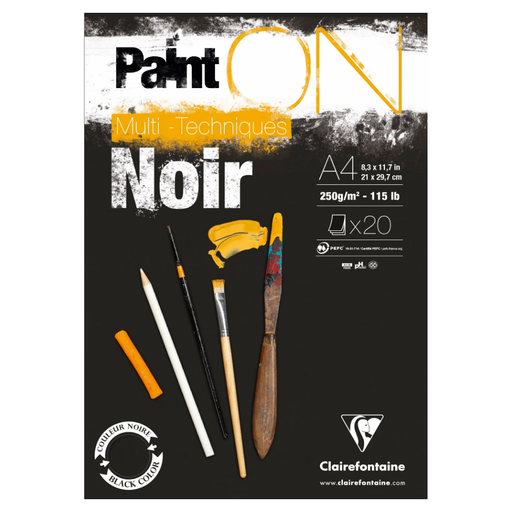
Why not cross over to the dark side? Working on a dark surface opens up incredible creative possibilities. This deep black paper from the Paint'ON range is perfect for making light, metallic, or fluorescent colours pop. With its 250 g/m? weight, it shares the same durable qualities as its white counterpart, making it compatible with both wet and dry techniques.
For creatives who want to explore drawing and painting on a dark background and create works with spectacular contrast.
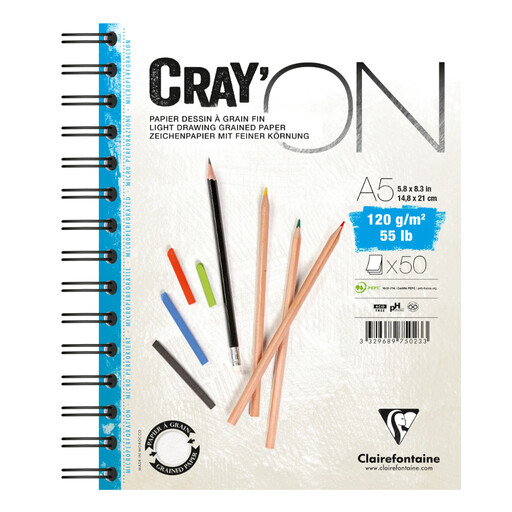
This pad is the perfect solution for those who primarily use dry media but want a paper that won't buckle at the first drop of ink. With its 120 g/m? weight and very fine grain, it's an excellent surface for sketching, pencil drawing, and markers. The added bonus: it's acid-free, ensuring better preservation of your artwork over time.
For drawers, sketch artists, and students who mainly work with dry media but require a sturdier paper than a standard drawing sheet.
Our selection highlights some tried-and-true favourites, but the world of fine art paper is vast. To explore other weights, textures, or formats and find the hidden gem that suits your practice, feel free to browse our complete category.
? Discover our full range of paper and boards on Joybuy.fr
For truly versatile use that includes wet media (gouache, acrylic), aim for 250 g/m? or more. This gives you peace of mind. If you mainly work with dry media with just a bit of marker or ink, a paper between 160 and 200 g/m? will do the job.
Yes, but in moderation. It's entirely possible on papers of 250 g/m? and up. However, keep in mind that a mixed media paper, often made of cellulose, doesn't have the same absorption as a true 100% cotton watercolour paper. The pigments won't feather in the same way, and the paper will buckle more quickly if you saturate it with water. For light washes, it's an excellent alternative.
It's all a matter of composition and treatment. Watercolour paper, often 100% cotton, is the champion of absorption and stability: it soaks up water without warping. Mixed media paper, on the other hand, is generally made of cellulose. It's an excellent compromise: much more water-resistant than a classic drawing paper, but less specialised than a dedicated watercolour paper.
By the Joybuy Editorial Team