
Livraison le jour même ou le lendemain

Qualité garantie

Débloquez vos offres de bienvenue: Livraison GRATUITE | Jusqu'à -80 % | 30 jours d'essai gratuits à JoyPlus
Téléchargez l'application
Whether you're an artist, student, or illustrator, you know that choosing the right paper is just as crucial as selecting your brushes or pencils. An unsuitable surface can ruin hours of work: paper that buckles under watercolour, ink that bleeds, colours that lose their vibrancy... Mixed-media paper presents itself as the ultimate versatile solution, but how do you navigate the countless options in weight, texture, and size?
This guide is here to shed some light. We'll break down the essential criteria for choosing your paper and present our selection of the best products—all without the unnecessary marketing jargon.
Before diving into our top picks, it's essential to understand the three key characteristics that define a paper and its suitability for your projects.
Expressed in grams per square meter (gsm), paper weight indicates its thickness and density. It's a critical factor, especially if you work with wet media.
The grain of the paper refers to its surface texture. Your choice will directly depend on the finish you're aiming for.
Finally, the format should suit your workflow. An A5 sketchbook slips into any bag for drawing on the go, while a large-format drawing pad, like A3 Canson paper, is better suited for large-scale works in the studio. Pads glued on one or four sides are a real bonus: they keep the sheet perfectly taut when you're working with wet media.
Here are the products that caught our eye, each standing out for its versatility and unique strengths, catering to different artistic needs.
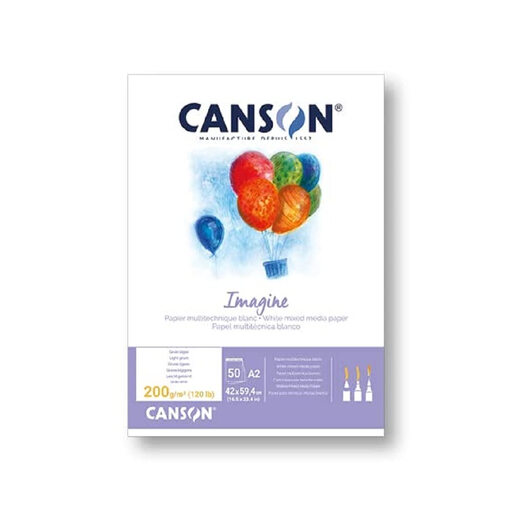
The Canson Imagine is a champion of versatility, with a value for money that's hard to beat. Its 200 gsm weight is an excellent compromise for switching between dry media and light wet applications (gouache, watercolour washes). We love its natural, fine-grain texture, which is very pleasant to the touch and ensures beautiful pigment adhesion. Its pure white colour guarantees striking contrast and makes colours truly pop.
Pros:
Who is it for? Art students and artists looking for a quality paper supply to experiment freely, from simple sketches to more ambitious projects.
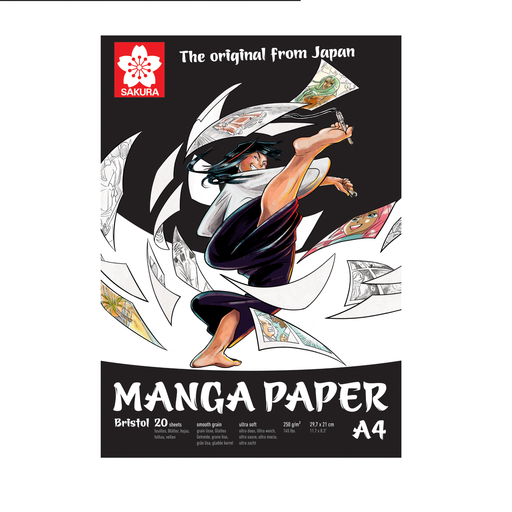
Tailor-made for mangakas and illustrators, this Sakura paper stands out with its heavyweight 250 gsm and ultra-smooth surface. It's the perfect combination for inking with a pen or marker: the ink doesn't feather, and lines are surgically precise. It also effortlessly handles alcohol markers and solid colour blocks without any bleed-through.
Pros:
Who is it for? Manga artists, comic book creators, and illustrators who primarily work with ink and markers and aim for a flawless, professional finish.
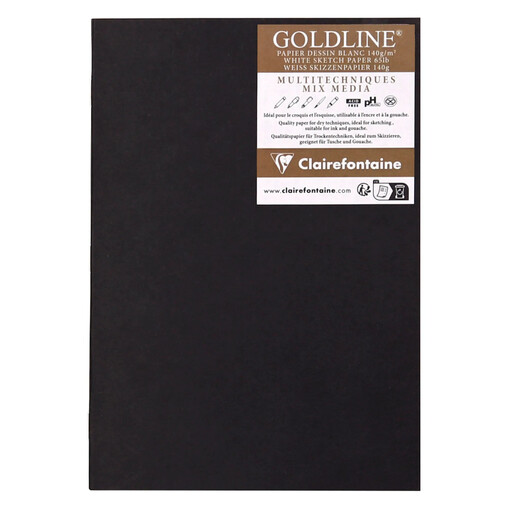
This notebook from Clairefontaine's Goldline range is the ultimate travel companion. Its A5 size and soft cover slip into any bag. Don't be fooled by its lightweight 140 gsm; the paper is of impeccable quality and performs very well with dry media and light washes. Its real strength? The stitched binding, which allows it to open perfectly flat, ideal for drawing across a two-page spread.
Pros:
Who is it for? Mobile artists, urban sketching fans, and anyone who wants a quality notebook for their daily sketches and visual notes.
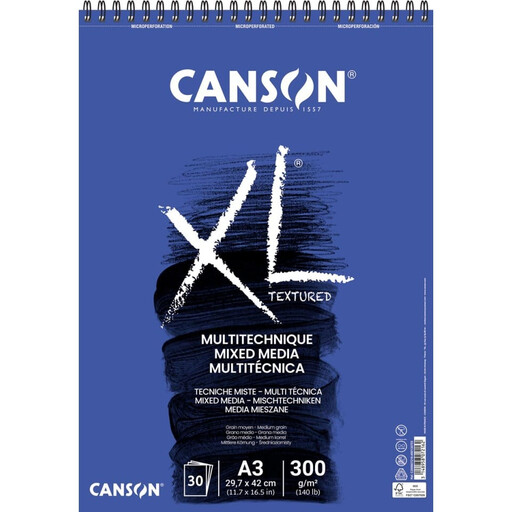
The Canson XL Mix Media pad is a go-to classic, favoured by students and artists alike. Its medium-grain 300 gsm paper is a true heavyweight, as robust as it is versatile. Textured enough to grip pencil, it is above all resistant enough to handle wet media (watercolour, gouache, and even acrylic) without buckling. Compliant with the ISO 9706 conservation standard, acid-free, and treated against mould, it guarantees excellent longevity for your artworks.
Pros:
Who is it for? Fine arts students and artists who love to explore a wide range of techniques, especially wet media, and are looking for a reliable and durable surface, particularly in the A3 Canson paper format.
Our selection is just a starting point. If your needs are more specific or if you want to explore a wider variety of grains, sizes, and brands, many other gems await you.
Explore our full range of Drawing Papers to find the perfect surface for your next masterpiece.
A mixed-media paper is a versatile, jack-of-all-trades surface designed to accommodate many media, both dry and wet. A dedicated watercolour paper, often 100% cotton and with a weight over 300 gsm, is specifically optimised to absorb large amounts of water, allow for "wet-on-wet" techniques, and permit pigment lifting. A mixed-media paper only offers these capabilities to a limited extent.
For maximum versatility, aim for a weight between 180 and 250 gsm. This is the perfect middle ground: sturdy enough for light gouache or watercolour washes without too much buckling, while remaining pleasant for drawing with pencil or pen. If you primarily work with wet media, go directly for 250 gsm or higher.
Yes, mixed-media paper is generally a good surface for ink. To prevent it from bleeding or feathering, opt for a fine-grain paper with a weight of at least 200 gsm. Heavier and smoother papers, like those dedicated to manga, are particularly effective at preventing alcohol markers from bleeding through the sheet.