People who reheat food every day
In a studio flat, kitchenette or holiday home, you mainly want to reheat meals and defrost food without having to juggle lots of settings. UFC-Que Choisir’s guide describes these common uses for a microwave.


If you mainly reheat and defrost food, start with a straightforward microwave. Choose a grill model for occasional browning, or a combination microwave with fan heating if you also want to cook oven-style dishes. In a kitchenette, check that the functions you need fit the space available, the dishes you use and the ventilation requirements. A mini oven or air fryer is better suited to dry cooking that your current appliances can’t handle.
In a studio flat, kitchenette or holiday home, you mainly want to reheat meals and defrost food without having to juggle lots of settings. UFC-Que Choisir’s guide describes these common uses for a microwave.
You want to occasionally make gratins, pizzas or bakes on a worktop, as well as reheat meals. For these uses, UFC-Que Choisir’s guide distinguishes between a grill and the fan heating found in a combination microwave.
You already have a way to reheat food, but want to brown certain dishes without filling your kitchen with appliances that do much the same thing. The ranges described by Whirlpool and Moulinex show the different functions worth comparing.
UFC-Que Choisir’s guide distinguishes between a basic microwave for reheating, a grill for browning and a combination microwave with fan heating for oven-style cooking. An appliance designed for dry cooking meets a different need: first check what your current equipment can already do.
Choose this if: reheating and defrosting make up most of the food preparation you need to do.
Bear in mind: it won’t provide the dry heat you need for roasting or browning.
Choose this if: you’d also like to brown dishes from time to time.
Bear in mind: a grill on its own won’t offer all the cooking functions of a fan oven.
Choose this if: not having an oven stops you making the oven-style dishes you actually cook.
Bear in mind: according to UFC-Que Choisir, combination models cost more than basic microwaves. Their dimensions and functions also vary from model to model.
Choose this if: dry cooking is your priority and you already have another appliance for reheating.
Bear in mind: these appliances don’t cover every use of a microwave and may duplicate functions you already have in a combination model.
| Priority | What to check | Who it’s for |
|---|---|---|
| Reheating and defrosting | Measure the space, allowing for the clearances required in the instructions. Compare the usable cavity size with the dishes you usually use. | I want to reheat meals and defrost food without giving up too much space to an appliance I’ll mainly use for these tasks; around 33% of consumers would prioritise this need. |
| Cooking without an oven | For baking or roasting, look for fan heating and check the temperature range and which accessories are supplied for these types of cooking. | Without a conventional oven, I also want to cook meals and oven-ready dishes, not just reheat food; this would be the priority for around 45% of consumers. |
| Browning food without doubling up | Compare the settings on your current appliances, then check how easy the appliance is to clean, how its door or drawer opens, and the guidance on hot surfaces. | I can already reheat meals, but I’d like a way to brown or crisp food without taking up more space in my kitchenette; around 22% of consumers would put this need first. |
A grill and fan heating are useful if your meals genuinely need those cooking methods. If you mainly reheat leftovers and defrost food, these functions may make it harder to choose without meeting any additional need.
Make a note of the dishes you plan to cook regularly before comparing a combination model with a basic microwave.
The cavity capacity alone won’t tell you whether your dish will fit, or whether the appliance will fit in its space once you account for the open door and ventilation.
Measure the available width, height and depth. Also check the turntable size or usable surface area, and the clearances specified in the instructions.
A container that’s suitable for microwave use isn’t necessarily suitable for grill or convection heat. UFC-Que Choisir notes in particular that plastic used in microwave mode must not be used with these cooking functions.
Check the instructions for both the appliance and the container for each mode you select. Only use a metal accessory if the instructions explicitly allow it for that mode.
An extra appliance can take up worktop space without providing the cooking function you’re missing. UFC-Que Choisir tests have also found very hot surfaces on mini ovens, so take particular care where you place one in a small kitchen.
Compare your recipes with the functions your current appliances already offer, and follow the clearance guidance in the instructions. Keep the appliance away from busy walkways.
Freestanding models to compare if you’re choosing between a compact option and a combination model with several cooking modes.
Freestanding combination models worth a look if fan heating is one of the functions you need.
A brand to consider for some combination microwaves that bring several cooking modes together.
Mini ovens and air fryers to compare if dry cooking matters more to you than microwave defrosting.
These Joybuy models are suited to reheating and defrosting, with or without a grill for occasional browning. If you want to bake or roast without a conventional oven, check separately for suitable fan heating.
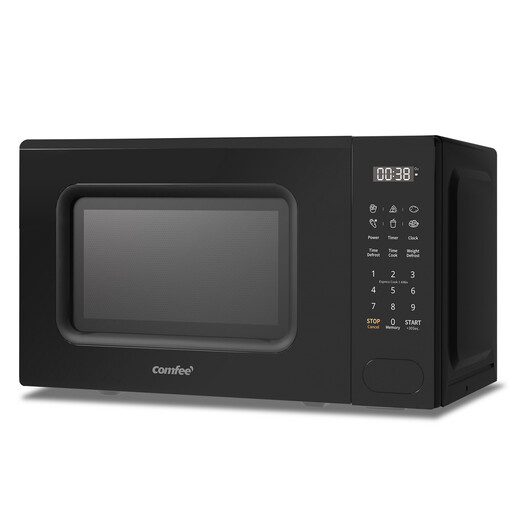 Image unavailable
For reheating and defrosting in a kitchenette, provided it fits the space available.
Rated at 700 W, with six pre-set menus, eleven power levels and a defrost function. Check the turntable size against your dishes and allow for the clearances specified in the instructions.
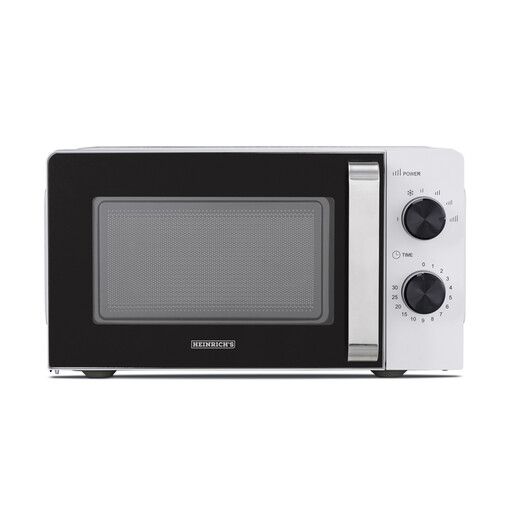 Image unavailable
For reheating meals and defrosting food, with controls to compare against your usual routine.
Six power levels, a 30-minute timer, interior light, turntable and a stated power rating of 700 W. Measure the space, allowing for the clearances in the instructions.
 Image unavailable
For microwave reheating with the option to brown a dish occasionally. The grill on its own won’t replace the fan heating of an oven.
Rated at 700 W. Before using the grill, check which containers are suitable and how much space to leave around the appliance.
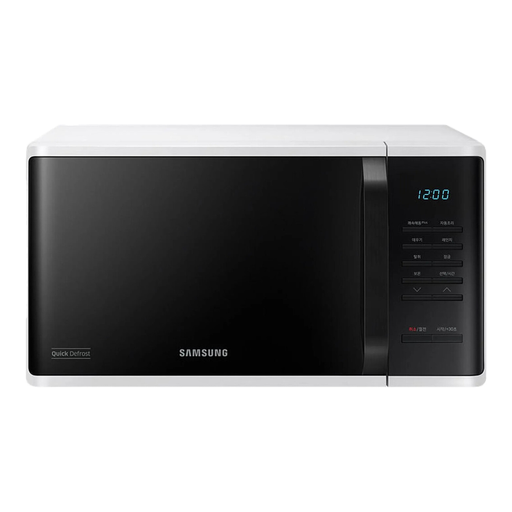 Image unavailable
For reheating and defrosting, without the need for a grill or oven-style cooking function.
Quick Defrost function and LED display. Check its overall size, including the clearances specified in the instructions, against the space available.
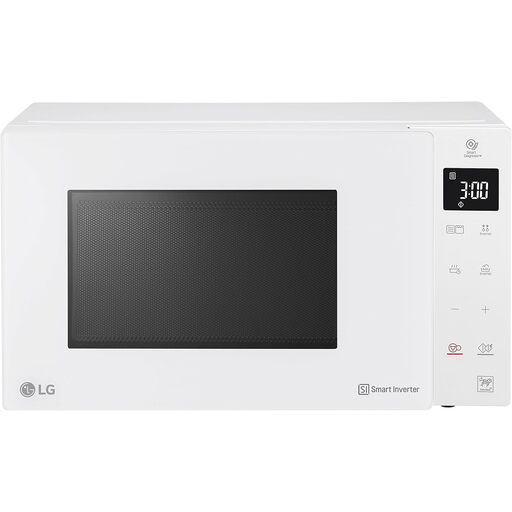 Image unavailable
For reheating and occasional grilling, if this setting suits the dishes you make and you don’t need fan heating.
Digital display. Check which dishes are suitable for grill mode and the clearances specified in the instructions.
It can handle some oven cooking if the model has fan heating suited to your recipes, but it won’t necessarily do everything a conventional oven can. For baking or roasting, check the available temperature, cavity size, accessories and preheating requirements. UFC-Que Choisir distinguishes these functions from those of a basic grill.
Not without checking that they’re suitable for this mode. A container that’s safe to use in a microwave may not withstand the heat from a grill or convection setting. UFC-Que Choisir notes that plastic used in microwave mode must not be used with these functions; follow the instructions for both the container and the appliance.
Follow the instructions to clean the cavity and accessories without damaging their surfaces. UFC-Que Choisir advises unplugging the appliance before cleaning, wiping it with a sponge lightly soaked in washing-up liquid, then rinsing and drying it. Only put removable parts in the dishwasher if their instructions say they’re dishwasher-safe.
No. You must leave the clearances and ventilation space specified in its instructions. UFC-Que Choisir tests found that mini ovens can have very hot outer surfaces. Make sure there’s room to open the door and avoid placing the appliance where someone might touch it while it’s hot.