
Livraison le jour même ou le lendemain

Qualité garantie

Débloquez vos offres de bienvenue: Livraison GRATUITE | Jusqu'à -80 % | 30 jours d'essai gratuits à JoyPlus
Téléchargez l'application
By the Joybuy Editorial Team, July 20, 2026
A 4K video recording that stops abruptly, a burst of RAW photos that overloads the buffer, hours spent waiting to transfer your files… These frustrations are often a sign that your memory card isn't right for your gear. Faced with a jungle of standards (UHS-I, UHS-II, SD Express) and speed classes (V30, V90), choosing the right storage media can quickly become a real headache.
This guide is designed to demystify the spec sheets and present a selection of the best cards on the market today. Our goal: to give you everything you need to make an informed choice that's perfectly suited to your work as a photographer, videographer, or content creator.
Before jumping on the first deal you see, it's crucial to understand a few technical criteria that make all the difference in performance.
This is the first spec to check, as it determines the card's theoretical peak speed.
Pro Tip: Always check the compatibility of your camera memory card. A device that only supports UHS-I cannot take full advantage of a UHS-II card's speed.
Essential for video, this class guarantees a minimum sustained write speed. It's your insurance against recording interruptions.
Cards are divided into two categories: SDHC (up to 32 GB) and SDXC (from 64 GB to 2 TB). For 4K/8K video and RAW photography, a high-capacity SDXC card (128 GB or more) is highly recommended to avoid running out of space mid-shoot.
We've selected three standout cards for you, built for professional and semi-professional use.
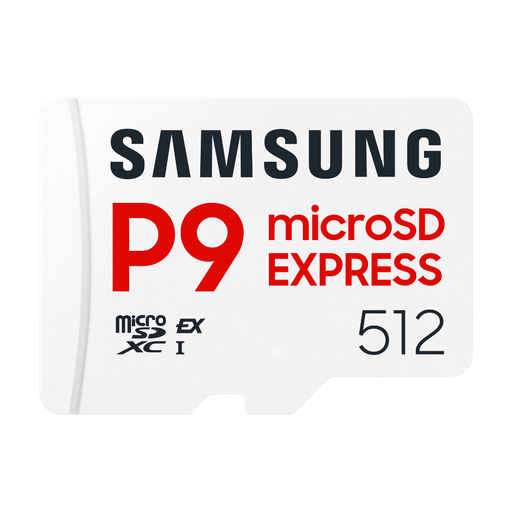
Why it stands out: With its SD Express interface, this card is playing in the big leagues. It delivers read speeds worthy of an SSD, slashing transfer times and revolutionising your post-production workflow.
Highlights:
Who is it for? Image professionals already equipped with SD Express-compatible gear who want an immediate productivity boost and a foothold in the future of video.
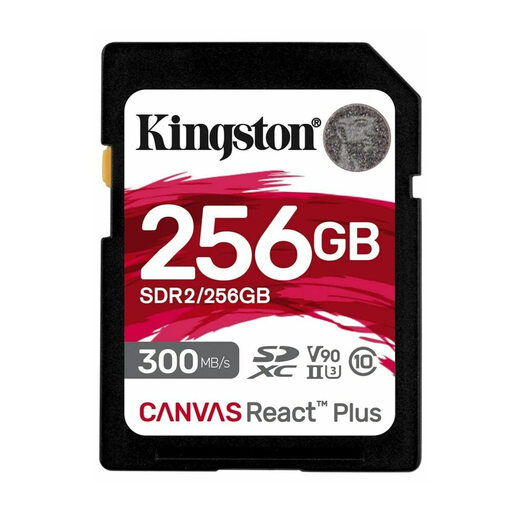
Why it stands out: The Canvas React Plus is a reliable choice in the UHS-II world. It shines with its perfect balance of extremely high read and write speeds. In practice, it's just as effective at recording your footage as it is at transferring it to your computer.
Highlights:
Who is it for? Sports or action photographers and professional videographers using UHS-II compatible mirrorless cameras or camcorders. It's the reliable choice for consistent performance in the field.
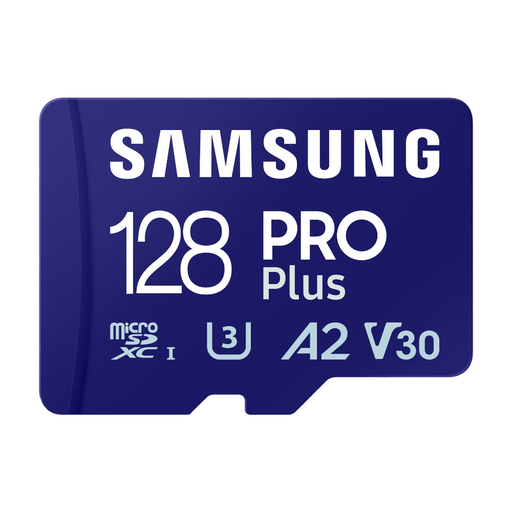
Why it stands out: This microSDXC card delivers excellent performance for a UHS-I card, even exceeding the standard's specifications. Its versatility, thanks to the included SD adapter, makes it a true Swiss Army knife for numerous devices.
Highlights:
Who is it for? On-the-go content creators, users of drones, action cameras, or smartphones looking for a fast and reliable card without necessarily investing in UHS-II compatible equipment.
The cards featured above are optimised for high-speed video and photography. But some uses, like high-fidelity multitrack audio recording, may have different requirements for reliability and error handling.
? If your needs are focused on sound capture, check out our selection of SD cards for audio recording.
The difference is both physical and technical. A UHS-II card has a second row of pins that allows it to achieve much higher speeds (up to 312 MB/s) than a UHS-I card (up to 104 MB/s). To take advantage of this, your device (camera, card reader) must also be UHS-II compatible.
Yes, in the vast majority of cases. A V30 class card guarantees a minimum write speed of 30 MB/s (which is 240 Mbps), sufficient for most 4K recording formats on mirrorless cameras, drones, and action cams. However, for very high bitrates or RAW formats, a V60 or V90 card will be essential.
Yes, but with limitations. SD Express cards are designed to be backward compatible. If you insert an SD Express card into a device that only supports the UHS-I interface, the card will work, but its performance will be throttled to UHS-I speeds (typically around 90-100 MB/s). You won't be able to enjoy the extreme speeds of the Express standard.