Faced with a jungle of formats, speed classes, and capacities, choosing a memory card can quickly become a headache. The requirements for a microSD card for a smartphone and an SD card for a professional camera body vary dramatically. Should you prioritise speed for 4K video, or endurance for a security camera??
This guide is here to decode the technical jargon and give you concrete benchmarks to find the perfect memory card for your device and budget. We will review the essential criteria before presenting a selection of models that have caught our eye.
Buying Guide: The 3 Key Criteria for Choosing a Memory Card
Before jumping into a memory card comparison, you need to understand the specifications that truly matter for your use case.
1. Format: SD or microSD??
Let's start with the basics: the format. There are two main standards:
- SD Card: Larger in size, it is primarily found in cameras (mirrorless, DSLR) and camcorders.
- microSD Card: Much more compact, it is the standard for smartphones, tablets, portable gaming consoles (like the Switch or Steam Deck), drones, and dashcams. In fact, most microSD cards are sold with an SD adapter, making them highly versatile.
The first step before any purchase: check the format required by your device.
2. Speed: Decoding the UHS, V, and A Acronyms
Speed is a crucial factor, especially for video recording. Several indicators coexist on the label:
- UHS (Ultra High Speed) Bus: This is the card's data highway, so to speak. UHS-I is the most common, with theoretical speeds up to 104 MB/s. The UHS-II SD card, recognisable by its second row of connectors, is designed for professionals and can exceed 300 MB/s. Note that your device must be UHS-II compatible to take full advantage of it.
- Video Speed Class (V): Indicated by a "V" followed by a number (V30, V60, V90), this class guarantees a minimum sustained write speed. For a 4K memory card, a V30 class (30 MB/s minimum) is the bare minimum. For 8K or demanding slow-motion shots, a V60 or V90 class is essential.
- Application Performance Class (A): The A1 or A2 class becomes a key factor if you plan to install applications on the card (from a smartphone or tablet). It ensures sufficient random read/write speeds to keep everything running smoothly.
3. Endurance and Capacity
- Endurance: For write-intensive use, such as in a memory card for a dashcam or a security camera that records continuously, a high-endurance memory card is indispensable. These models are designed to handle thousands of hours of recording and rewriting without failing.
- Capacity: Expressed in gigabytes (GB) or terabytes (TB), the capacity should be chosen based on your needs. A 128 GB card represents an excellent balance for most purposes (photos, Full HD video). For 4K video or to host a large game library on a console, a capacity of 256 GB or more will offer you much greater peace of mind.
Our Recommended Memory Card Picks
Here are the models that particularly caught our editors' attention, each tailored to a specific need.
Kingston High Endurance 128 GB microSD
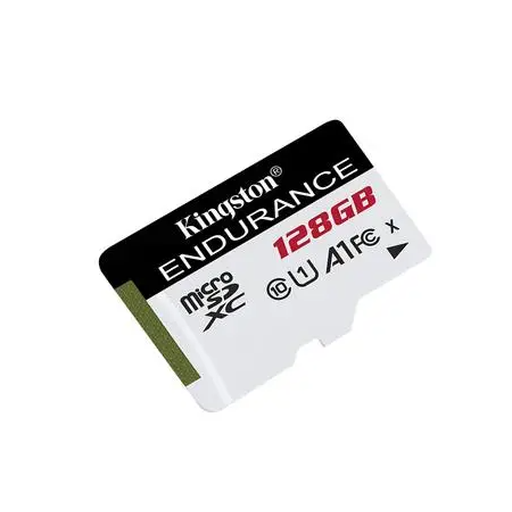
Why it stands out: Specifically designed for intensive write cycles, this Kingston card is the sensible choice for devices that record in a loop. Its reliability is its number one selling point.
Pros:
- High Endurance: Optimised for security cameras and dashcams.
- Smooth Full HD Recording: Its Class 10, UHS-I U1, A1 ratings are perfectly suited for 1080p video.
- Rugged: Water-resistant (IPX7), shockproof, resistant to extreme temperatures (-25°C to 85°C), and X-rays.
- Comfortable Capacity: 128 GB provides enough space to store many hours of recording before the loop overwrites old footage.
Who is it for? Owners of security cameras, dashcams, or any device that needs to record continuously and reliably.
Kingston Canvas React Plus 256 GB SD UHS-II
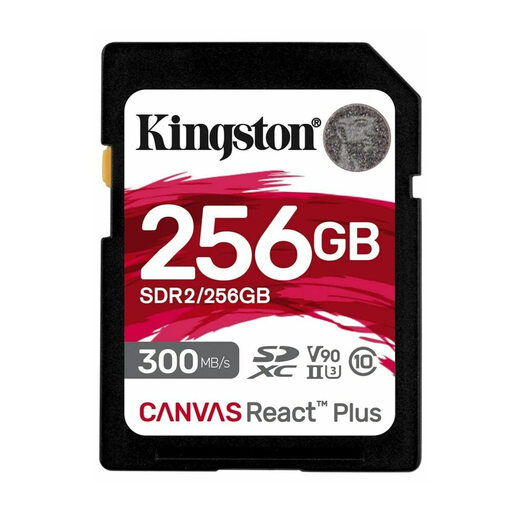
Why it stands out: This SDXC card is all about raw performance. With its UHS-II interface and V90 speed class, it is built for the most demanding professional workflows.
Pros:
- Extreme Speeds: Up to 300 MB/s read and 260 MB/s write, perfect for quickly offloading very large files.
- 8K Ready: The V90 class guarantees a minimum write speed of 90 MB/s, enough to shoot in 4K and 8K without any stuttering.
- Ideal for Burst Mode: It handles high-speed RAW photo bursts without overwhelming the camera's buffer.
- Large Capacity: 256 GB to store hours of high-resolution video or thousands of RAW photos.
Who is it for? Expert or professional photographers and videographers with a UHS-II compatible camera, who are looking for top-tier speeds for 4K/8K video and burst photography.
Samsung PRO Plus MicroSDXC 128 GB (2023)
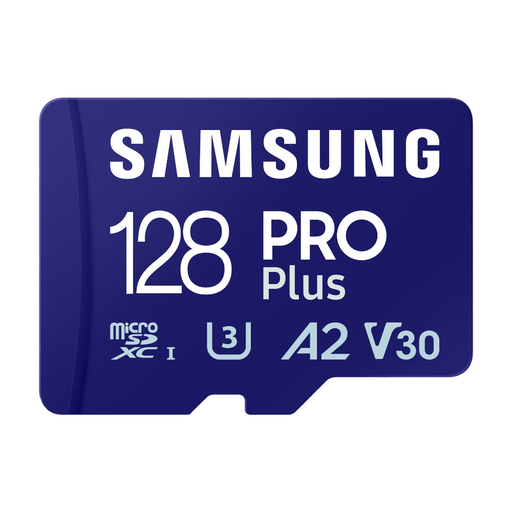
Why it stands out: This model from Samsung is the champion of versatility. It's the high-performance, do-it-all microSD card for everything from drones and smartphones to gaming consoles.
Pros:
- High UHS-I Performance: With advertised speeds of up to 180 MB/s read and 130 MB/s write, it pushes the UHS-I standard to its limits.
- Ultimate Versatility: The V30 class opens the door to 4K video, while the A2 class ensures excellent responsiveness for apps on a smartphone.
- Comprehensive Protection: Samsung claims resistance to water, temperature, X-rays, magnets, drops, and wear.
- SD Adapter Included: For maximum compatibility with a computer or camera.
Who is it for? Drone content creators, smartphone and tablet users wanting more space, or portable console gamers.
Can't Find What You're Looking For?
This selection covers the most common needs, but the memory card market is vast. If you are looking for a specific capacity, brand, or model, other options are of course available.
? Explore our full range of memory cards to discover other models.
Frequently Asked Questions (FAQ)
What is the difference between a UHS-I and a UHS-II SD card?
The difference is primarily physical, but it has a direct impact on speeds. A UHS-II card has a second row of contact pins on its back, allowing it to achieve much higher read and write speeds (often over 250 MB/s). To benefit from this, the device (card reader, camera) must also be UHS-II compatible. Note that a UHS-II card will work in a UHS-I port, but its speeds will be limited to that standard.
Is a 128 GB card sufficient for 4K video?
Yes, in most cases. A 128 GB card can store between 1.5 and 2.5 hours of 4K video, depending on your camera's bitrate. For longer shoots or to travel with peace of mind, a 256 GB or 512 GB card will provide more breathing room.
Can I use any microSD card in my smartphone?
Technically, yes, as long as the format is correct. However, for an optimal experience, especially if you plan to install apps on it, choose a model certified for application performance (A1 or, even better, A2). This ensures shorter loading times and better overall system responsiveness.


