
Livraison le jour même ou le lendemain

Qualité garantie

Débloquez vos offres de bienvenue: Livraison GRATUITE | Jusqu'à -80 % | 30 jours d'essai gratuits à JoyPlus
Téléchargez l'application
In cooking, and even more so in baking, precision isn't an option: it's the key to success. A cake that won't rise, a sauce that's too thin, a dish that's too salty... these minor kitchen disasters are often the result of poorly estimated quantities. Equipping yourself with the right measuring tools is therefore the first step to saying goodbye to guesswork and ensuring all your recipes are a success.
But faced with an overwhelming number of options, how do you find your way? Should you get a graduated measuring jug made of glass or plastic? Is an electronic kitchen scale truly essential? And what's the deal with those famous measuring cups and spoons from across the pond? Don't panic. This guide is here to help you choose the right tools for your needs, so you can finally measure your ingredients with reliability and ease.
Before diving into our selection, let's review the essential criteria for making the right choice.
There's no contest here: these two instruments serve different purposes and are perfectly complementary.
Our advice: for maximum versatility, the ideal solution is simply to own both.
For a measuring jug, the material has a direct impact on its use and longevity.
To follow an American recipe to the letter or to accurately measure small quantities (yeast, spices, baking soda...), a measuring set with cups and spoons (tablespoon, teaspoon) quickly becomes essential. It ensures a consistency that's impossible to achieve with the soup or coffee spoons from your drawer, whose sizes always vary from one set to another.
We have selected four products that meet a variety of needs, from everyday cooking to high-precision baking.
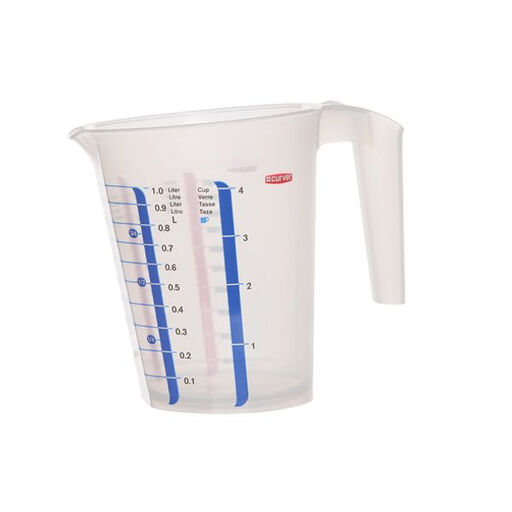
Why it stands out
The Curver jug is the simple, effective basic you'll be glad to have on hand for daily use. Its large capacity and well-thought-out design make it a perfect partner for soups, pancake batter, and all your family-sized recipes.
Key features
Who is it for?
For those looking for a large, simple, durable, and practical measuring jug for everyday cooking.
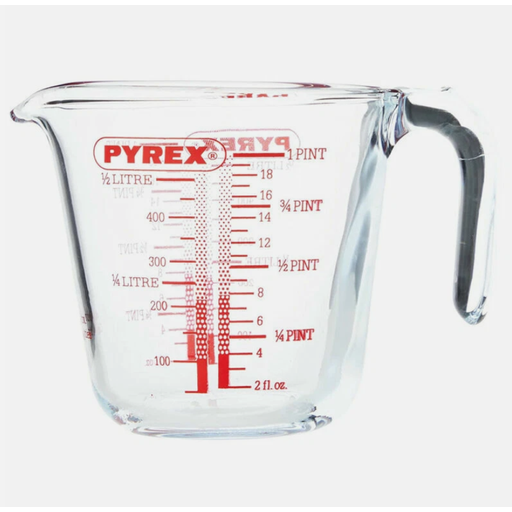
Why it stands out
The Pyrex measuring jug is a timeless classic, and for good reason. Its secret? Borosilicate glass, which gives it unbeatable versatility and durability. It doesn't just measure: it's also oven, microwave, and freezer safe.
Key features
Who is it for?
For those who want a versatile tool that will last a lifetime. Essential if you're used to heating liquids directly in the measuring jug.
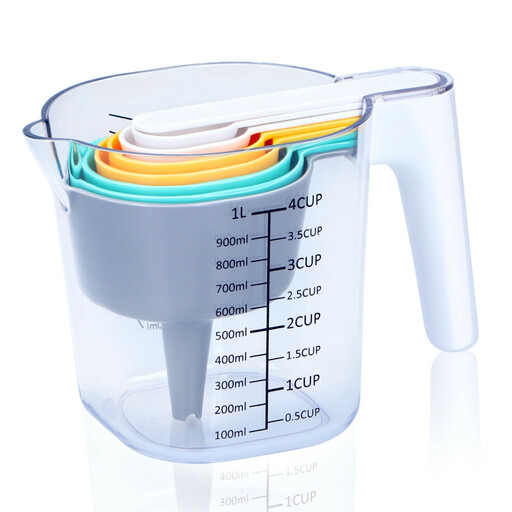
Why it stands out
This Alpina measuring set is the perfect solution for combining precision with clever storage. It brings together all the standard cup and spoon sizes in a stackable format that frees up precious space in your drawers.
Key features
Who is it for?
For baking enthusiasts and fans of American or British recipes. It's also the best way to finally standardise measurements for small quantities.
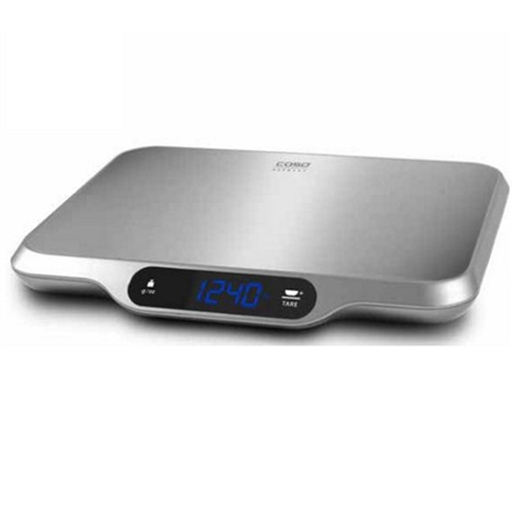
Why it stands out
This electronic kitchen scale from Caso Design is where style meets performance. With its sleek design, extra-large weighing capacity, and gram-perfect accuracy, it's equally suited for small recipes and very large preparations.
Key features
Who is it for?
For meticulous bakers, large families, and fans of batch cooking or home canning. Its large capacity also makes it very handy for weighing parcels.
Didn't find exactly what you need in our selection? Every kitchen is unique! To discover other capacities, different designs, or more specific accessories, explore our complete range.
? See our entire collection of measuring tools on Joybuy.fr
1. Should I get a kitchen scale or a measuring jug? Neither—you need both! They are essential and complementary. The rule is simple: use a digital kitchen scale for solids (flour, sugar, butter...), where weight is king, especially in baking. Use a measuring jug for liquids (water, milk, oil...), where you measure by volume.
2. How do I convert cups to grams or millilitres? This is the classic trap! There is no universal conversion because it depends on what you're measuring: a cup of flour does not weigh the same as a cup of sugar. The most reliable advice: if a recipe only lists cups, look for an online conversion chart specific to the ingredient, or, even better, find a recipe that provides weights in grams and use your scale.
3. How do I care for my measuring tools to make them last? First, check if they are dishwasher-safe. For plastic tools with printed (not engraved) markings, it's best to wash them by hand with the soft side of a sponge to avoid rubbing them off. As for the scale, a simple wipe with a damp cloth on the surface is enough. Never submerge it in water and always store it in a dry place.