
Same-day & Next-day Delivery

Quality Guaranteed

Unlock Your Welcome Offers: FREE Delivery | Up to 80% OFF | Free 30-day JoyPlus trial
Download the APP
There's nothing like a cold lemon drink to quench your thirst on a sunny day. But be warned: behind the colourful labels and promises of freshness lie products of widely varying quality. Navigating between an artisanal lemonade, a commercial iced lemon tea, and a fizzy lemon soda can quickly become a headache. Some products, which project a healthy image, are actually sugar bombs, while others disappoint with a desperately artificial taste.
As the Head of Product Recommendations at Joybuy, my mission is to help you decode labels to make an informed choice. I'll explain how to sidestep the three most common traps and finally find the refreshing drink that's right for you.
Making the right choice, especially online, requires a bit of vigilance. Because no, not all lemon drinks are created equal. Here are the most common pitfalls:
To avoid making a mistake again, here are the essential criteria that make all the difference.
This is the number one criterion. The ingredients list is your best ally for judging the product's quality:
The lemon drink aisle is vast. There's a type of drink for every craving:
Whether for regular consumption or for watching your figure, the nutritional profile is a decisive factor.
Sugar-free or low-calorie options: Many brands offer versions with sweeteners (like stevia) or are simply unsweetened. The benchmark: the energy value (kcal) per 100 ml. A drink is considered low-calorie if it's under 20 kcal/100 ml.Organic certification: The organic label guarantees that the ingredients (lemons, sugar) are from organic farming, without synthetic pesticides. It's a mark of quality and respect for the environment.To help you see more clearly, here are a few products that illustrate these criteria well, suited for different profiles.
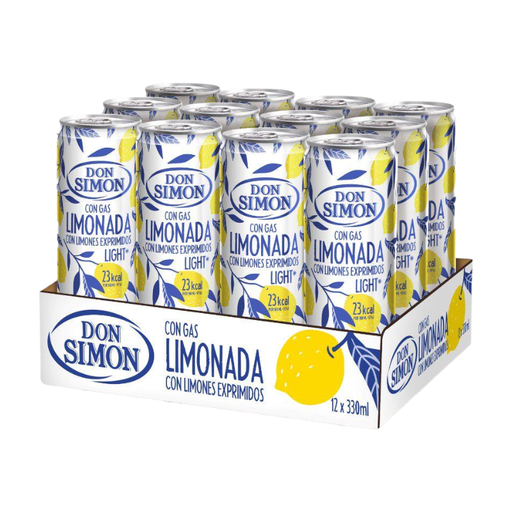
Why we chose it: This sparkling lemonade pack is perfect for meals, snacks, or family drinks. Its individual can format is as convenient to drink as it is to store.
It stands out from drinks with artificial flavours thanks to a clear composition: 15% lemon juice, guaranteeing a truly fruity and authentic taste.
Its pack format is both economical and practical. We also appreciate its moderate calorie content (23 kcal/100 ml) and added vitamin C.
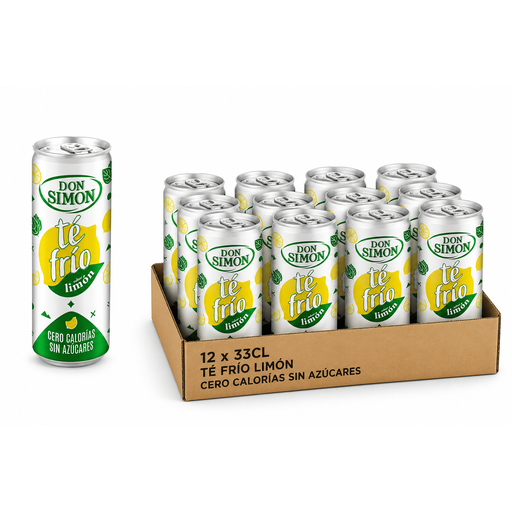
Why we chose it: This iced tea is the perfect option for hydrating throughout the day without the guilt of added sugar. Its light and highly thirst-quenching taste makes it an excellent daily companion.
It brilliantly sidesteps the hidden sugar trap. With only 2 kcal and 0.1g of sugar per 100ml, it's the very definition of a sugar-free drink.
Ultra-low in calories and sugar-free. Its can-pack format is ideal for taking it with you anywhere.
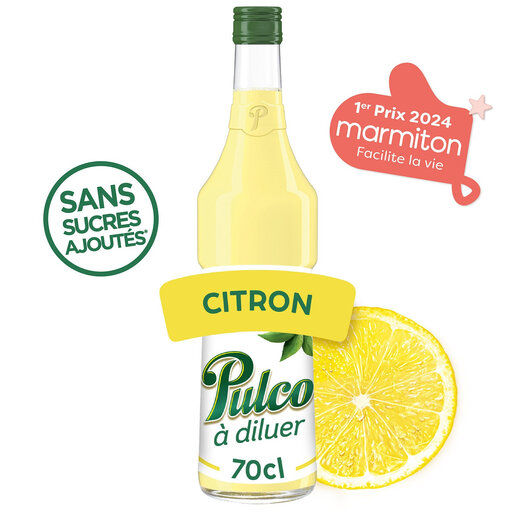
Why we chose it: This concentrate is the perfect ally for those who like to control their drinks from start to finish. It serves as a base for homemade lemonades, cocktails, mocktails, or simply for flavouring a pitcher of water.
It ends the "ready-to-drink vs. concentrate" confusion by clearly stating it is a product to be diluted. And since it has no added sugars, you have complete control over the final result.
Unbeatable versatility. Its formula, based on concentrated lemon juice (equivalent to 40% reconstituted juice), is guaranteed free of colourings and preservatives.
Explore our complete and up-to-date selection of products that meet our quality criteria and current regulations.
The line can be blurry. Traditionally, a lemonade is made from water, sugar, and real lemon juice. A lemon soda, on the other hand, is a sweetened carbonated drink where the flavour often comes from flavourings, with or without juice. Generally, artisanal or higher-quality lemonades will list a much higher percentage of real fruit juice.
For most ready-to-drink beverages (iced tea, lemonade), it's best to keep them in the refrigerator and finish them within 3 to 4 days of opening to preserve their freshness. For a lemon concentrate, follow the instructions on the packaging, but keeping it chilled is always the rule.
Of course! A lemon concentrate like Pulco is an incredibly versatile kitchen ingredient. It's perfect for making vinaigrettes, marinades for meat and fish, or for flavouring your baked goods (cakes, tarts, etc.).