
Livraison le jour même ou le lendemain

Qualité garantie

Débloquez vos offres de bienvenue: Livraison GRATUITE | Jusqu'à -80 % | 30 jours d'essai gratuits à JoyPlus
Téléchargez l'application
Driving at night or in bad weather with yellowish halogen headlights can quickly become a source of stress and danger. Not only is the light dim and the range limited, but your car also looks seriously dated. If you're looking to improve both the safety and style of your vehicle, upgrading to LED headlights is the perfect solution.
But with options ranging from simple replacement bulbs to complete headlight assemblies, it's hard to know where to start. This guide is here to shed light on the key points and present our top picks, so you can make the best choice for your car and your budget.
Before you take the plunge, let's review the three essential criteria that will make all the difference.
First things first: check for compatibility with your vehicle. Cars use different types of sockets for their bulbs, with the most common being H7, H4, or H1 LED bulbs. To find out which type you need, you have two options: consult your car's manual or, even simpler, remove an original bulb to inspect it. Some LED conversion kits are designed with a 1:1 fit, meaning they are the same size as halogen bulbs. This ensures a dead-simple installation, without any need to force or modify the headlight housing.
Modern cars are equipped with an on-board computer (OBC) that keeps a close watch on everything. The problem? An LED bulb consumes far less power than a halogen one. The OBC, not detecting the usual power draw, thinks the bulb is burnt out and triggers a warning light on your dashboard. To avoid this miscommunication, opt for a CANbus error-free bulb (or "CANbus ready"). It includes a built-in resistor that mimics the power consumption of a standard bulb, tricking the electronics for complete peace of mind.
The performance of a powerful LED headlight is measured in lumens (lm) for brightness and kelvins (K) for colour temperature. A 6000K car light produces a pure white light, similar to daylight, which improves the perception of contrasts and details on the road. This is the current standard for a modern look and optimal visibility. Be aware that raw power isn't everything: a good LED conversion kit must above all produce a clean, precise beam that illuminates the road where it's needed, without blinding other drivers.
To put theory into practice, we've reviewed several solutions, from simple DIY replacement bulbs to complete headlight assemblies for a radical transformation.
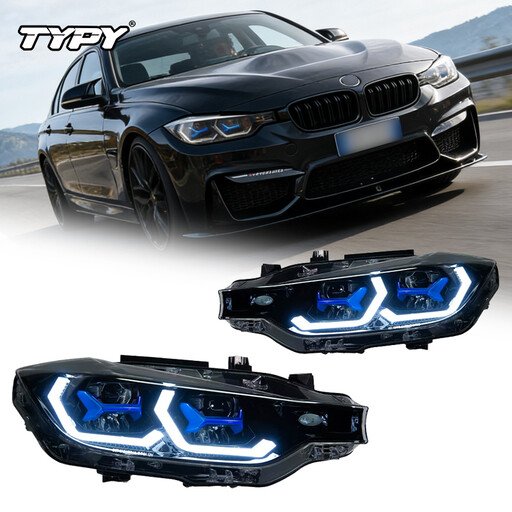
Why it stands out: Here, we're not just talking about simple bulbs, but a complete headlight assembly replacement to transform the front end of your car. Its star attraction: the integration of a sequential dynamic turn signal, a lighting signature worthy of the latest premium models.
Advantages:
Who is it for? For BMW 3 Series (F30/F35) owners who want to give their car a complete facelift and an upscale upgrade. The goal is to replace the original headlight units (whether halogen or basic xenon) for a more modern look and much higher-performance lighting. Note that professional installation is highly recommended for perfect beam alignment and any potential electronic coding.
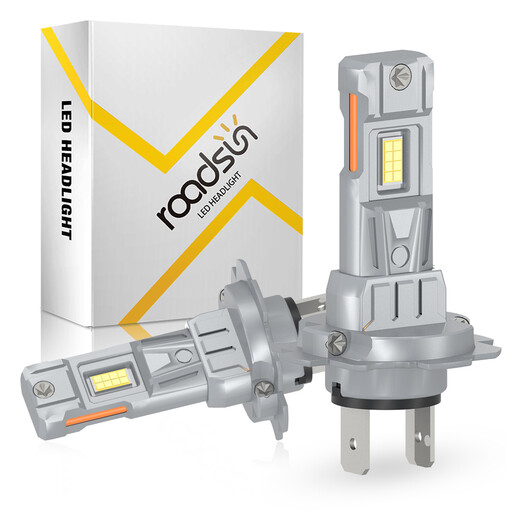
Why it stands out: Simplicity is its defining characteristic. These H7 LED bulbs are designed with a 1:1 fit compared to halogen bulbs. In practical terms: no modifications, no adapters, no dust covers to drill. The very definition of "plug-and-play."
Advantages:
Who is it for? For drivers, even the least DIY-savvy, who are looking for a real visibility boost without any hassle. In short, it's the perfect solution for upgrading to LED without getting into a major project.
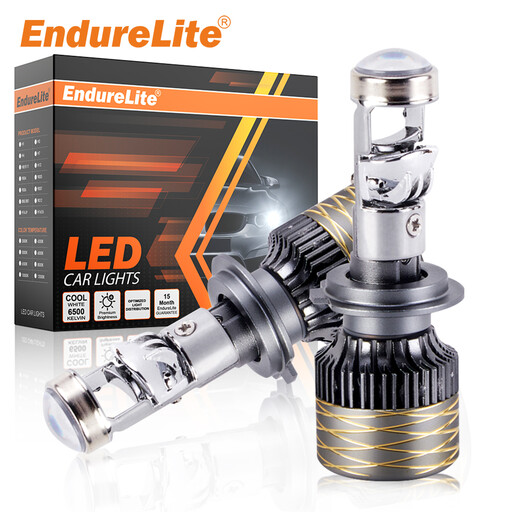
Why it stands out: This kit integrates a mini projector lens directly onto the bulb. This technology creates a sharp, precise cut-off line, just like original projector optics. The result: maximum light on the road and minimal glare for other drivers.
Advantages:
Who is it for? For drivers who demand precision from their light beam. This is an excellent solution if your original reflector headlights tend to scatter the beam of standard LED bulbs (a common issue). Perfect for upgrading your low beams or fog lights.
Why stop there? Upgrading your fog lights can also make all the difference when the weather turns bad.
Discover our full range of LED fog light bulbs for a top-tier setup.
1. Is it legal to install LED headlights on my car? Regulations can be strict. In Europe, for an LED conversion kit to be road-legal, it must have an ECE approval specific to the vehicle model it's installed on. Without this approval, its use is theoretically restricted to private tracks. Complete headlight assemblies, like the TYPY model, are generally compliant if they bear the European approval mark (an 'E' in a circle). Our advice: always check your local regulations and the product's specifications before you buy.
2. How can I prevent dashboard error messages after installation? The easiest way is to choose bulbs labelled "CANbus ready" or "error-free." Like the ENdureLite kit in our selection, they have built-in circuitry to prevent dashboard warnings. If you choose a model without this feature, don't worry: you can always add a small external module (a CANbus decoder or resistor) between the bulb and the original connector.
3. Is a 6000K LED bulb the right choice? A colour temperature of 6000K corresponds to a pure white light, popular for its modern look and its ability to enhance contrasts on the road. It's an excellent balance between performance and visual comfort. Higher temperatures (e.g., 8000K) produce a bluer light, which is often less effective in rainy weather and can attract unwanted attention from law enforcement. Therefore, 6000K stands out as the best compromise for everyday use.