
Livraison le jour même ou le lendemain

Qualité garantie

Débloquez vos offres de bienvenue: Livraison GRATUITE | Jusqu'à -80 % | 30 jours d'essai gratuits à JoyPlus
Téléchargez l'application
Driving at night with old, yellowish halogen headlights is not only unpleasant, but also dangerous. Poor visibility, washed-out colours, and mounting eye strain... it's a grim picture. Switching to LED headlight bulbs is the simplest and most effective solution to transform your night-time journeys. The result?: a whiter, more intense light with a much longer range.
The only problem?: the market is a real jungle of models and technical terms that can quickly make your head spin?: lumens, kelvins, CANbus, bulb bases... This guide is here to cut through the noise. Our expert shares their advice for choosing the LED conversion kit that's perfectly suited to your car and your needs, without the unnecessary marketing jargon.
Before you get started, let's review the essential criteria to ensure you make the right choice.
This is the number one, non-negotiable criterion?: physical compatibility with your headlight. Every vehicle uses a specific type of bulb, known as the "base". The most common are H4 LED bulbs (which combine high and low beams) or D1S LED bulbs (often as a xenon replacement).
To find this, there's one simple step?: check your vehicle's manual or remove the original bulb to identify its base (H1, H7, H4, 9006, D1S, etc.). You should also favour models described as "1:1" or "mini design". Their size, nearly identical to a halogen bulb, guarantees an ultra-simple plug-and-play installation, without needing to modify the headlight housing or the dust cap.
Don't be blinded by the numbers?: the power of an LED headlight isn't just about a flood of lumens. Two factors are far more important:
Modern cars are equipped with an on-board computer (OBC) that monitors the proper functioning of all components, including the bulbs. However, an LED bulb consumes far less power than a halogen one. The OBC can misinterpret this as a fault (a burnt-out bulb) and display an error on the dashboard.
To avoid this hassle, the solution is simple?: choose bulbs with a built-in OBC error-free system, often called "CANbus Ready". These kits include a resistor or a smart driver that simulates the power consumption of a standard bulb, ensuring compatibility with most electronic systems.
We have selected three products that cater to a variety of needs, whether you're looking for a xenon replacement or a halogen replacement.

Its standout feature: This kit is the ideal solution for directly replacing factory D1S or D1R xenon bulbs. The manufacturer claims a near-instant start-up (0.01 seconds), which eliminates the warm-up time typical of HID bulbs. Its design aims for high brightness for enhanced visibility.
Advantages:
Who is it for? For owners of vehicles with factory D1S/D1R xenon bulbs who want to upgrade to LED technology without any modifications, seeking maximum light output and flawless responsiveness.
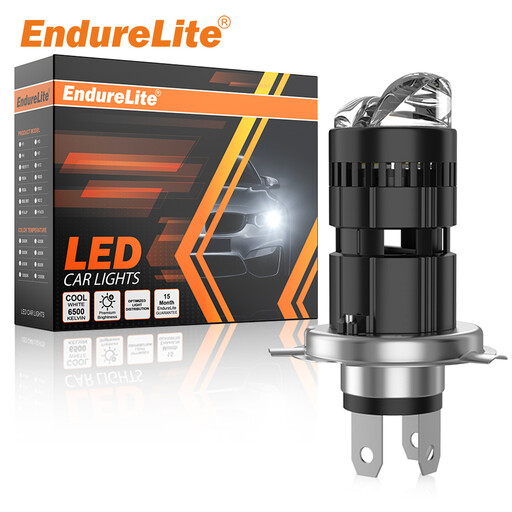
What makes it unique: This H4 bulb stands out thanks to its "1:1" design (identical in size to a halogen bulb) and, most importantly, its integrated projector lens. This lens creates an ultra-precise beam pattern for both low and high beams, improving range without ever causing glare.
Advantages:
Who is it for? Ideal for drivers of H4-equipped vehicles looking for a hassle-free solution to replace their halogens, while demanding a perfectly defined beam pattern.
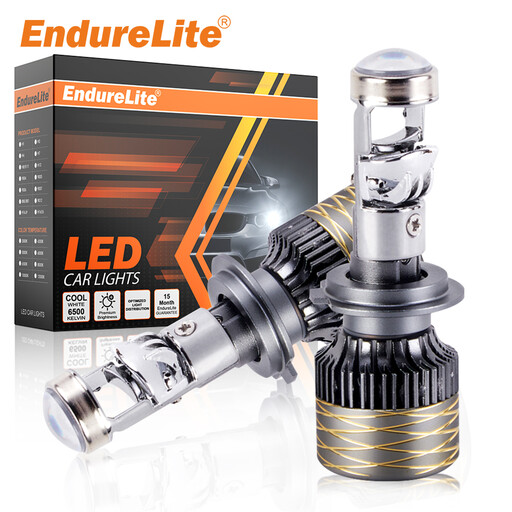
Its key advantage: A cousin to the H4 model, this version is dedicated to 9006/HB4 bases, which are frequently used for low beams or fog lights. It follows the same winning formula?: a 1:1 design for a quick installation and a projector lens for a razor-sharp beam.
Advantages:
Who is it for? For those who want to replace their 9006/HB4 halogen bulbs with a high-performance LED solution, featuring a very clean beam and a completely worry-free installation.
If these models aren't compatible with your vehicle or if you simply want to explore other options, many other models are available. Every car is unique; the key is to find the bulb that's a perfect match for it.
Discover our full collection of lighting projectors on Joybuy
1. Are LED bulbs street legal? Replacing halogen bulbs with LEDs is highly regulated. To be compliant, bulbs must have the proper certification for your region (e.g., ECE marking in Europe, DOT approval in the US). Furthermore, proper beam alignment is crucial to avoid dazzling other road users. Always check your local, up-to-date regulations and ensure your installation will pass any required vehicle inspections.
2. Do I need a CANbus error-free system? Generally, most European cars produced after 2005 are equipped with one. If you have a recent car, there's a high chance you'll need "CANbus Ready" bulbs to avoid dashboard warnings. Opting for a kit with a built-in OBC error-free system is the safest and simplest solution.
3. Are more lumens always better? Not necessarily. A flood of lumens is actually counterproductive if the beam scatters in all directions. A quality bulb focuses the light where it's needed—on the road and the shoulders—with a clean cut-off line to avoid blinding others. The quality of the LED chips and the bulb's design are far more important than raw power.