
Livraison le jour même ou le lendemain

Qualité garantie

Débloquez vos offres de bienvenue: Livraison GRATUITE | Jusqu'à -80 % | 30 jours d'essai gratuits à JoyPlus
Téléchargez l'application
The laundry detergent aisle, both online and in the supermarket, can be overwhelming. Between promises of dazzling whites, captivating scents, and "revolutionary" formulas, it's hard to know where to turn. Choosing the right detergent isn't just about grabbing the flashiest bottle; it's a decision that impacts the lifespan of your clothes, the comfort of your skin, and, of course, your budget.
Before you fill your cart, let's review the common pitfalls that could make you regret your purchase:
To navigate this jungle, simply focus on a few objective criteria. These are what define a detergent's quality and its suitability for your needs.
Forget the marketing slogans. A simple three-point analysis is all you need to find the detergent that truly fits your daily life.
The format of your detergent is more than just a matter of preference. Each type has its own strengths and weaknesses.
The ingredient list and official labels are your best allies for finding the right formula for you.
To find out the true cost of a detergent, ignore the shelf price. The only reliable calculation is the cost per wash. The formula is simple:
Total Product Price (€) / Indicated Number of Washes = Cost Per Wash (€)
This indicator is the only way to objectively compare a large bottle of liquid detergent, a box of detergent pods, and a package of powder detergent. It's the key to making a truly economical choice.
To illustrate how these criteria apply in practice, here are a few products that meet specific needs.
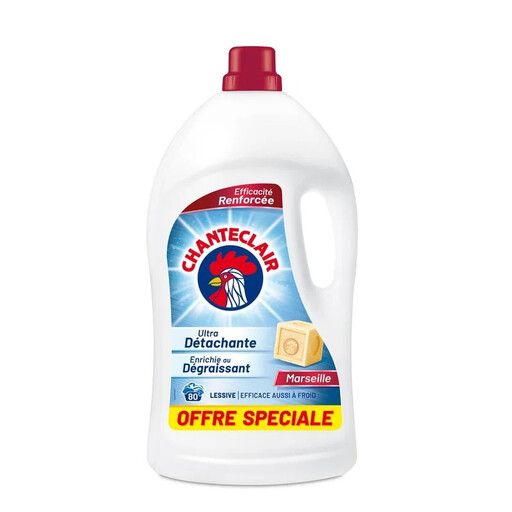
Why we recommend it : Perfect for families, this detergent combines an XXL format (80 washes) with a formula enriched with degreasing agents. It's designed to tackle the toughest stains, from tomato sauce to grass stains after a football game.
It sidesteps the "false economy" trap. Its large 3.6 L volume for 80 washes ensures a truly competitive cost per wash without sacrificing performance on stains.
Its formula is boosted with a Marseille soap-based degreaser, providing targeted action on grease stains, which are often the most difficult to remove.
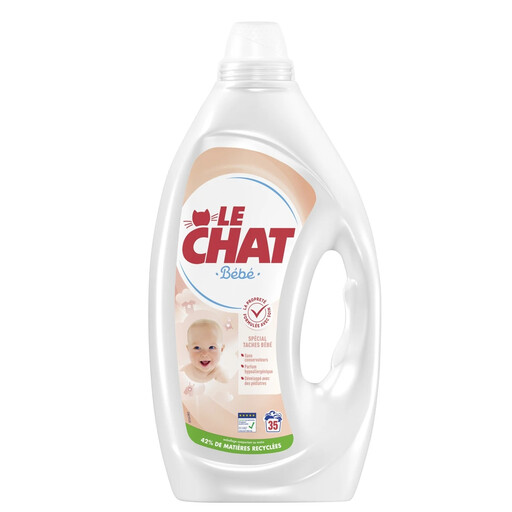
Why we recommend it : Specially formulated for the delicate skin of babies and adults, it was developed with paediatricians and is dermatologically tested. It gives you complete peace of mind.
It doesn't just make a vague "hypoallergenic" claim. Its ECARF certification is an objective guarantee: the formula has been rigorously tested to minimise allergy risks.
Its preservative-free formula and hypoallergenic fragrance don't compromise its effectiveness on typical baby stains (carrot purée, milk, cereal...).
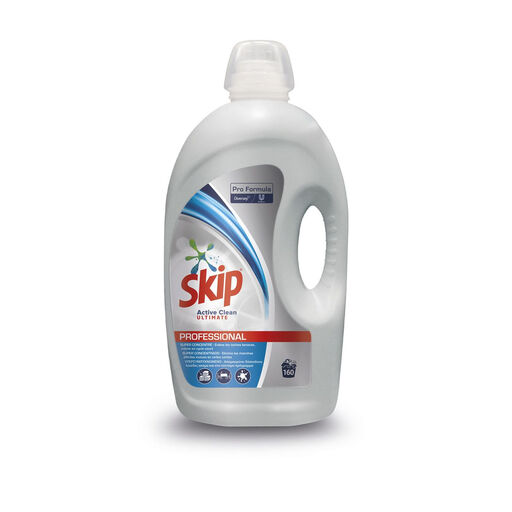
Why we recommend it : Built for intensive use, this professional detergent delivers an exceptional yield of 160 washes. Its ultra-concentrated formula is designed for impeccable results in the most demanding environments (hotels, restaurants...).
This isn't just a consumer-grade product in a bigger bottle. As part of the Pro-Formula range, it's developed to meet professional demands: performance, volume, and controlled costs.
Its formula includes enzymes and optical brighteners for targeted action on a wide spectrum of stains, including grease, even at low temperatures.
Discover our complete, up-to-date selection of products that meet our selection criteria and current regulations.
Powder detergent is often more formidable on white laundry and set-in stains thanks to its bleaching agents. Its weakness: it can dissolve poorly in very short or very low-temperature cycles. Liquid detergent, on the other hand, dissolves perfectly even in cold water, better preserving the vibrancy of colours. It is also ideal for pre-treating a stain by applying it directly before washing.
For a reliable guarantee, trust independent certifications like the ECARF label. Scrutinise the ingredient list to track down potential allergens (fragrances, dyes, preservatives). The "dermatologically tested" claim is a plus, but an official label offers much better assurance for the most reactive skin.
That's a very bad idea. Hand-washing detergents produce significantly more suds than machine-wash formulas. This excess foam not only hinders washing and rinsing efficiency but, more importantly, risks damaging your washing machine's sensors and mechanics. Always use a product designed for your appliance—that's a golden rule.