
Livraison le jour même ou le lendemain

Qualité garantie

Débloquez vos offres de bienvenue: Livraison GRATUITE | Jusqu'à -80 % | 30 jours d'essai gratuits à JoyPlus
Téléchargez l'application
Waste separation is now a part of our daily lives. The problem? It often turns the kitchen into a chaotic mess. Between packaging piling up on the countertop and unsightly sorting bags, finding a solution that is both practical and stylish can be an uphill battle. However, a well-designed kitchen recycling bin can change everything: it simplifies daily recycling and blends seamlessly into your home's decor.
This guide is here to help you see things more clearly. We'll review the essential criteria for making the right choice and present a selection of proven models, all without the unnecessary marketing jargon.
Before you make a decision, let's go over a few key factors that will make all the difference in your daily routine.
This is the first question to ask yourself. The volume and organisation of your bin will depend on the size of your household and your habits.
The material has a direct impact on the durability, aesthetics, and ease of cleaning of your sorting bin.
When your hands are full in the middle of cooking, the opening system becomes crucial. The pedal bin remains the most hygienic and practical solution, as it avoids any contact. For your ears' comfort, opt for models equipped with a soft-close system, which prevents the lid from slamming shut noisily.
We have selected a few models that stand out for their design, durability, and value for money.
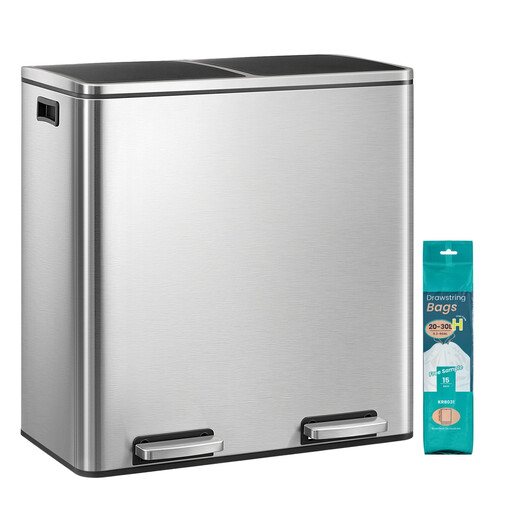
Why It Stands Out
This model combines a very large capacity with a sleek design. Its stainless steel structure and two generous 30-litre compartments make it a powerful ally for families, where waste accumulates quickly. The pedal mechanism with a soft-close feature is a real plus for everyday comfort.
Key Features
Who Is It For? For families and anyone living in a house or a large apartment who is looking for a sorting solution that is spacious, durable, and discreet.
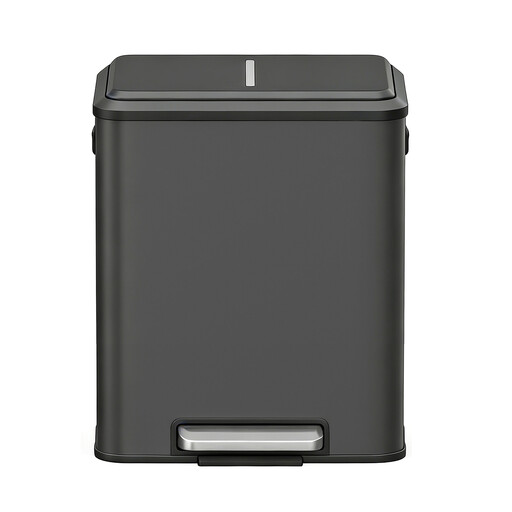
Why It Stands Out
With its more compact format and understated matte black steel finish, this bin fits perfectly in modern kitchens or smaller spaces. It makes no compromises on practicality: a wide pedal, side handles for easy moving, and, of course, a soft-close system.
Key Features
Who Is It For? For couples, single people, or those with limited kitchen space who don't want to compromise on style and practicality.
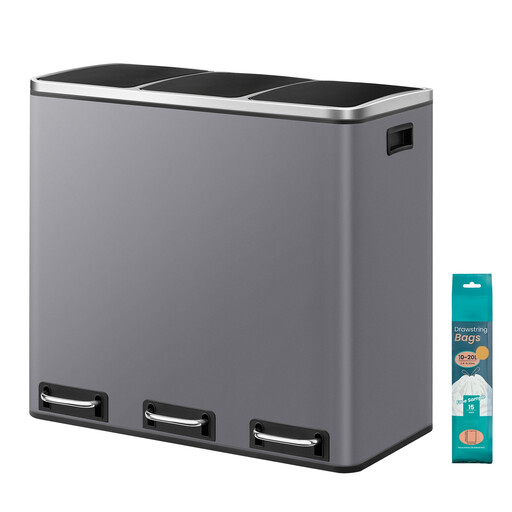
Why It Stands Out
This is THE solution for those who want to take their sorting to the next level. With its three compartments, it allows you to effortlessly separate general waste, packaging, and a third category (glass, organic waste...). Each bin has its own pedal and soft-close lid.
Key Features
Who Is It For? For committed households that practice advanced recycling (compost, glass...) and are looking for a true all-in-one sorting station.
A good bin is an excellent start. But kitchen organisation doesn't stop there. If you're looking for other accessories to optimise your space, whether for your cupboards or your countertop, don't hesitate to explore other options.
Discover our selection of Bucket Lids and many other accessories to complete your setup.
1. What size recycling bin should I choose for my kitchen? The ideal size depends on two criteria: the size of your household and the frequency of waste collection in your area. For a family, a total capacity of 50?L or more is recommended. For one or two people, 30 to 40?L is more than enough. Also, consider the volume of packaging you consume (plastic bottles, cardboard, cans...).
2. How do I maintain a stainless steel bin to avoid fingerprints? To clean a stainless steel bin, use a damp microfibre cloth with a drop of dish soap or mild soap. Always rub in the direction of the steel's grain to avoid micro-scratches. For stubborn fingerprints, a little diluted white vinegar works wonders. Then, rinse with clean water and dry with a clean cloth for a flawless result.
3. What is the benefit of a bin with removable inner buckets? Inner buckets are a real advantage for several reasons. First, they make it much easier to transport waste to the outdoor container. Second, they help to hold the bin liner securely in place and conceal it. Finally, they protect the bin's structure from leaks and radically simplify cleaning in case of a small accident.