
Livraison le jour même ou le lendemain

Qualité garantie

Débloquez vos offres de bienvenue: Livraison GRATUITE | Jusqu'à -80 % | 30 jours d'essai gratuits à JoyPlus
Téléchargez l'application
Kimchi has taken the world's kitchens by storm, and it's easy to see why. But with an ever-growing online selection, how do you make the right choice? Napa cabbage or radish, spicy or mild, traditional or vegan... it's easy to get lost.
As product selection experts, our mission is to do the legwork for you. This guide presents our top finds and gives you all the keys to choosing the perfect Korean kimchi to elevate your dishes and delight your taste buds.
Before diving into our selection, let's review a few key points for finding that perfect jar online.
The most common type, Baechu-kimchi, is made from napa cabbage. Its tender texture perfectly soaks up the brine's flavours. It's the quintessential all-rounder, equally delicious as a side dish (banchan) or used in cooking.
Another very popular option is Kkakdugi, or radish kimchi. It's recognisable by its crunchy, juicy cubes of white radish, which offer a firmer, more refreshing texture.
The taste of kimchi is never static; it evolves over time. When young, it's fresh and crisp. As it ages, it becomes more acidic and develops complex, deep flavours. As for the spice level, it all depends on the amount of Korean chilli powder (gochugaru). Some recipes opt for a milder profile, while others are aimed squarely at the most adventurous palates.
Traditional Korean kimchi owes its signature umami flavour to jeotgal, a brine made from seafood (fish sauce, shrimp paste). If you are vegetarian or vegan, checking the ingredient list is a must. Fortunately, excellent vegan kimchi alternatives exist; they replace seafood products with miso or mushroom extracts for an equally savoury result.
Enough theory, let's get to the tasting! Here are the gems we've unearthed for you in our online Korean grocery store.
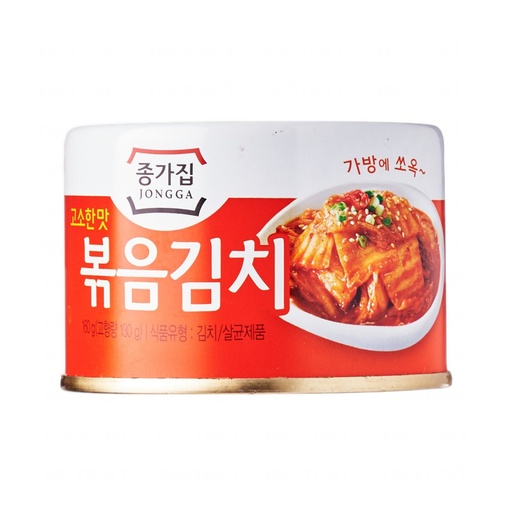
Why we love it: This isn't your classic raw kimchi. It's already stir-fried with garlic and spring onions, giving it a rich, almost smoky flavour and intense umami. This makes it ready to be added straight into your hot dishes.
Highlights:
Who is it for? For those who primarily see kimchi as a cooking ingredient and are looking for a milder, less fermented flavour. Note: it contains bonito extract (fish).
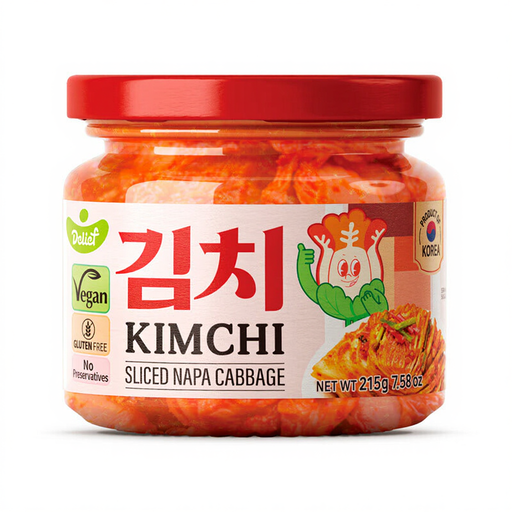
Why we love it: Here it is, the perfect vegan alternative! This kimchi replicates the authentic taste of cabbage kimchi without any animal products, using a vegetable broth (kelp, shiitake) to provide all the necessary complexity.
Highlights:
Who is it for? For vegans and vegetarians, of course, but also for anyone looking for an excellent, accessible, classic cabbage kimchi without animal-derived ingredients.
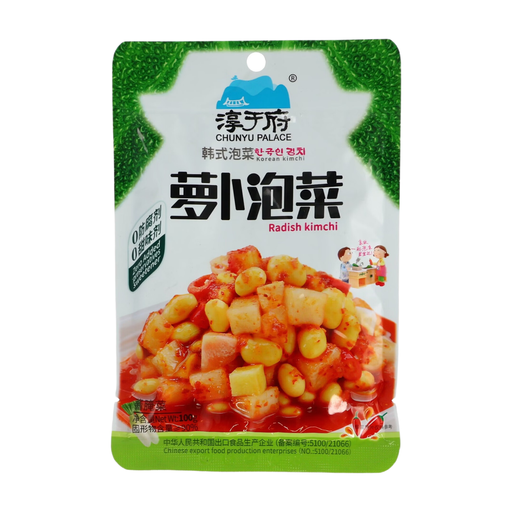
Why we love it: Time for radish and a radically different texture! Radish kimchi (Kkakdugi) is famous for its incomparable crunch, which remains intact even after fermentation.
Highlights:
Who is it for? For flavour adventurers who want to explore beyond cabbage kimchi. Ideal for adding variety in taste and texture. Note: this product contains fish sauce and shrimp paste.
Is your kimchi in the basket? Take the opportunity to stock your cupboards and explore other Asian flavours. For a creamy Thai curry or to mellow out a spicy dish, one ingredient is a must.
Discover our selection of light coconut milk, the perfect partner for balanced, flavourful dishes.
Kimchi is a living product. Once the jar or pouch is opened, it must be stored in a tightly sealed container in the refrigerator. The fermentation continues at its own pace, making the taste increasingly acidic. To enjoy a perfect balance, it's best to consume it within a few weeks of opening.
No, far from it! While most recipes contain chilli, the intensity varies enormously. There are even completely mild kimchis, like baek kimchi (white kimchi), which contains no chilli powder at all. Rely on the product descriptions to gauge the spice level before you buy.
Absolutely! In fact, it's one of its greatest strengths. In Korea, cooking with well-fermented, acidic kimchi is very popular. It works wonders in the famous stew (kimchi-jjigae), fried rice (kimchi-bokkeumbap), or savoury pancakes (kimchijeon). Cooking mellows its heat and concentrates its flavours.