
Livraison le jour même ou le lendemain

Qualité garantie

Débloquez vos offres de bienvenue: Livraison GRATUITE | Jusqu'à -80 % | 30 jours d'essai gratuits à JoyPlus
Téléchargez l'application
Finding an activity for children that is fun, creative, and age-appropriate can sometimes be a real puzzle. Between screens and toys that quickly lose their appeal, creative hobbies remain a reliable choice for stimulating imagination and fine motor skills. A good kids' paint kit opens the door to a world of colour and possibility, whether for a rainy afternoon, school holidays, or a creative gift for a child.
As the Head of Product Recommendations at Joybuy, my mission is to help you navigate the jungle of available options. This guide gets straight to the point, offering clear selection criteria and a curated list of products to help you make the right choice, without the unnecessary marketing jargon.
Before you dive in, let's review the key points for finding the kit that will delight your child… and meet your expectations as a parent.
For a kids' craft activity with complete peace of mind, safety is non-negotiable. Always opt for products that comply with European safety standards (CE marking). Prioritise water-based paint for kids, which is non-toxic and, most importantly, easy to clean. Some manufacturers, like Bruynzeel, go a step further by offering specific formulas (e.g., gluten-free) to eliminate any risk of skin reactions.
Each type of paint offers a different experience. Let's look at the most common ones.
For a first-time experience or as a gift, a complete set is often the ideal solution. A kit that includes paint, brushes, and sometimes even a palette allows a child to get started right away. Bruynzeel paint sets, for example, are often designed with this in mind, featuring practical, compact storage to keep everything from getting lost.
To move from theory to practice, here are a few products that caught our eye for their ingenuity and creative potential.
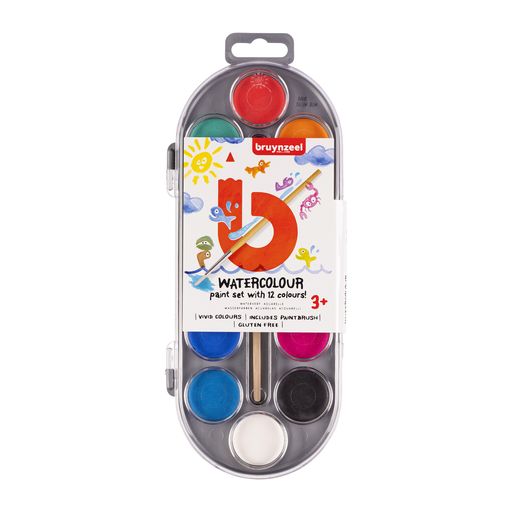
What sets it apart: The perfect starting point for budding artists. Its standout feature is its clever storage case. It protects the paint pans, but its lid also serves as a mixing palette thanks to dedicated wells. It's an all-in-one solution that encourages experimentation while staying organised.
Key features:
Who is it for? Ideal for children aged 3 and up who are just discovering watercolour. A perfect choice for a first kit, thanks to its simplicity and hassle-free, all-in-one format.
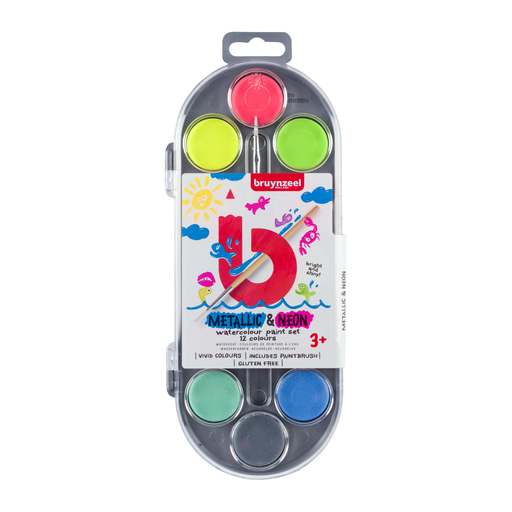
What sets it apart: For kids who love things that sparkle and pop, this kit thinks outside the box. It combines 7 metallic and 5 fluorescent colours for spectacular effects on both white and black paper. It's an invitation to explore more daring creations.
Key features:
Who is it for? Perfect for children who are already a bit comfortable with painting or those who want to add a "wow" factor to their artwork. An excellent creative gift to spark their imagination.
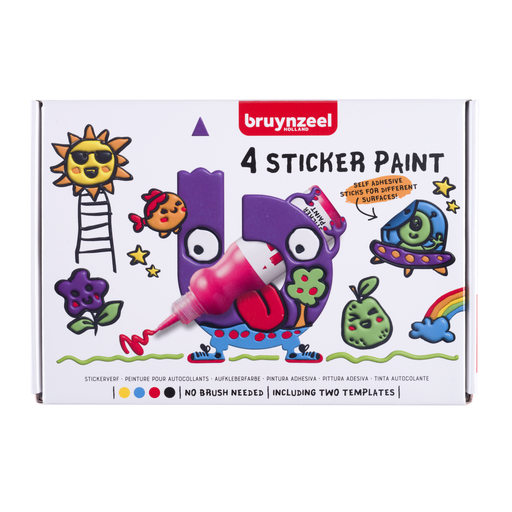
What sets it apart: This is a version of window paint designed to be simple and clean. There's no brush here: the paint is applied directly from the bottle using its precision tip. The child follows a stencil on a plastic sheet, lets it dry, and gets a repositionable sticker to put on windows, mirrors, or even their pencil case.
Key features:
Who is it for? Recommended for children who love creative hobbies that lead to a tangible, decorative result. It's also a perfect activity for an afternoon with friends, as it's very easy to supervise.
If painting isn't quite right, or if you want to round out your gift, drawing remains a timeless classic. There are specific kits available for learning how to draw favourite characters, step by step.
To explore other creative worlds, feel free to check out our selection of cartoon drawing kits, another excellent way to foster creativity.
Most kits are recommended for ages 3 and up. At this age, children generally have the fine motor skills needed to hold a brush and are fascinated by colours. However, it's still essential to check the manufacturer's recommended age and always supervise the activity, especially with younger children.
Good news: the vast majority of children's paints (watercolour, gouache, etc.) are water-based. This means that stains on skin, clothes, or the table will come off with warm water and a little soap. For total peace of mind, the plastic tablecloth and old clothes (or an apron) combo remains unbeatable.
These two water-based paints are very popular, but they produce different results. Watercolour is all about transparency: the colours can be layered, allowing the white of the paper to show through. Gouache, on the other hand, is opaque: it covers the surface and even allows you to paint light colours over dark ones (once the first layer is dry). For very young children, watercolour in pans is often easier to get the hang of.