
Livraison le jour même ou le lendemain

Qualité garantie

Débloquez vos offres de bienvenue: Livraison GRATUITE | Jusqu'à -80 % | 30 jours d'essai gratuits à JoyPlus
Téléchargez l'application
Sterilisation is a turning point in a cat's life, changing its metabolism and behaviour. For owners, the main challenge is finding a suitable food for sterilised cats that meets their new needs while preventing weight gain.
With the overwhelming array of choices on the shelves, making the right decision isn't easy. This guide is here to help: we've listed the essential criteria and selected the most relevant kibble for sterilised cats for your feline friend.
After the procedure, your cat's energy needs drop by about 30?%, while their appetite tends to increase. It's a classic trap! An unsuitable diet almost inevitably leads to excess weight and the health problems that come with it. To make the right choice, here are the key points to watch for.
The number one criterion for a good food for sterilised cats?? A moderate fat content and a controlled calorie intake. The goal is to maintain their ideal weight without depriving them of essential nutrients. This is why formulas designed for sterilised cats have a higher protein-to-fat ratio: the idea is to preserve muscle mass while limiting fat storage.
Sterilised cats, especially males, are more prone to urinary problems, including the formation of stones. A suitable diet is therefore crucial for keeping their urinary system healthy. To achieve this, manufacturers adjust the mineral levels (especially magnesium and phosphorus) to promote an optimal urinary pH. The presence of ingredients like ammonium chloride in some recipes, such as those from Ultima, directly contributes to this balance.
A healthy cat needs high-quality, primarily animal-based proteins to maintain its muscles and vitality. Seeing chicken, turkey, salmon, or trout at the top of the ingredients list is always an excellent sign. For cats with sensitive stomachs, kibble for cats with sensitive digestion, enriched with prebiotics (like inulin) and fibre, will help maintain healthy gut flora and regular digestion.
Based on these criteria, we have reviewed several products on the market. Here is our selection from the Ultima range, known for its recipes developed with veterinary nutritionists.
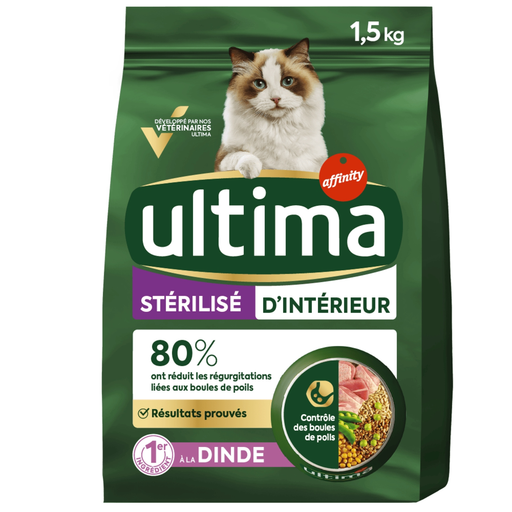
What makes it special?: This recipe is specially designed for cats that tick two boxes: sterilised AND living exclusively indoors. It therefore meets the dual requirements of weight control and combating hairballs, a common problem for indoor cats.
Highlights:
Who is it for?? This indoor cat kibble is the ideal solution for owners of sterilised cats that never set a paw outside and are prone to hairballs.
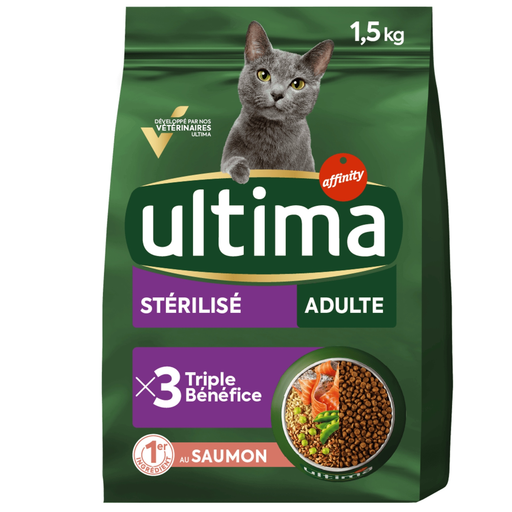
What makes it special?: This recipe showcases salmon, a protein source that cats love, naturally rich in fatty acids. It offers an excellent balance between delicious flavour and targeted benefits for sterilised cats.
Highlights:
Who is it for?? Perfect for adult sterilised cats with no specific health issues, whose owners are looking for a complete and tasty food that enhances their coat. This sterilised cat salmon kibble is a reliable choice.
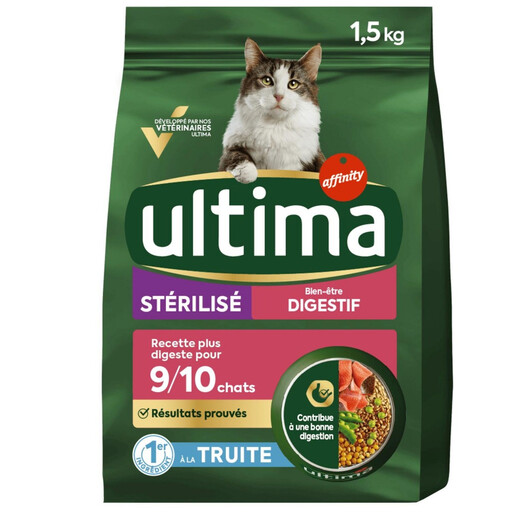
What makes it special?: Developed by the veterinary nutritionists at Affinity Petcare, this recipe focuses on digestive comfort. It relies on ingredients chosen for their high digestibility, like trout, and a combination of fibres that promotes good digestion.
Highlights:
Who is it for?? This kibble for cats with sensitive digestion is the ideal answer for sterilised cats prone to soft stools, flatulence, or other signs of digestive sensitivity.
Some cats are fussy about kibble and will only eat the texture of wet food. Others enjoy mixed feeding (or bi-nutrition), which alternates between kibble and p?té. Wet food has a major advantage: its high water content, which ensures good hydration and supports kidney function.
To add variety and complement your companion's diet, take a look at our selection.
Discover our range of Wet Cat Food.
The daily portion depends on your cat's weight, age, and activity level. The easiest way is to follow the recommendations on the packaging. To be precise, weigh their daily portion with a kitchen scale and adjust it if you notice any weight gain or loss. And of course, always leave a bowl of fresh water available for them.
Yes, and without delay. It's even advisable to anticipate this change. The hormonal shifts that follow the procedure disrupt the animal's metabolism. To help their digestive system adapt gently, plan a dietary transition over 7 to 10 days, gradually mixing the new kibble with the old.
No. Each type of food meets specific needs. Food for sterilised cats is specifically formulated for adults with a slower metabolism. It is therefore lower in calories than food for a growing kitten or a very active, non-sterilised adult. Giving this kibble to a cat that doesn't need it could lead to deficiencies or fail to provide enough energy.