
Livraison le jour même ou le lendemain

Qualité garantie

Débloquez vos offres de bienvenue: Livraison GRATUITE | Jusqu'à -80 % | 30 jours d'essai gratuits à JoyPlus
Téléchargez l'application
A dead battery is every driver's nightmare. A turn of the key that does nothing, a hopelessly dark dashboard... The day is off to a bad start, filled with delays and the hassle of finding help. Fortunately, there's a simple solution to never depend on another car again: the battery booster.
This compact device, also known as a portable jump starter, allows you to restart your vehicle in minutes, freeing you from traditional jumper cables and the need to find another vehicle. But with an overwhelming number of options on the market, how do you choose the right one??
Our guide is here to help. We've analyzed the spec sheets of dozens of models to bring you our expert advice and a curated selection for every type of user, from small city car owners to drivers of large diesel utility vehicles.
Before diving into our selection, let's review the essential criteria for making the right choice.
Expressed in amps (A), power is the number one criterion. It determines whether the booster has enough "juice" to start your engine.
Today, a battery booster is much more than just a jump-starting aid.
Safety is non-negotiable for an emergency jump starter kit. Make sure the model includes comprehensive electronic protections:
The internal battery technology is also a key factor. While most models use lithium-polymer (Li-Po) batteries, new technologies like sodium-ion are emerging. They promise enhanced safety and greater durability, especially in extreme temperatures.
We have selected three models that stand out from the crowd for their performance and versatility, catering to different user profiles.
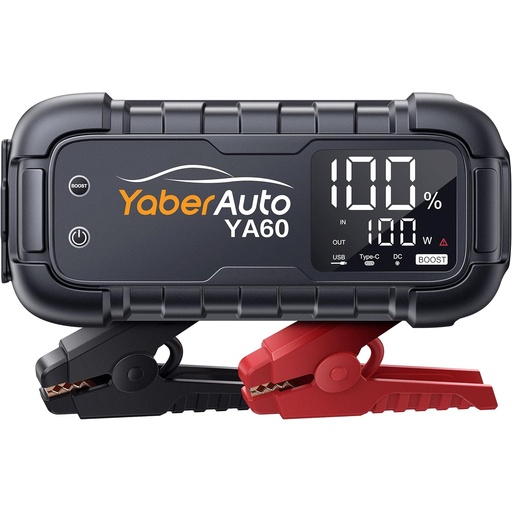
Why it stands out?? The YaberAuto YA60 is all about brute force. With a peak current of 8000?A, it's designed to handle anything. It can start any gas engine and diesel engines up to 12.0L, even with a completely dead battery, thanks to its "BOOST" function. Its other key advantage? A 65W two-way fast charging capability, which allows it to recharge in just 1.5 hours and even power a laptop.
Pros?:
Who is it for? Owners of large vehicles (SUVs, 4x4s, RVs, utility vans), roadside assistance professionals, and anyone who demands top-tier performance and express charging without compromise.
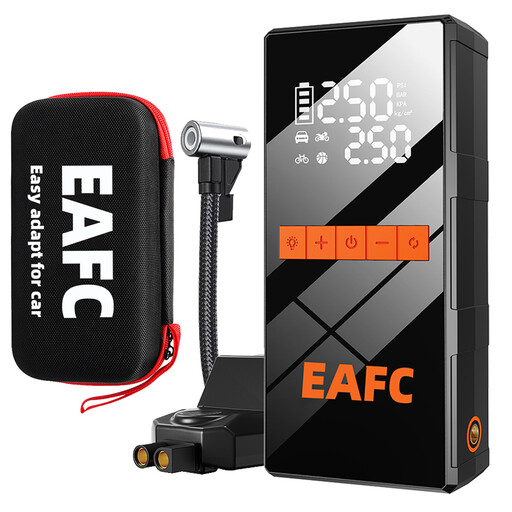
Why it stands out?? This EAFC model is all about versatility. It combines four essential functions into one compact unit: jump starter, 150?PSI air compressor, power bank, and LED light. It's the ideal all-in-one solution for handling the two most common roadside emergencies: a dead battery and a flat tire.
Pros?:
Who is it for? The forward-thinking driver, road-trippers, and campers. An excellent choice for those looking for a versatile tool that can handle multiple types of emergencies without adding clutter.
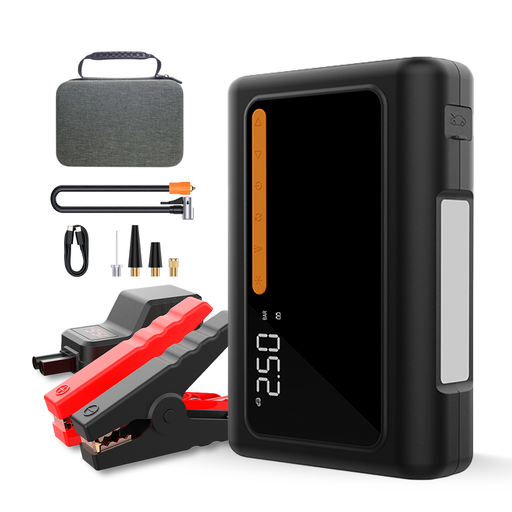
Why it stands out?? The GOKKCL GK01 stands out with its innovative sodium-ion battery technology. Unlike lithium, it offers an extreme operating temperature range (-40°C to 80°C / -40°F to 176°F), enhanced safety (no risk of fire, even if punctured), and a record-breaking lifespan. Its near-zero self-discharge rate means it can stay ready for years in your trunk without needing a recharge.
Pros?:
Who is it for? Drivers who face extreme climates (harsh winters, scorching summers), those who want a maintenance-free, "set-it-and-forget-it" solution for their trunk, and all users for whom safety and longevity are top priorities.
Our selection highlights products that meet specific needs, from raw power to extreme versatility. However, the car accessories market is vast and constantly evolving.
To explore other solutions or compare more models, feel free to browse our dedicated category.
? Discover our full range in the Electronics Kits category
1. Can I leave a battery booster in my car permanently? It all depends on the technology and the climate. Sodium-ion models like the GOKKCL GK01 are specifically designed to withstand extreme temperatures (-40°C to 80°C / -40°F to 176°F) and can be left in a vehicle without any issues. For lithium models, it's safer to check the manufacturer's recommended storage temperature range and avoid leaving them in direct sunlight inside a hot car.
2. What's the difference between peak current (A) and capacity (mAh)? Imagine a sprinter and a marathon runner. The peak current (in amps, A) is the sprinter's explosive power: the instantaneous brute force needed to start the engine. The capacity (in milliampere-hours, mAh) is the marathon runner's endurance: the energy reserve that determines how many jump-starts you can perform, or how many times you can charge your smartphone before the booster itself needs recharging.
3. Can a jump starter damage my car's electronics? No, not if you choose a quality model. Modern jump starters come with "smart" clamps that have multiple built-in safety features (reverse polarity protection, short-circuit protection, over-voltage protection, etc.). These effectively protect your vehicle's sensitive electronics. Of course, it's still essential to follow the user manual's instructions to connect the clamps correctly.