
Livraison le jour même ou le lendemain

Qualité garantie

Débloquez vos offres de bienvenue: Livraison GRATUITE | Jusqu'à -80 % | 30 jours d'essai gratuits à JoyPlus
Téléchargez l'application
The dreaded click when you turn the key, the deathly silence of an engine that refuses to start... A dead battery is every driver's nightmare. Fortunately, a simple and effective solution exists to get you back on the road in minutes?: the battery booster. Much more than a simple car starter, this versatile tool has become essential for ensuring your independence and safety.
But with an overwhelming number of options on the market, how do you find your way? This guide is here to break down the key criteria and present our selection of the best models, helping you make an informed choice without getting lost in technical jargon.
Before you buy, here are the key points to check to find the device that will perfectly meet your needs.
The most critical factor for a battery starter is its peak current, measured in amps (A). This value determines its ability to jump-start a stubborn engine.
It is imperative to check for compatibility with your vehicle's voltage (the vast majority of passenger cars run on 12?V) and the maximum engine displacements (petrol/diesel) recommended by the manufacturer.
Modern boosters are true Swiss Army knives. Depending on your use case, certain features can be particularly practical?:
Safety is non-negotiable. Opt for models equipped with comprehensive protections?: reverse polarity, short-circuit, overload, and over-temperature protection. A clear LCD screen or indicator lights make it incredibly easy to use, even for a beginner, by confirming that the clamps are properly connected before starting.
To guide you, here are three models that cater to very different needs, selected by our editors for their performance and versatility.
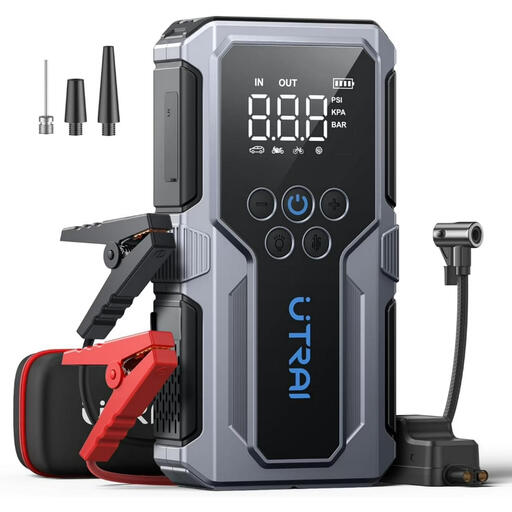
Why it stands out This model is a true portable power station. With its peak power of 3000?A, it can start petrol engines up to 8.5L and diesel engines up to 6.5L. But its key feature is its built-in 150?PSI air compressor, which allows you to preset the pressure for automatic and precise inflation.
Advantages
Who is it for?? For adventurers, campers, and forward-thinking drivers looking for a complete tool to be prepared for any situation, from a dead battery to an underinflated tyre, while keeping their devices charged.
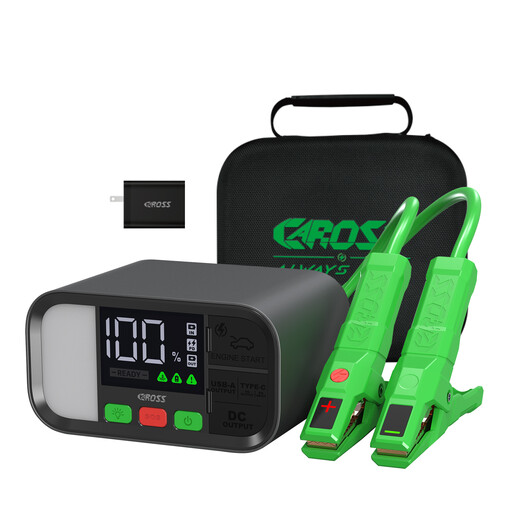
Why it stands out The CAROSS booster focuses on safety and simplicity. Its Smart Connect technology and non-polarised clamps eliminate any risk of connection errors?: the system automatically detects the polarity. Its aluminium casing and large 3-inch screen give it a premium finish and feel.
Advantages
Who is it for?? For the user who prioritises simplicity, safety, and performance. Ideal for those who want a hassle-free device capable of charging power-hungry devices like a laptop.
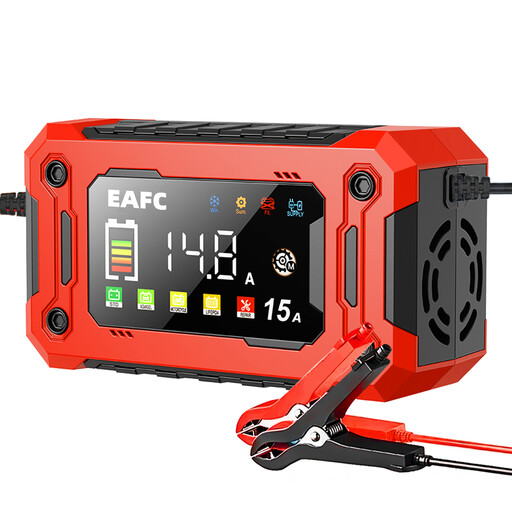
Why it stands out Note, this product is not a booster, but a smart car battery charger and charge maintainer. Its mission?: to charge, maintain, and even attempt to repair 12V lead-acid batteries using its pulse repair technology. It is designed for preventive use, at home or in the garage.
Advantages
Who is it for?? For vehicle owners (car, motorcycle, SUV, boat) who want to maintain their battery over the long term, especially during winter storage periods, to extend its lifespan and avoid unpleasant surprises.
A well-equipped vehicle isn't just about the battery. For other essential accessories, like adapters for your screens or onboard electronic devices, explore our selection.
Discover our range of adapters and monitors
1. What is the difference between a jump starter and a battery charger?? A battery booster (or jump starter) provides a very intense, brief burst of current to start an engine when the battery is dead. It's an emergency tool. A car battery charger, on the other hand, slowly recharges a battery over several hours. It is used for maintenance and recovering a discharged battery, but it cannot start a vehicle instantly.
2. How long does a jump starter's charge last?? Most manufacturers recommend fully recharging your booster every 3 to 6 months to preserve its internal battery and ensure it is ready when needed. The lifespan of the device will then depend on its build quality and how often you use it.
3. Can I use a booster on any vehicle?? No, it is crucial to check compatibility. The vast majority of boosters are designed for the 12?V systems in cars, motorcycles, and SUVs. Heavy-duty trucks, however, often use 24V systems that require specialised equipment. Also, remember to check that the booster's amperage is suitable for your engine's displacement (petrol or diesel).