
Livraison le jour même ou le lendemain

Qualité garantie

Débloquez vos offres de bienvenue: Livraison GRATUITE | Jusqu'à -80 % | 30 jours d'essai gratuits à JoyPlus
Téléchargez l'application
A dead battery. A flat tyre. The kind of unexpected problem that turns a simple drive into a major hassle, especially when you're behind the wheel of a large vehicle like an SUV, campervan, or utility truck. To regain your independence and peace of mind, the jump starter with a built-in compressor has become an essential piece of safety equipment.
Much more than a simple roadside assistance tool, this all-in-one device can restart your engine, reinflate your tyres, charge your electronic devices, and on some models, even diagnose a fault. But with an overwhelming number of options on the market, how do you find your way?? Our guide is here to clear the confusion, featuring a selection of versatile products and clear criteria to help you choose the right model without getting lost in marketing jargon.
Before diving into our selection, let's review the key technical criteria for making the right choice.
Starting power is the most critical factor. It's measured in amps (A) and is presented in two values?:
If you own a large vehicle, especially one with a diesel engine, a powerful car starter is not optional. A diesel jump starter requires significantly higher starting amps than a model for a petrol engine. For peace of mind, aim for at least 1500?A peak. This ensures good versatility.
The real advantage of these devices is their versatility. Consider evaluating the extra features based on your needs?:
Expressed in milliamp-hours (mAh) or watt-hours (Wh), the internal battery's capacity determines the device's runtime. Logically, the higher it is, the more starts you can perform or the longer you can charge your devices.
It is crucial to verify that the jump starter includes multiple safety protections (against reverse polarity, short circuits, overcharging, overheating, etc.). This is an essential safeguard to protect your vehicle's electronics as well as the device itself.
We have selected three models that cater to a variety of user profiles, from the occasional driver to the fully-equipped adventurer.
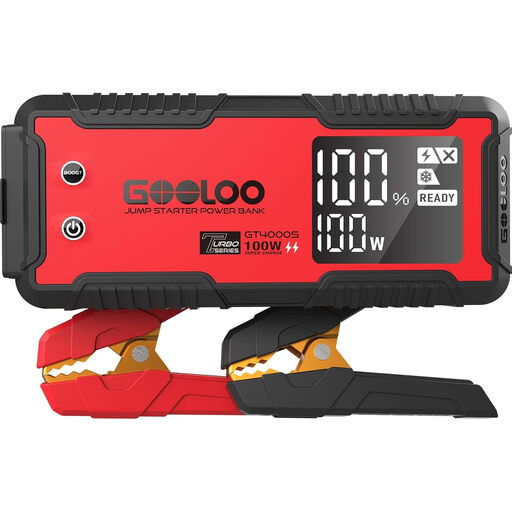
Key Feature?: Its 100W two-way fast-charging technology. According to the manufacturer, it fully recharges in just 1.2 hours, and a mere 5 minutes of charging is enough to provide an emergency jump start.
Highlights?:
Who is it for?? Drivers of large SUVs, pickup trucks, or boats who prioritise performance and speed. Its express charging makes it a powerful ally for those who are frequently on the road and can't afford to wait.
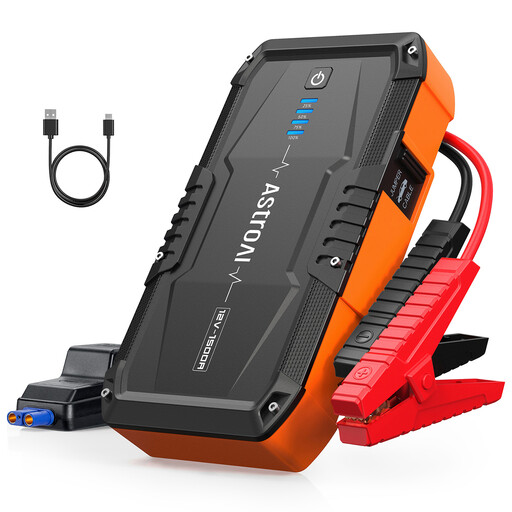
Key Feature?: An ultra-compact and lightweight design that doesn't sacrifice the essentials. Easy to slip into a glove box or a bag, it's the ultimate portable solution for mid-sized vehicles.
Highlights?:
Who is it for?? Perfect for drivers of saloons, small SUVs, or motorcycles who want a reliable, simple, and discreet backup solution for the most common battery failures.
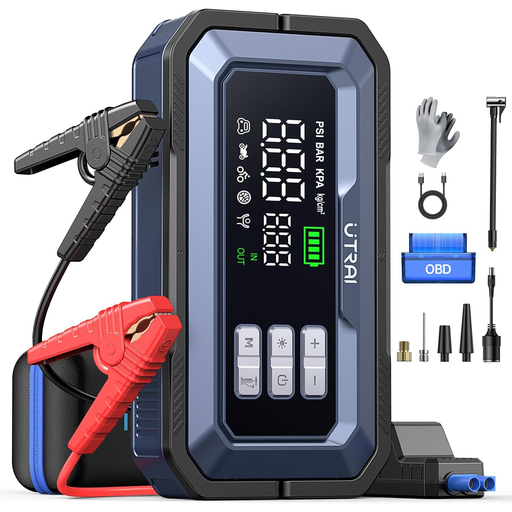
Key Feature?: The JS-30 isn't just a jump starter; it's a true Swiss Army knife for drivers. It combines colossal starting power, a high-performance compressor, an OBD2 fault code reader, and a super-bright work light.
Highlights?:
Who is it for?? For owners of trucks, campervans, agricultural machinery, and mechanics enthusiasts. It's the ultimate tool for those who aim for complete self-sufficiency and want an all-in-one solution capable of handling (almost) any eventuality, both on the road and in the great outdoors.
Our selection highlights versatile models for specific needs. If you want to explore other power levels or features, feel free to browse our full category to find the best battery starter that matches your vehicle and budget.
Diesel engines, with their higher compression ratio, are more demanding to start, especially in winter. For a standard diesel (2.0L to 3.0L), a jump starter with at least 1500?A to 2000?A peak is a good starting point. For larger engines (trucks, campervans), don't hesitate to aim for models with 3000?A or more.
It's not recommended, especially for lithium-based models. Extreme temperatures, whether from summer heatwaves or winter freezes, can damage the internal battery and drastically reduce its lifespan. The ideal solution is to store it at room temperature and take it with you before a long trip. Don't forget to recharge it every 3 to 6 months to keep it ready for use.
Yes, absolutely. Most models with a built-in compressor can inflate an SUV tyre without any issues. The inflation will simply be slower than with a service station compressor. The key specification to watch is the maximum pressure (in PSI) the device can achieve. A model capable of delivering 150?PSI, like the UTRAI JS-30, is perfectly sized for the tyre pressures of most vehicles, including SUVs and light commercial vehicles.