
Livraison le jour même ou le lendemain

Qualité garantie

Débloquez vos offres de bienvenue: Livraison GRATUITE | Jusqu'à -80 % | 30 jours d'essai gratuits à JoyPlus
Téléchargez l'application
A dead battery: every driver's nightmare. That moment when a simple turn of the key is met with a dreadful silence, signalling a ruined day and a cascade of delays. To never again have to depend on a tow truck or the goodwill of another driver, the battery booster has established itself as the ultimate lifesaving accessory.
This guide is here to light the way. We've analysed the market to help you choose the portable car starter that truly matches your vehicle and your needs, giving you complete independence.
Faced with a jungle of available models, it's hard to know where to start. To make the right choice, let's focus on the criteria that really matter.
The most critical factor for a booster is its peak amperage (A). This is the burst of current that will provide the necessary impulse to start your engine.
Always check the compatibility indicated by the manufacturer, usually expressed in litres of engine displacement (e.g., "up to 8.0L gasoline / 6.0L diesel").
A modern emergency starter is much more than just a battery. It's a true Swiss Army knife for the motorist. Consider these options that can save the day?:
Safety first! A good booster must include protections to safeguard your vehicle's electronics and the device itself. Ensure the model is equipped with smart clamps that protect against?:
A clear LCD screen or LED indicators are also a real plus for monitoring the booster's charge status and the starting steps.
To guide you, we have selected three models with distinct profiles, chosen for their technical specifications and versatility.
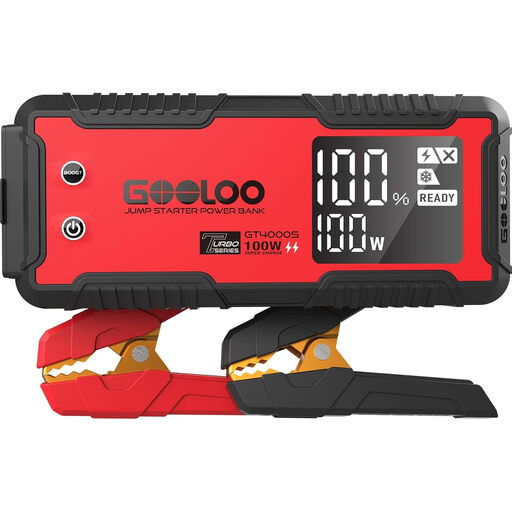
Why it stands out?: Its key feature: 100W two-way fast charging. According to GOOLOO, it recharges to 100% in just 1 hour and 12 minutes, and a mere 5 minutes on the charger provides enough juice for an emergency start.
Pros?:
Who is it for?? For drivers of large-displacement vehicles (SUVs, trucks, RVs) and professionals who need a powerful, reliable, and, above all, very fast-charging device between uses.
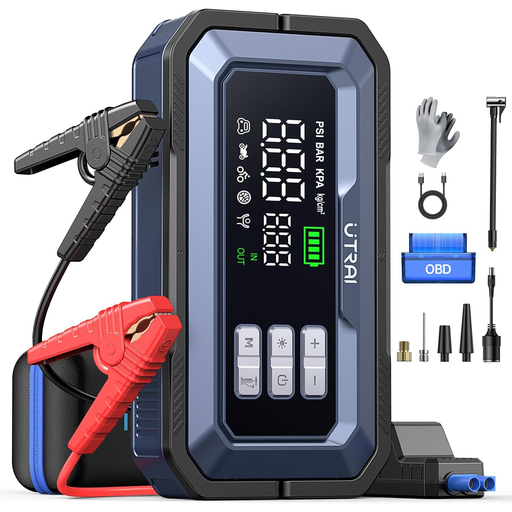
Why it stands out?: This is the ultimate emergency Swiss Army knife. It combines a colossal 7000?A starting power with an air compressor, a work light, and even an OBD2 diagnostic tool.
Pros?:
Who is it for?? Ideal for outdoor enthusiasts, RV owners, road professionals, and anyone looking for a multifunction booster that can handle almost any emergency on the road.
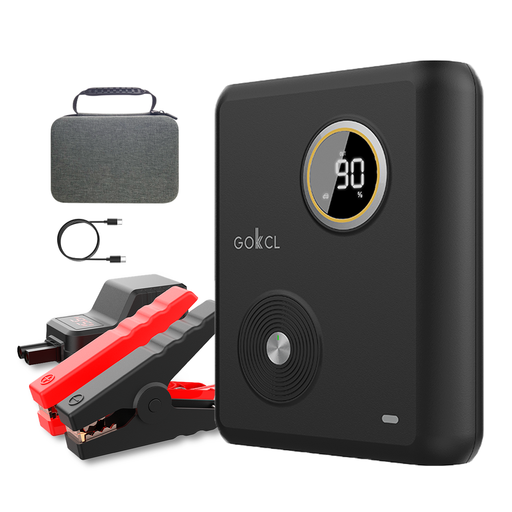
Why it stands out?: Its sodium-ion battery technology. Unlike traditional lithium batteries, it offers remarkable safety and durability, including resistance to extreme temperatures and a very long lifespan.
Pros?:
Who is it for?? For drivers living in regions with extreme climates or for those looking for a "set it and forget it" device, prioritising longevity, safety, and minimal maintenance.
Our selection highlights three models with distinct profiles. But the market for emergency starters is much broader! To explore other power levels, features, or price points, feel free to browse our complete catalogue.
? Discover our full range of car starters and battery boosters
Be careful not to confuse them; their roles are quite different. A battery booster (or jump starter) delivers a brief, intense burst of energy to start an engine when the battery is dead. In contrast, a car battery charger slowly and steadily recharges a battery over several hours via a wall outlet. In short: the booster is an emergency solution, while the charger is a maintenance solution.
It depends on the booster's power and the diesel engine's displacement. Generally, a booster designed for a small gasoline car won't have the necessary peak amperage to start a diesel engine, which requires much more force. It is therefore crucial to check the booster's specifications, particularly the peak amperage and the maximum recommended displacement for diesel engines. When in doubt, always opt for a more powerful model.
How long a charge is retained varies greatly depending on the battery technology and the quality of the product. For most lithium-based boosters, we recommend checking and topping up the charge every 3 to 6 months to ensure it's always ready for use. Newer models, like those based on sodium-ion, exhibit a much lower self-discharge rate and can hold their charge for several years, thus requiring far less frequent maintenance.