
Livraison le jour même ou le lendemain

Qualité garantie

Débloquez vos offres de bienvenue: Livraison GRATUITE | Jusqu'à -80 % | 30 jours d'essai gratuits à JoyPlus
Téléchargez l'application
Silence. Then the dreaded click when you turn the ignition key. A dead battery is arguably the most frustrating surprise a driver can face. Fortunately, the days of fumbling with bulky jumper cables and relying on another vehicle for help are over. The jump starter, also known as a portable car starter, is a compact, powerful, and multifunctional tool that will get you out of a jam in minutes.
But with an overwhelming number of options on the market, how do you choose? This guide breaks down the essential features to help you identify the perfect model for your needs, whether you're a daily commuter, a professional driver, or an outdoor adventurer.
Before diving into our top picks, let's review the key criteria for making the right choice.
A jump starter's real strength is its peak current, measured in amps (A). This value determines its ability to start an engine.
Always check the compatibility listed by the manufacturer (often in litres, e.g., "up to 8.0L Gas / 6.0L Diesel").
Modern jump starters are much more than just emergency batteries. Their additional functions can be incredibly useful in daily life:
A good lithium jump starter must include multiple protections to safeguard your vehicle's electronics and the device itself. Essential safety features include protection against reverse polarity, short circuits, overcharging, and overheating. Smart clamps with indicator lights (green for a correct connection, red for an error) make usage a breeze, even for beginners.
We've selected models that stand out from the crowd with their technical specs and versatility, designed for different user profiles.
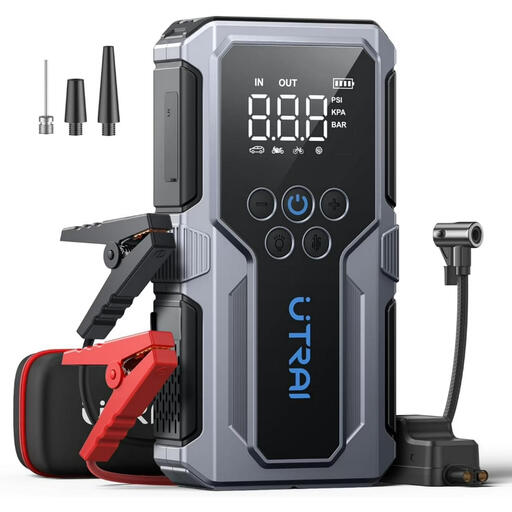
Why it stands out: The UTRAI JS-9 is a true Swiss Army knife for drivers. It combines high starting power with a built-in air compressor, making it an all-in-one solution for dealing with a dead battery or a flat tyre.
Key features:
Who is it for?: Forward-thinking drivers and outdoor enthusiasts (camping, boating) looking for a versatile device to handle any situation without being weighed down.
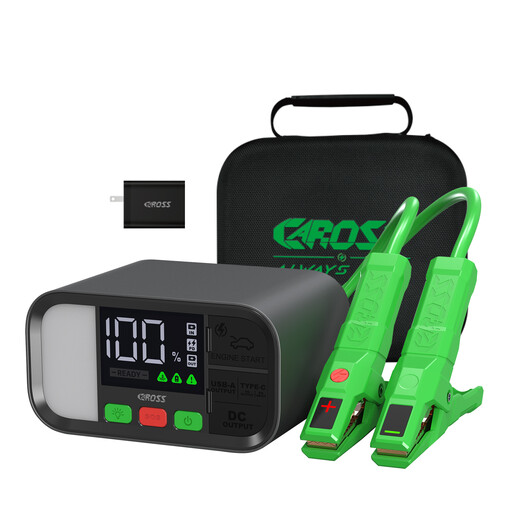
Why it stands out: This model focuses on ease of use with its Smart Connect technology and non-polarised clamps. No more stress about connecting the red and black clamps to the wrong terminals!
Key features:
Who is it for?: Drivers who prioritise simplicity and safety above all. A reassuring option for those intimidated by mechanics.
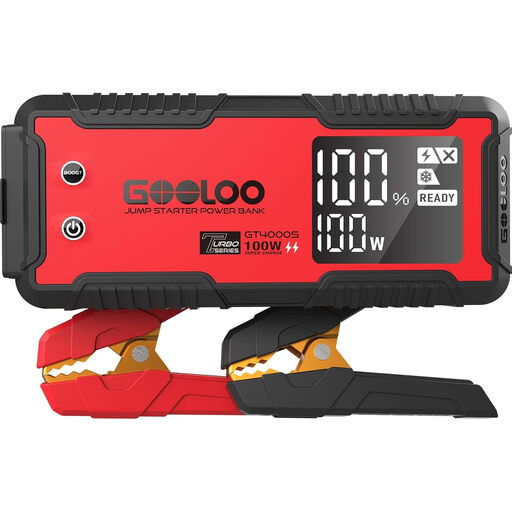
Why it stands out: The GOOLOO GT4000S is built for raw performance and speed. With its 4000A peak current and 100W two-way charging, it's aimed at the most demanding users.
Key features:
Who is it for?: Owners of large vehicles (trucks, RVs, boats) and tech enthusiasts who need maximum starting power and appreciate the convenience of 100W USB-C fast charging for all their devices.
Does our selection not meet your needs? If you're looking for a more traditional charger to maintain your battery or simply power your devices in the car, other options are available.
Discover our collection of USB car chargers
A diesel engine requires a higher starting current than a gas engine of the same displacement. For a standard diesel car, a 1500A to 2000A jump starter is a good starting point. For larger vehicles (vans, 4x4s, RVs), opt for models with 2500A or more to ensure an effective start, especially in cold weather.
Yes, these devices are designed to be kept in a vehicle. However, avoid extreme temperatures: don't leave it on the dashboard in direct sunlight during summer, or exposed to freezing temperatures in winter. The ideal place is in its case, in the glove compartment or boot. Also, remember to check and recharge the device every 3 to 6 months to ensure it's always ready for use.
No, and it's important not to confuse a jump starter with a battery charger. The jump starter (or starter pack) provides a very intense, brief burst of current to start the engine. It does not recharge the battery. Once the engine is running, the alternator takes over to recharge the battery as you drive. If your battery regularly dies, have it checked by a professional.